
Across the fast-moving world of active trading, concentration isn't optional — it's the whole game. One lapse, one distracted click, and the damage is done. Successful traders know this. So they build habits, not shortcuts.
In active trading, focus isn't a nice-to-have. It's the entire edge. Lose it once, and you pay.
Structure matters more than most people admit. Trading only during specific sessions — like the London-New York overlap — cuts decision fatigue hard. Time-blocking separates pre-market analysis from order execution from trade reviews. No mixing. No multitasking. Some traders even run Pomodoro-style sprints: 25 minutes of locked-in focus, five minutes of rest. Sounds rigid. Works anyway.

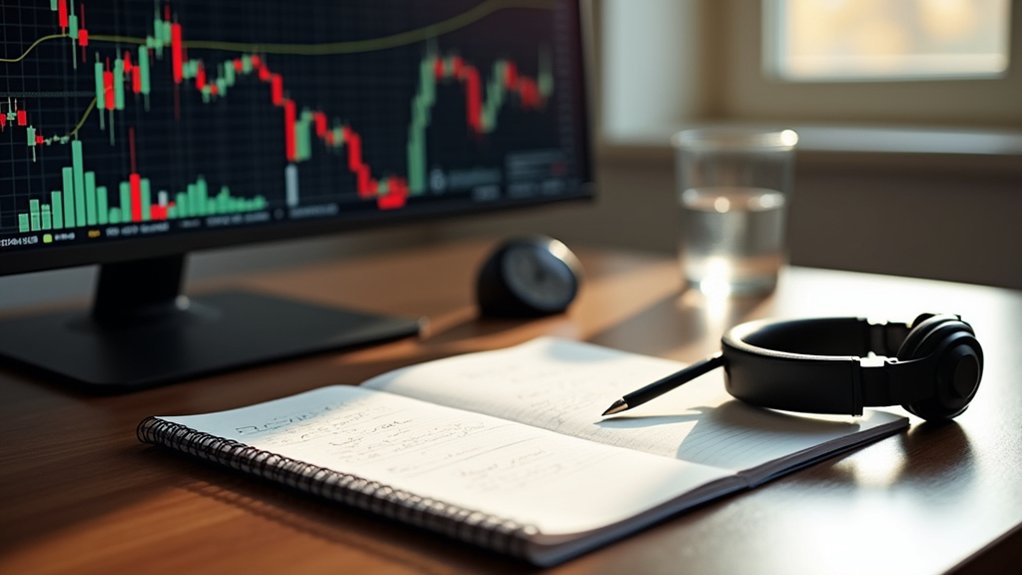
The workspace is next. And yes, the kitchen table counts as a problem. A dedicated trading space creates a mental cue — brain knows it's time to work. Minimal clutter, good lighting, ergonomic setup. Notifications off. Website blockers on. Unrelated tabs closed. Every open distraction is a small tax on attention. Those taxes add up fast.
Before the session even starts, disciplined traders write things down. A game plan. Key levels. Relevant news. Three to five specific process goals — like “only A+ setups” or “honor the stop, no exceptions.” They review their rules. They use a short focus ritual to signal the brain that real work is beginning. None of this is glamorous. All of it matters.
Breaks aren't optional either. Mental fatigue is real, and pushing through it doesn't make anyone smarter. Micro-breaks every 25 to 60 minutes help. Movement during those breaks — stretching, walking, hydrating — keeps blood moving and brains functioning. The catch? Checking social media during a break isn't a break. It's just a different kind of drain. Actual recovery means actual rest.
Energy isn't constant throughout the day. Traders who respect ultradian rhythms — natural focus cycles of 60 to 90 minutes — work with their biology instead of against it. Longer recovery blocks follow longer focus blocks. Simple math, honestly.
Traders who also cultivate psychological resilience find it easier to return to full concentration after a losing trade, rather than spiraling into frustration that clouds every decision that follows. Maintaining consistent trading rules across sessions reinforces this resilience, creating a structured framework that keeps emotional decision-making from eroding hard-won focus. Research consistently shows that traders who develop emotional discipline habits are far less likely to abandon their trading plan under pressure, which directly protects the quality of their concentration during volatile market conditions.
Concentration isn't some rare gift. It's a product of environment, routine, and recovery. Build those right, and the focus tends to follow.