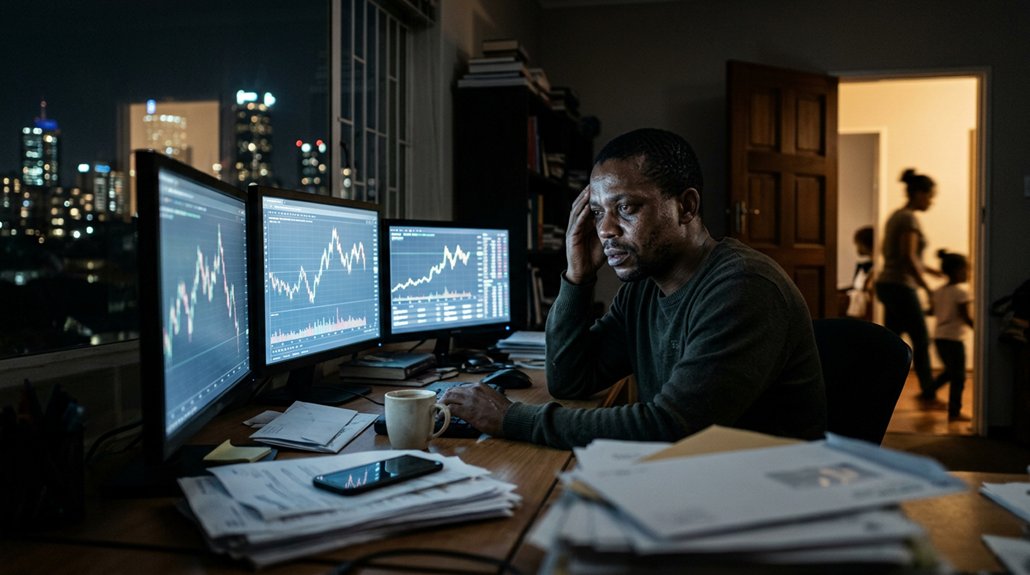
Traders chasing quick profits often mistake motion for opportunity. A chart that jumps around can look exciting, but excitement isn't the same as a real trading setup. Before acting on any price move, it helps to define the instrument, the direction, the entry trigger, and the exit plan. Day trades and longer swing positions need different rules entirely, since each carries its own risk and timing demands. Regulators like FINRA have warned that day trading can bring large, fast losses and may not suit everyone, especially those with limited money or experience. Chasing every move without a plan can also lead to overtrading, a common mistake that strains both capital and discipline.
A real setup usually has a reason behind it. That means checking for catalysts such as earnings reports, economic data, or corporate announcements, then confirming those headlines against official filings rather than secondhand chatter. This matters for African markets too. A surprise move in the U.S. dollar or a shift in Federal Reserve policy can ripple into currencies like the naira, the rand, or the Kenyan shilling. Traders watching these markets should separate genuine policy shifts from noise that fades quickly.

Screening should be repeatable, not random. Comparing price action against volume, volatility, and sector benchmarks helps confirm whether a signal is meaningful or just a one-off spike. A single data point rarely tells the full story.
Liquidity also deserves attention. Thinly traded currency pairs or stocks can make it hard to exit at a fair price, especially during sudden volatility. Spreads, commissions, and slippage can quietly eat into profits that looked strong on paper. Limit orders offer more price control, though they don't guarantee execution, while market orders fill fast but not always at the desired level.
Finally, any strategy worth following should be tested with realistic assumptions, including costs, across different market conditions. Hypothetical results that ignore liquidity or benefit from hindsight can be misleading.
For African traders watching global cues, from oil prices affecting Nigeria's naira to commodity swings influencing the rand, the lesson stays the same: look past the noise. A measurable reason, confirmed facts, and disciplined risk checks matter far more than watching a chart move.