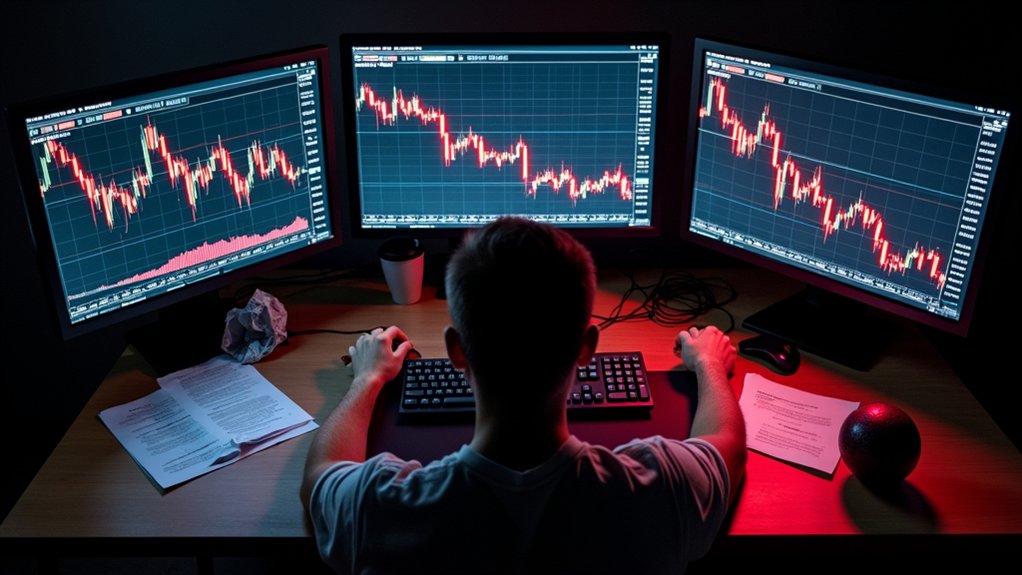

High-impact news events are a classic trap. Central bank rate decisions, Non-Farm Payrolls, CPI releases — these aren't just “exciting” moments. They're chaos. Spreads blow out. Liquidity vanishes. Stops get hunted. Many trading frameworks flat-out recommend avoiding new positions 30 minutes before and after major releases unless the entire strategy is built around news.
F&O expiry days and earnings announcements on the traded instrument? Same deal. Erratic order-book behavior and price gaps are practically guaranteed.

Then there's the slow, dead market problem. Low volume, thin order books, wide spreads — none of that is tradeable. It's just noise dressed up as price action. Choppy, directionless markets sitting “in the middle of nowhere,” far from any meaningful support or resistance, are notorious for whipsaws and stop-outs. Professional trading education is pretty blunt about it: if price action is a mess and there's no clear structure, skip it. Wait.
Timing by day and hour matters too. Mondays and Fridays have a reputation — and it's earned. Positioning shifts, profit-taking, elevated event risk. Tuesday through Thursday tends to be more stable for many strategies. The first and last 30 minutes of the cash session can get wild with large orders and price discovery. The London-New York session overlap typically concentrates the highest liquidity and tightest spreads of the trading day, making outside those hours a notably different environment entirely.
The 4–5 p.m. EST settlement window in some markets is considered genuinely unsuitable for new positions because of option hedging and spread instability. Pre-market and after-hours? Thin liquidity, sharp moves, wider spreads. During volatile or low-liquidity periods, order execution delays can cause trades to fill at prices significantly different from what was intended. Most educators say use those periods for observation, not execution.
Poor technical context rounds it out. Chasing price far from value areas — entering well above support or well below resistance — raises the probability of mean reversion against the position. The reward-to-risk math just doesn't work. Entry location matters enormously, and bad location is its own reason to sit on hands.
Beyond market conditions, consecutive trading losses are a well-recognized signal to step back entirely, as emotional burnout and compromised decision-making after a losing streak can turn a bad day into a blown account.
Doing nothing is sometimes the sharpest move on the board.