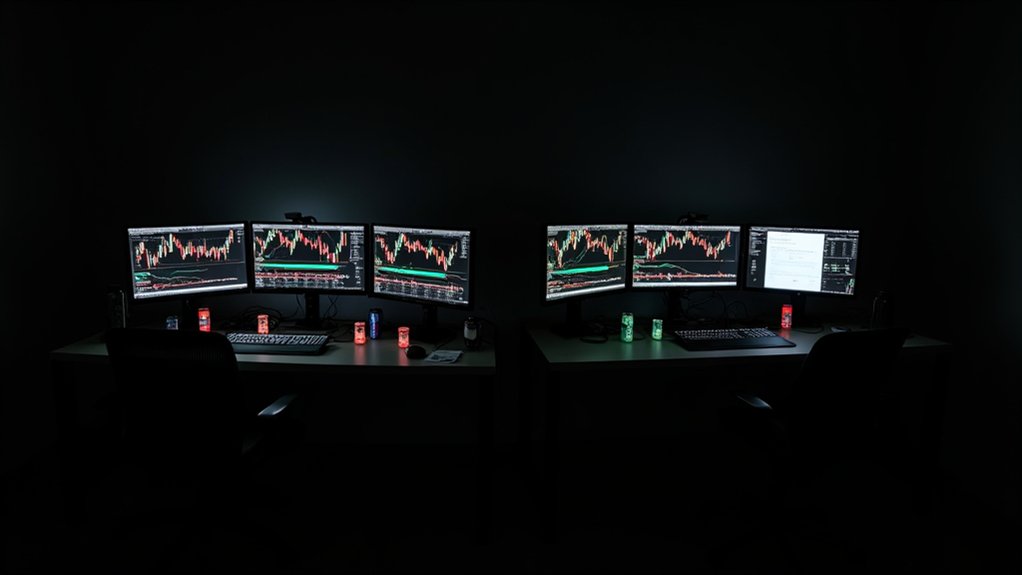

Trading with self-doubt feels like stepping into the ring with one hand tied behind your back.
Trading with self-doubt means fighting yourself first, then the market second. You lose before the bell rings.
You know the setup. You recognize the pattern. But when it's time to pull the trigger, something freezes. The position gets smaller. The entry gets skipped. The exit comes too early during a routine retracement. Knowledge means nothing when hesitation runs the show.

Here's the thing about doubt, though. It's not the enemy everyone pretends it is. Self-doubt is completely natural in chaotic markets. Even seasoned traders experience it. The difference is they've learned to control it through accumulated knowledge and experience. They don't pretend confidence magically erases uncertainty. They just stopped letting doubt dictate their actions.
Mark Douglas nailed it when he described the psychological zone of neutrality. No single trade carries emotional weight in that space. The catch? You don't get there through motivation or analysis. Repetition does the work. Boring, unglamorous repetition. Pre-market routines. Journaling. Data reviews. The same actions under the same conditions until your brain stops treating each trade like a life-or-death moment.
The real game isn't about building confidence in predictions. That's a sucker's bet. Execution confidence is what matters. Following your methodology, win or lose, becomes the success metric. Trust in the process replaces trust in outcomes. This shift rewires the dopamine response itself. Discipline starts delivering the hit, not winners.
The self-doubt feedback loop destroys traders because it mistakes belief for competence. “I'm not good enough” becomes a self-fulfilling prophecy. Hesitation erodes confidence, which breeds more hesitation. The cycle feeds itself. Breaking it requires addressing those core beliefs directly, not pretending they don't exist.
Pattern recognition develops subconsciously through repeated exposure. Handling profits and losses becomes second nature over time. Mental consistency separates professionals from everyone else, just like in sports. Detachment from the equity curve prevents mood swings during drawdowns. Fear of being wrong disappears when losses get viewed as natural outcomes of an edge. Documenting trades systematically creates the feedback loop needed to identify which hesitations are justified and which are just noise.
Doubt subsides with skills and experience. Not because confidence replaces it. Because repetition makes it irrelevant. Risk management principles protect your account during the learning curve when doubt peaks and execution wobbles. Success in currency markets ultimately depends on maintaining consistent rules that override the emotional noise trying to derail every decision.