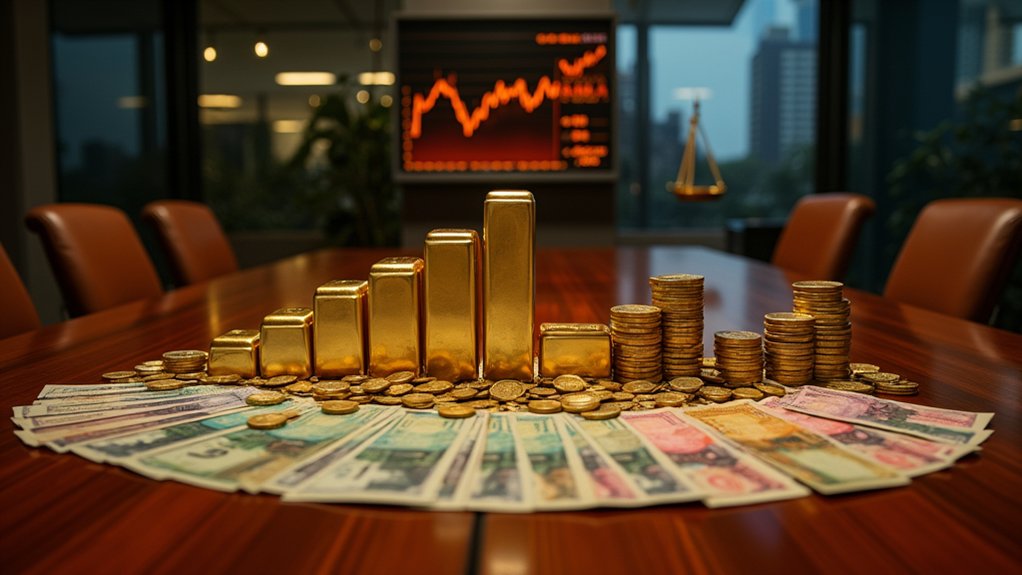

Gold just keeps going up. The yellow metal hit $5,100 per ounce, smashing through the $5,000 barrier like it was nothing. That's nearly double the $2,660 price from a year ago. Up more than 70% since the start of the year. It's the best year for gold gains since 1979.
Gold's relentless surge past $5,100 marks the strongest yearly performance since 1979, crushing the $5,000 threshold without hesitation.
Here's the weird part. Gold was supposed to collapse when the panic stopped. The U.S. and Iran signed a two-week ceasefire, unwinding selloff pressures. Geopolitical tensions eased. The fear trade should've died right there.

It didn't.
Gold prices keep climbing even when the reasons for climbing supposedly disappear. Earlier, Trump's aggressive trade and foreign policy stoked volatility. His tariff threats over Greenland fueled record highs. A U.S. blockade of Venezuelan oil and Ukraine's attack on a Russian tanker boosted demand. Rising geopolitical tensions drove a year-end surge. All that made sense.
Then the ceasefire happened. Gold still went up. It gained 3.9% on April 7 to an all-time high amid ceasefire news. Figure that one out.
The dollar weakened post-ceasefire, aiding recovery. A stronger dollar during the war had pushed gold down 11.9% from February to April. Now the dollar's getting hit by tariffs, high spending, and inflation concerns. Weakening dollar, rising gold. That relationship holds.
Three consecutive Fed rate cuts fueled the upswing. Markets are pricing a gold-friendly 2026 outlook with lower rates. December's employment report increased expectations for lower rates. Negative employment data raised Fed rate cut odds for the January 27-28 meeting. Negative real interest rates erode cash purchasing power. Money finds somewhere else to go. Lower rates typically weaken currency values, which makes dollar-denominated gold cheaper for foreign buyers and further supports prices. Central bank interest rate decisions don't just affect domestic bond markets—they ripple through forex markets and commodities like gold.
Central banks keep buying. They scooped up 254 tonnes through October. The National Bank of Poland increased purchases recently. Central bank interventions in foreign exchange markets can influence currency valuations and investor sentiment toward alternative assets. Monetary policy strategies that target exchange rate stability can indirectly affect gold's appeal as a hedge against currency devaluation. Retail and larger individual investors shifted to buying rallies since late November. Mounting government debt levels across major economies don't inspire confidence.
Société Générale forecasts $6,000 by year-end. Silver hit $100, recently trading at $82. Platinum reached an all-time high of $2,800.
Gold made a strong start to 2026 with all-time highs. It just keeps going up.