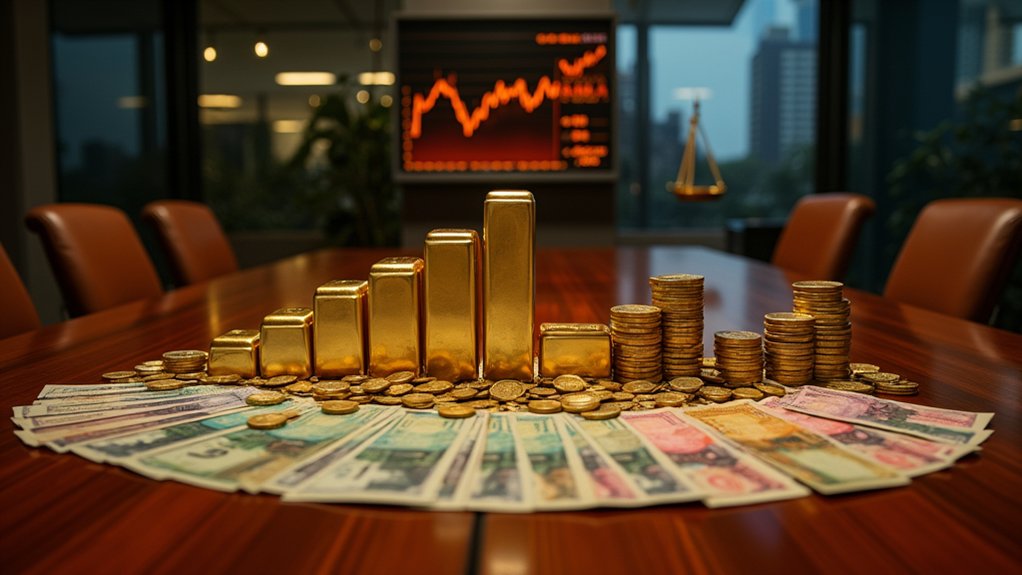
In a surprising twist that defies mining headlines, North Africa—not the continent's gold-producing heavyweights—dominates when it comes to actual central bank reserves. Algeria sits at the top with 174 tonnes of official gold reserves. Libya holds 147 tonnes. Egypt has 129 tonnes. Meanwhile, Ghana—West Africa's mining superstar—barely scrapes together 33 tonnes in reserves. The disconnect is striking.
🏆 Africa’s Top 10 Gold-Reserve Holders (as of June 2025)
| Rank | Country | Gold Reserves (Tonnes) | Previous (Tonnes) | Reference Date |
|---|---|---|---|---|
| 1 | 🇩🇿 Algeria | 174.00 | 174.00 | Jun 2025 |
| 2 | 🇱🇾 Libya | 147.00 | 147.00 | Jun 2025 |
| 3 | 🇪🇬 Egypt | 129.00 | 128.00 | Jun 2025 |
| 4 | 🇿🇦 South Africa | 125.00 | 125.00 | Jun 2025 |
| 5 | 🇬🇭 Ghana | 32.99 | 31.01 | Jun 2025 |
| 6 | 🇲🇦 Morocco | 22.12 | 22.12 | Jun 2025 |
| 7 | 🇲🇺 Mauritius | 12.42 | 12.42 | Jun 2025 |
| 8 | 🇹🇳 Tunisia | 6.84 | 6.84 | Jun 2025 |
| 9 | 🇲🇿 Mozambique | 3.94 | 3.94 | Jun 2025 |
| 10 | 🇰🇪 Kenya | 0.02 | 0.02 | Mar 2025 |
Half of Africa's top ten reserve holders are North African countries. They control the majority share of the continent's central bank gold, using it to buffer currency volatility and safeguard financial stability amid global economic chaos. North African central banks are actively increasing gold acquisitions, reinforcing reserves during market uncertainty. Sub-Saharan regions lag far behind, despite extensive mining activity. Production doesn't equal possession, apparently.

West Africa leads gold mining output. Ghana, Mali, Burkina Faso, and Ivory Coast pump out tonnes annually. South Africa projects about 100 tonnes for 2025. Guinea produced around 63 tonnes in 2024. But here's the kicker: most of that gold gets exported, not stashed in central bank vaults. Mining countries don't reflect their mining volume in reserves. The gold leaves. South Africa ranks third with 125 tonnes of gold reserves among African nations. Monetary policy decisions by institutions like the South African Reserve Bank influence how countries manage their reserve assets and foreign exchange positions.
Africa's total official gold reserves are valued at $91.7 billion as of late 2025. Gold reserves defend currencies, enhance central bank credibility, and anchor economic sovereignty. With gold prices exceeding $3,500 per ounce in April 2025, reserve asset valuations have surged. In Guinea, gold contributes 20% of GDP and over 90% of export earnings. South Africa generated approximately $3.8 billion from gold exports in 2023. Côte d'Ivoire's gold exports exceeded $2 billion in 2023, representing roughly 30% of national export revenues. The economic significance is undeniable. The Ghanaian Cedi faces ongoing pressure against major currencies, reflecting how limited gold reserves impact exchange rate stability.
African central bank reserve gold reportedly reached 36,000 metric tons in 2024, nearing historic highs. Central banks globally have doubled gold acquisition rates compared to prior decades. North African banks plan further reserve accumulation, signaling a continued upward trajectory. They're pursuing financial independence and hedging against inflation and external pressures.
The divergence is clear. Reserve leaders like Algeria, Egypt, and Libya aren't primary mining powerhouses. They just hold onto gold better than countries that dig it up.