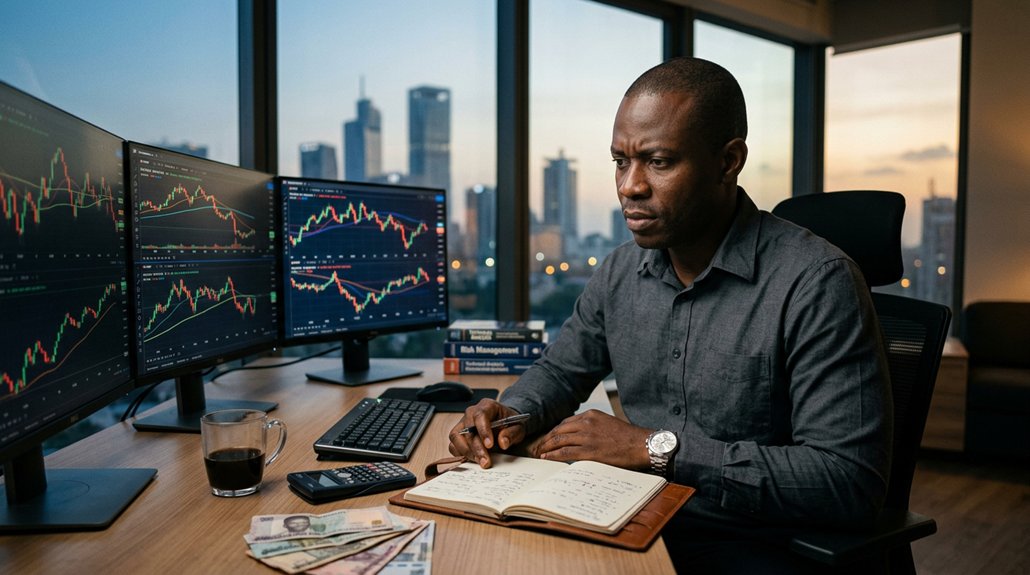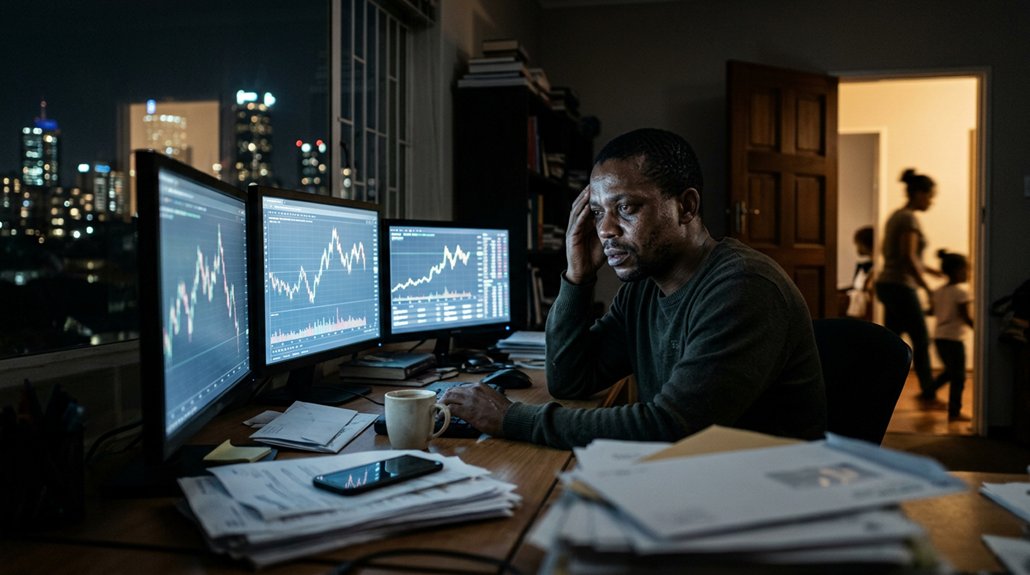

Most forex traders have a plan — until they don't. The market gets ugly, emotions kick in, and suddenly that carefully written plan is collecting dust. Fear, greed, and ego do a lot of damage. Traders make impulsive entries, bail out of trades too early, and break their own rules under pressure. After a losing streak, panic sets in. After a winning streak, overconfidence takes over. Either way, the plan suffers.
Fear and greed don't care about your plan. They just wait for the market to get ugly.
Poor risk management accelerates the collapse. Inconsistent position sizing wrecks the equity curve. Traders move their stops, remove them entirely, or tighten them after entry — which completely breaks the original trade logic. Some ignore daily loss limits until a bad day becomes an account-ending event. Overexposure in a single trade is shockingly common. One bad bet, too much capital on the line, and the damage is very real.

Then there are the expectations. Traders enter forex thinking profits come fast and easy. They don't. Normal losses and market friction feel like failures to someone expecting quick wins. Overestimating skill leads to abandoning structure and taking on more risk than planned. Unrealistic profit goals push traders toward overtrading and bloated position sizes. Expecting one strategy to win endlessly is a fantasy that collapses quickly. Many traders also fail to account for the reality that forex market volatility can rapidly erode gains that took weeks to build.
Discipline is another casualty. Trading without a clear plan produces inconsistency. After a loss, setup selection gets worse, not better. Overtrading follows emotional discomfort. Fatigue, distraction, and market noise make weak discipline even weaker. It's a cycle, and most traders don't even notice they're in it. Studies consistently show that the majority of retail traders lose money over time, reinforcing how quickly poor discipline compounds into permanent account damage.
Sometimes the plan itself is the problem. Copying another trader's system without understanding whether it fits is almost guaranteed to fail. Strategies that feel emotionally unbearable get dropped before enough data is collected. Without self-awareness, traders can't tell if the system is broken or if they're just a bad match for it. Beginners frequently overtrade in forex by entering too many positions at once, mistaking high activity for high productivity.
Finally, capital and time constraints quietly kill trading careers. Small accounts are vulnerable to margin calls. Underfunding forces excessive leverage. And part-time traders without enough time to monitor and review consistently? They're already fighting an uphill battle.