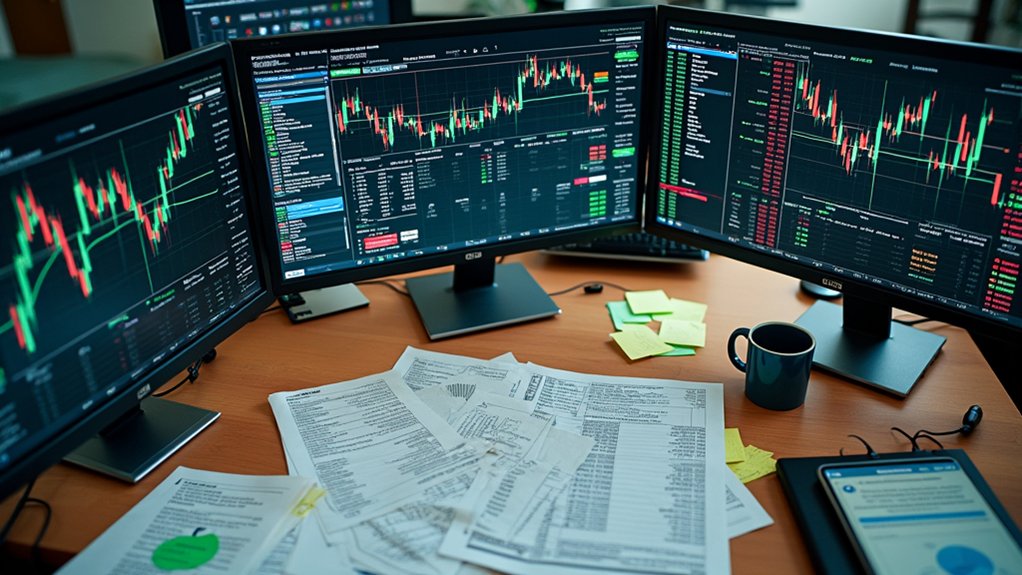

Most traders treat demo accounts like video games, clicking buy and sell without consequence, then wonder why real money trading feels like a different sport entirely. The gap between demo confidence and live performance often comes down to one thing: discipline that was never actually tested. Traders who close that gap treat their demo accounts as rehearsal for the real thing, not a playground.
The first step involves replicating actual risk parameters. Serious demo traders risk just 0.25% to 1% of account equity per trade, the same range they'd use with real capital. They set hard daily and weekly loss limits, often 2% to 4% per day and 6% to 8% per week, and they stop trading the moment those lines are crossed. Demo balances get scaled to match planned live accounts, so position sizes stay realistic instead of inflated by fantasy money.

Position sizing exercises matter just as much. Many traders start with micro-risk phases, risking only 0.10% to 0.25% per trade before scaling up gradually. Trade frequency limits, sometimes capped at two or three trades per day, help build patience instead of impulsive overtrading. Tiered risk levels get adjusted weekly based on results and rule compliance, mimicking how professional desks manage exposure.
Sample size matters too. Traders document their strategy rules before ever opening a demo ticket, then execute at least 50 to 100 trades to test expectancy properly. They stick strictly to that one strategy, resisting the urge to experiment with setups they'd never risk real money on. Afterward, they calculate win rate, payoff ratio, and drawdown from the trade log. Progression to live trading only happens after positive expectancy and roughly 90% adherence to written rules. Newcomers who want a broader foundation before running these drills often start with a beginners guide to forex trading to understand how currency pairs and the foreign exchange market actually function.
Perhaps the hardest part is psychological. Traders who succeed visualize demo funds as real income, deliberately triggering the same adrenaline they'd feel live. They journal emotional states like fear and greed during trades, and they take mandatory breaks after loss clusters to avoid revenge trading.
This kind of preparation matters for anyone eyeing volatile markets, including African currency pairs where swings can be sharp and liquidity thinner. Building real discipline before risking real capital may determine whether a trader survives long enough to see results.