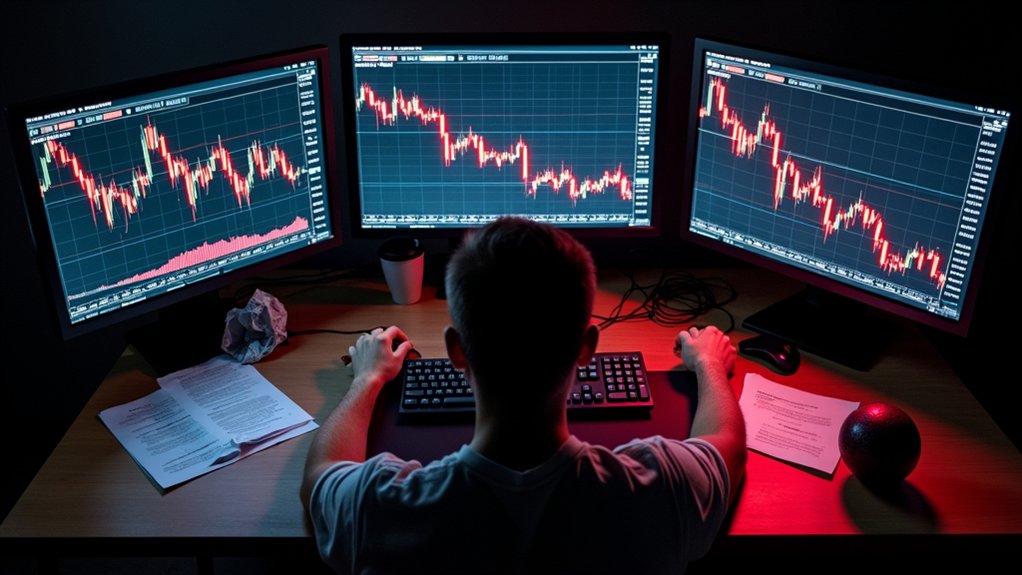

Fear is a funny thing in trading — it doesn't just make people nervous, it actively costs them money. Loss aversion means emotional pain from a losing trade hits harder than the satisfaction from an equivalent winner. That imbalance quietly warps how traders evaluate risk and reward. They move stops too early. They grab tiny profits and run. They miss solid setups entirely because their brain is already imagining the worst. Predefined stop-losses and position sizing help dial down that emotional noise, but plenty of traders skip that part.
Fear doesn't just rattle traders — it quietly picks their pockets, one distorted decision at a time.
Then there's the opposite problem. A winning streak hits, and suddenly someone thinks they've cracked the code. Overconfidence kicks in, position sizes balloon, and the trading plan gets treated like a rough suggestion. Greed layers on top — chasing extra profit beyond what the plan calls for, piling on exposure. Survivorship bias makes it worse. Traders hear success stories constantly and quietly assume they'll be one of them. The market, famously, does not care about that assumption. Maintaining a trading journal can expose these distorted thinking patterns before they spiral into significant account damage.

Impulsivity causes its own brand of damage. Trades made out of excitement or frustration rarely line up with tested rules. Revenge trading is especially brutal — after a loss, someone fires off oversized trades trying to claw the money back fast. It usually just digs the hole deeper. Without structured routines, checklists, and actual stop times, cognitive fatigue builds and discipline erodes. The mistakes compound. Consistently applying rules-based trading across all market conditions is one of the few reliable defenses against impulsive decision-making that accumulates into long-term losses.
And then there's the trader who does all this research, stacks up indicators, absorbs every piece of data — and still can't pull the trigger. Analysis paralysis. The signal was valid. The setup was there. But doubt crept in, recency bias from the last few losses amplified the hesitation, and the trade was missed. Short losing streaks send some traders system-hopping before their edge even gets a fair chance to play out. Many beginners also enter the Forex market without a tested trading strategy, leaving their decisions entirely vulnerable to whatever emotion happens to be loudest in the moment.
The uncomfortable truth is that most of these roadblocks don't feel like psychological failures. They feel like reasonable caution. Smart thinking. Good instincts. That's exactly what makes them so effective at wrecking performance.