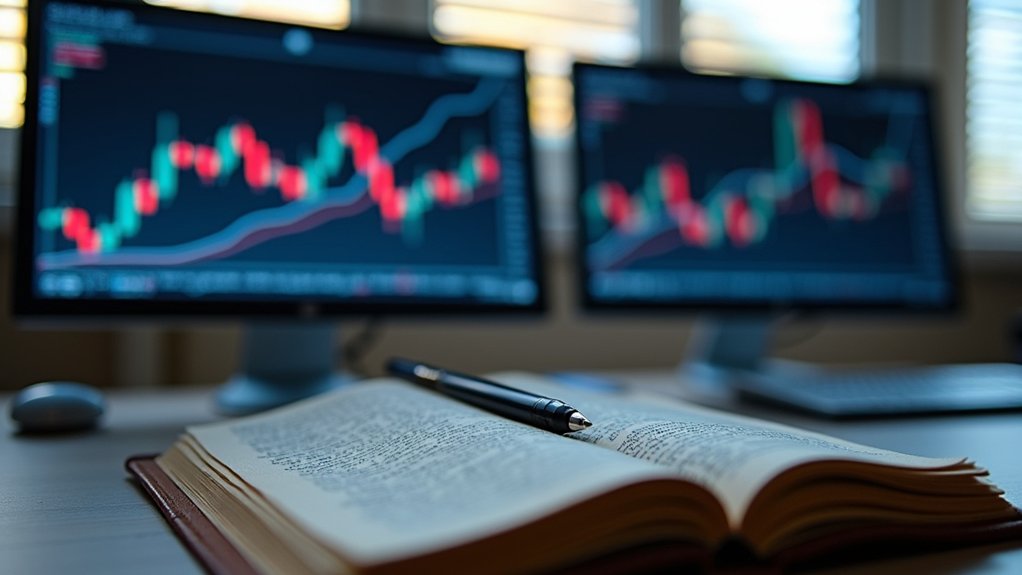

Trading intuition sounds like mystical nonsense until you understand what it actually is. It's not some magical sixth sense or fortune-telling ability. It's pattern recognition. Professional traders develop this through repeated exposure to different market conditions, combining technical and fundamental analysis with market feel that accumulates over time. Their brains recognize similar setups and notice subtle changes in price behavior that don't always show up on indicators. They can sense when trend momentum is dying before their charts confirm it.
Trading intuition isn't mystical—it's pattern recognition developed through repeated exposure to market conditions and accumulated experience over time.
This doesn't mean gut feelings are always right. Far from it.

Simply trusting gut reactions is dangerous. Trading is counterintuitive by nature, especially when market volatility triggers every natural impulse to avoid risk or loss. Visceral uncertainty during corrections tempts traders to make rash decisions that ignore sound reasoning and long-term planning. Getting drawn into momentary uncertainties often inverts the basic premise: buying low and selling high becomes selling low and buying high.
The emotional deck is stacked against traders. Behavioral finance research found that investors feel loss pain approximately two and a half times greater than equivalent gains. A 10% loss feels like 25%. A 25% loss psychologically registers as 62.5%. This myopic loss aversion causes fixation on short-term drawbacks while obliterating long-term vision.
The biggest mistake? Confusing intuition with emotion.
True intuition is calm and subtle. Emotional decisions scream through fear, frustration, or excitement. When a trade meets all the rules but still feels wrong, that might be legitimate intuition functioning as a warning sign. But emotional bias masquerading as instinct? That's just the 2.5 loss aversion multiplier talking.
Distinguishing between them requires structure. Consistent position sizing helps. Avoiding rushed decisions helps. Clear trading rules prevent emotional reactions from pretending to be intuitive signals. Implementing disciplined strategies creates a barrier between genuine pattern recognition and fear-driven impulses that masquerade as trading instincts. Building a reliable trading approach means establishing principles that can withstand the emotional turbulence inherent in currency markets. Documenting trades systematically allows traders to review past decisions and identify when genuine intuition led to success versus when emotions hijacked the process.
The goal isn't trading purely on instinct. Intuition should function as a supporting tool, a filter rather than a trigger. Every trading idea still needs confirmation against a plan and rules before execution. Pattern recognition earned through experience can improve decision-making. But emotional reactions dressed up as gut feelings? Those destroy accounts.