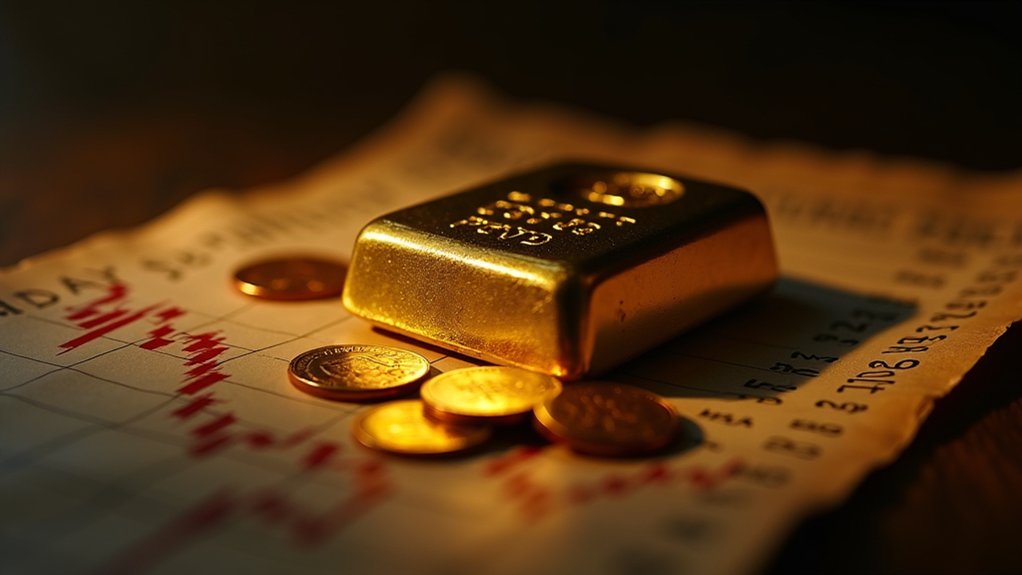

Gold just kissed $4,380—a record high that sent bulls into euphoria—and then promptly collapsed. Now it's hovering near $4,000, licking its wounds after a vicious correction that has traders wondering if the party's over or just paused for a breather.
Gold's record-shattering rally to $4,380 ended in a brutal collapse, leaving traders split between euphoria and existential dread.
The technical picture screams indecision. Support sits at $4,015, and if that cracks, the bullish case falls apart. Fast. Below that level, gold could tumble toward $3,865 or worse. On the flip side, resistance waits at $4,115, with a higher target at $4,185 if bulls can muster another charge. Medium-term moving averages have turned bearish despite the longer-term uptrend, which is fancy chart-speak for “nobody knows what happens next.”

What triggered the selloff? Profit-taking, mostly. Gold hit absurd bullish sentiment levels before the drop—unsustainable exuberance that always ends the same way. Add in improved risk appetite and a surprise rally in the US Dollar Index, and you've got a recipe for pain. The Fed cut rates recently, which should've boosted gold, but the dollar defied logic and surged anyway. If the USD Index breaks above 100, precious metals are toast.
Macro support remains solid, though. Central banks keep buying. Geopolitical chaos hasn't vanished. Real rates and global uncertainty still favor gold long-term. But short-term? It's a mess. The US government shutdown delayed economic data, adding confusion. The Trump-Xi meeting went nowhere, reducing safe-haven flows temporarily. Central bank policy changes can shift currency values dramatically, creating unexpected headwinds even when rate cuts should theoretically support precious metals.
Miners are flashing warning signs, replicating patterns seen before bigger declines. Volatility is spiking. Positioning in futures markets suggests tactical trading dominates—everyone's jumpy. When central banks conduct foreign exchange interventions, they can amplify or dampen currency moves that directly impact gold's dollar-denominated price.
So what's the verdict? Short-term looks dicey. Hold $4,015 and maybe gold rallies back toward $4,115 or beyond. Break it and sub-$3,865 becomes likely. Long-term fundamentals still support higher prices—central bank demand, geopolitical risk, dovish Fed expectations—but the dollar's strength is a serious threat right now.
The Fed's December meeting could be pivotal. Understanding how interest rate decisions influence currency strength helps explain why the dollar rallied despite rate cuts, creating headwinds for gold. Until then, gold's stuck in purgatory. Bull run or bull trap? The next few weeks will tell.