
Fear doesn't just rattle nerves in the forex market — it quietly drains accounts. Researchers studying trading behavior have found that emotional reactions, especially fear, correlate directly with weaker performance. Psychological factors like fear, anxiety, and stress reportedly account for roughly 60% of trading success, making emotional control a core skill rather than a minor detail.
Fear doesn't just rattle nerves — it quietly drains accounts, with psychology accounting for roughly 60% of trading success.
The numbers tell a sobering story. Surveys of active traders show severe stress in about 8-9% of participants and extremely severe anxiety in around 12-13%. That's not just personal discomfort. It's a measurable drag on decision-making quality, one that shows up in trading accounts over time.

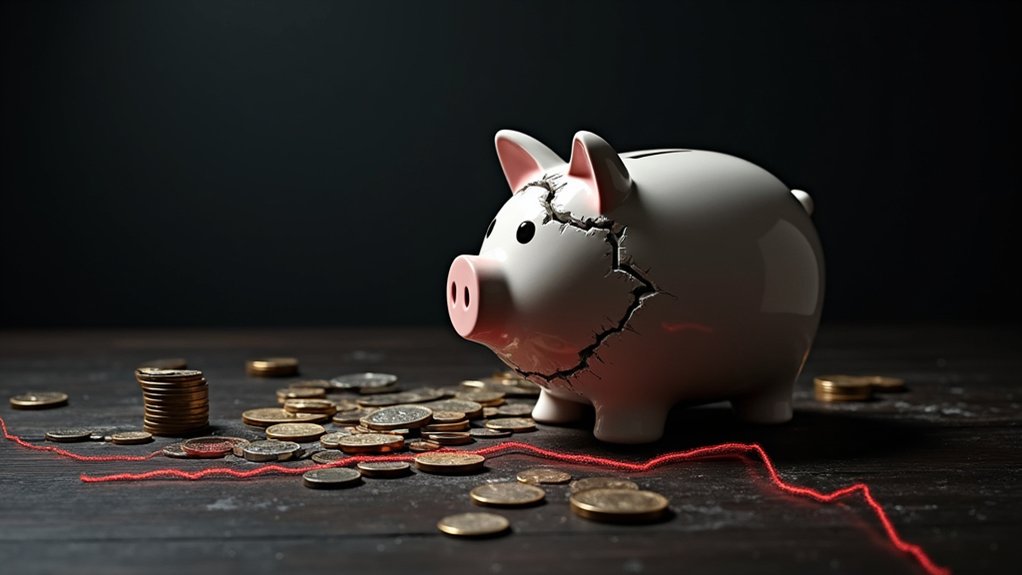
Fear rarely causes losses on its own. Instead, it triggers behaviors that slowly erode profits. Traders hesitate before entering good setups. They exit winning trades too early, worried about a reversal. They widen stop losses to avoid getting stopped out, turning small planned losses into bigger ones. Each habit chips away at returns, creating what analysts call a “slow bleed” in profit and loss.
This bleed matters because it's often invisible day to day. A trader might not notice missed gains from a skipped setup or a slightly smaller win from an early exit. But add these up over weeks and months, and the cost becomes significant. Data shows unpleasant emotional states have a strong negative link to daily trading performance, suggesting this isn't random bad luck. It's a systematic pattern.
Fear also breaks trading plans. Traders may abandon their rules entirely, panic selling or holding losing trades too long based on emotion instead of strategy. After a losing streak, fear can cause under-trading, where traders sit out good opportunities and never let their edge play out over enough trades to matter statistically. Successful traders, by contrast, tend to display strong emotional discipline, treating every trade as one data point in a larger statistical process rather than a personal test of worth.
For African forex traders steering through volatile currencies like the naira, cedi, or rand, these lessons carry extra weight. Currency swings driven by central bank decisions or commodity price shifts can trigger fear-based reactions just as easily as major pairs do.
The takeaway from this research is straightforward: fear isn't a trading signal. It's a cost. And like any cost, disciplined traders can learn to measure it, manage it, and reduce its impact through data and rules rather than raw emotion.