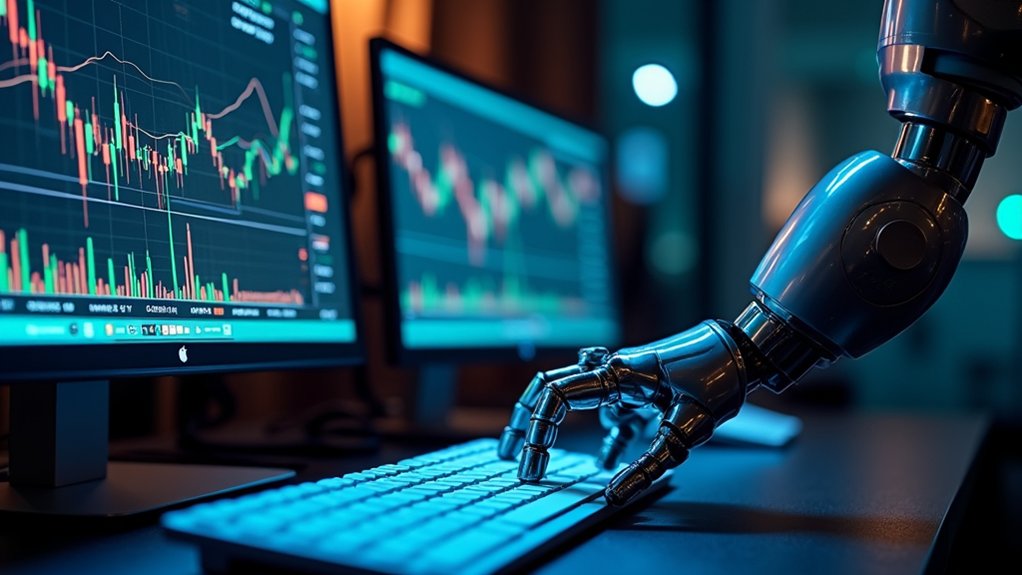

In the high-stakes world of currency trading, discipline separates winners from losers—and automated forex tools have become the great equalizer. The unpopular truth? Robots are crushing it while human emotions are getting wrecked. Automated systems now account for over 70% of forex trading volume, and here's the kicker: 88% of profitable traders use robots. Not a coincidence.
MetaTrader 4 dominates the landscape with 85% of forex traders using it. MT5 offers Python compatibility but somehow remains less popular than its predecessor. Meanwhile, cTrader captures just 5% of traders, and NinjaTrader brings NinjaScript (basically C#) for those who want customizable algorithms. TradingView throws social trading into the mix with over 50 million peers swapping strategies.

The numbers don't lie. The algorithmic trading software market is jumping from $2.74 billion in 2025 to $3 million in 2026. The forex platform market? Projected to hit $22.62 billion by 2032 at an 8.86% CAGR. Money follows results, and results follow automation.
Brokers are racing to offer execution speeds that would make your head spin. Axi delivers execution under 30 milliseconds with raw spreads from 0.0 pips. ActivTrades processes 100,000 orders per second under 0.004 seconds. Pepperstone throws in Autochartist and API trading. FXCM supports TradingView plus 100+ indicators. Professional traders increasingly rely on FIX API connections to establish direct, high-speed links between their automated systems and liquidity providers.
The tools traders actually use tell another story. A staggering 94% rely on pip calculators. Economic calendars get 82% approval. Financial newswires? 78%. Even timezone converters hit 74% approval. These aren't sexy features, but they work.
Trend following strategies use moving average crossovers and ADX above 25. Mean reversion suits conservative traders targeting 5-15% drawdown. Major pairs like EUR/USD offer the tightest spreads for execution. Risk engines calculate position sizes and set stop-losses automatically—no emotional override button. These predefined strategies eliminate the guesswork by executing trades when specific market conditions are met.
Here's where discipline actually matters: monitoring. High-frequency strategies need daily checks and weekly optimization. Swing algorithms require weekly reviews. Track 100+ trades for real performance metrics. Diversify across uncorrelated strategies to reduce drawdowns. The robots don't care about your feelings. Understanding platform capabilities helps traders select the right tools for their specific algorithmic trading needs.