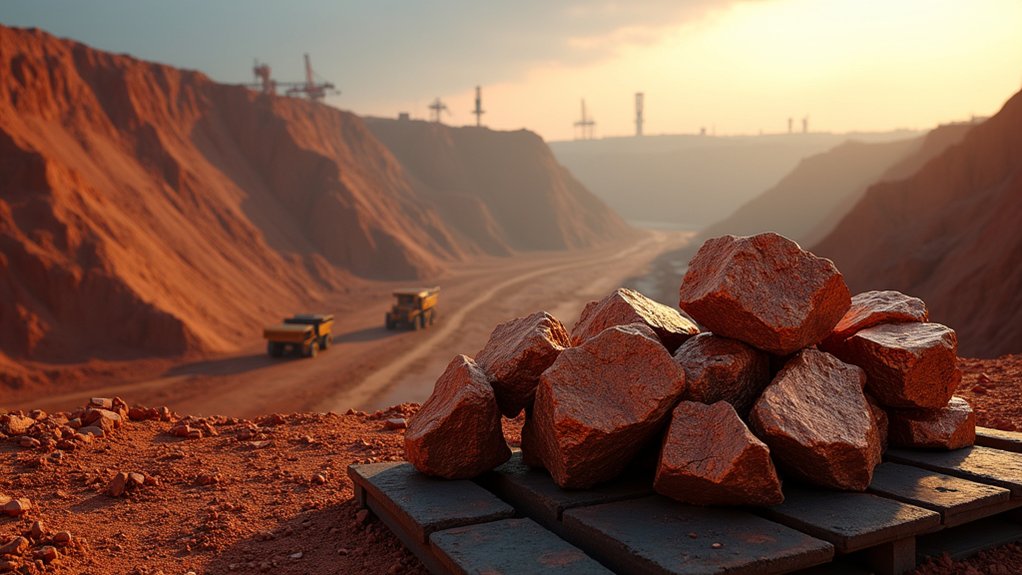

Copper prices have surged past $13,000 per metric ton in early 2026, hitting record highs as fears of shortages grip the global market. Analysts at Commerzbank say the rally is being driven by supply concerns rather than a sudden jump in demand. Tight physical supply, tariff uncertainty, and stockpiling in major markets have all combined to push prices higher. Some notes describe copper as range-bound in the near term, but the bank still holds a constructive medium-term view, expecting the market to keep tightening.
Copper's rally is about supply fears, not surging demand—prices near-term may range, but tightening looms medium-term.
Demand hasn't disappeared from the picture. Electrification, grid investment, and energy-transition spending continue to support copper use worldwide. Commerzbank points to technological and energy policy shifts as key long-term demand drivers, alongside infrastructure buildout and industrial needs. U.S. tariff uncertainty has also pushed buyers to front-load purchases, adding short-term demand. Strategic stockpiling in China and the U.S. has made demand look even stronger than it might otherwise be.

The bigger worry, though, is on the supply side. Commerzbank calls mine supply the “weak link” in the global copper chain. Mine growth in 2026 could be as low as 0.5% to 1%, held back by low ore grades, disruptions, and delayed projects. The International Copper Study Group projects 1.6% growth, but Commerzbank warns the risks around that number are significant. Chile and Indonesia stand out as potential trouble spots. Grasberg, one of the world's biggest mines, is reportedly running at just 40% to 50% of capacity.
Smelters are feeling the squeeze too. Weak margins raise the risk of production cuts, and tight concentrate supplies are making things worse. China could see changes to refined production if margins don't improve. Any drop in smelter output could tighten finished copper supply even further.
Inventories are adding to the tension. LME stocks are vulnerable to more depletion as delivery requests rise, partly due to tariff-related arbitrage shifting metal toward Comex. With visible stocks already low, any disruption could send prices swinging sharply. For African economies tied to copper exports, like Zambia and the Democratic Republic of Congo, sustained high prices could boost export earnings and support local currencies, even as global supply risks keep markets on edge. As with other resource-driven currencies, copper's price swings highlight how developments in emerging markets can ripple through global currency exchange rates and investment flows.