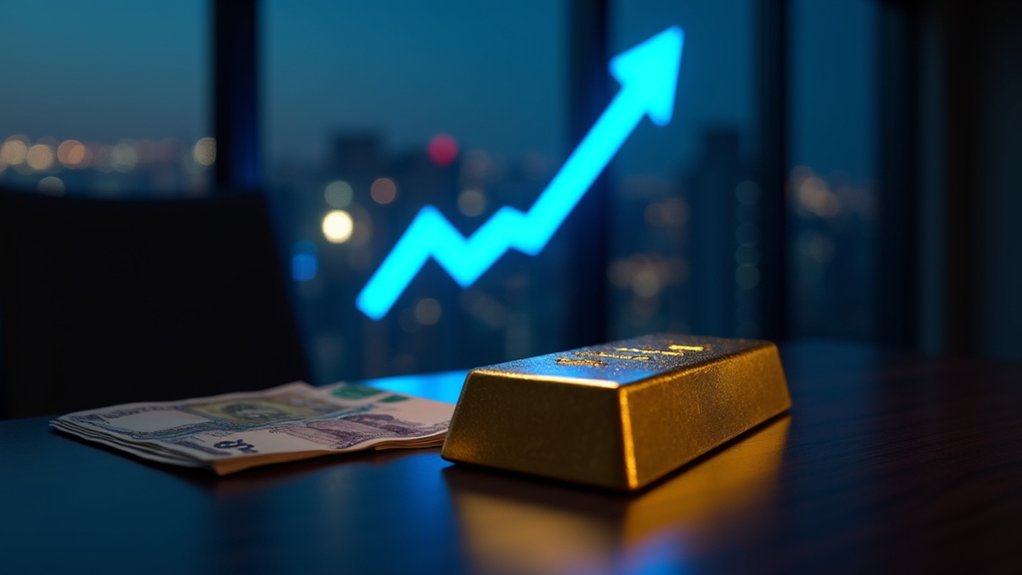

Gold and U.S. Treasury yields continue to move in opposite directions, and the latest climb in real interest rates is testing bullion's appeal. Research shows a strong inverse link between long-term real yields and gold prices. When yields rise, gold often falls—it's a pattern that's held up for decades.
When real yields climb, gold tends to fall—an inverse relationship that has held firm for decades.
The numbers tell the story clearly. A one-percentage-point increase in the 10-year real Treasury rate can lower real gold prices by about 13.1%. That's a significant hit for an asset that many investors treat as a safe store of value. The reason comes down to opportunity cost. Gold doesn't pay interest or dividends. When Treasury bonds offer better returns, investors have less reason to hold non-yielding bullion.

This shift shows up in short-term trading, too. Both rising and falling real rates tend to pressure gold, and the effects can linger for weeks. Traders watching for Federal Reserve rate hikes often sell gold ahead of expected policy moves, betting that higher rates elsewhere will make bonds more attractive. Even when other factors—like a weaker dollar or geopolitical tension—might normally lift gold, rising yields have repeatedly capped its rallies.
But it's not just about nominal rates. Real, inflation-adjusted yields matter more. If inflation expectations rise alongside nominal rates, the real rate might stay flat or even fall, which can ease pressure on gold. From 2000 to 2022, gold and 10-year real yields showed a correlation of roughly -0.75, reinforcing how central this relationship is to bullion's price direction. Traders also track inflation data releases closely, since these figures help shape expectations about future Fed policy and, in turn, real yield movements.
For African markets, this dynamic carries weight. Countries with gold exports, such as Ghana and South Africa, watch these trends closely, since falling gold prices can affect export revenue and currency stability. A weaker rand or cedi tied to softer gold prices could ripple through import costs and inflation on the continent.
Looking ahead, markets will watch Fed policy signals and inflation data closely. If real yields keep climbing, gold could face more headwinds. But if inflation expectations rise faster than rates, bullion might find its footing again. The relationship between yields and gold remains one of the market's most closely tracked signals.