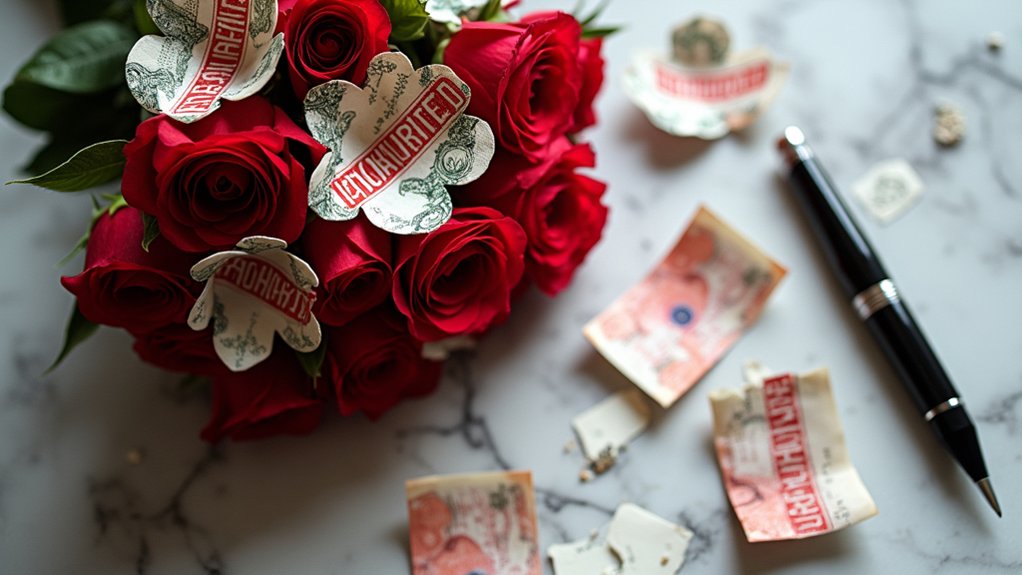

In a move that's putting a serious damper on Valentine's Day plans, the National Bank of Rwanda just slapped down a hard ban on cash bouquets. No more folding, pinning, gluing, or taping banknotes into romantic displays. The central bank declared it currency defacement, a criminal offense that could land violators in jail.
Rwanda's central bank criminalized cash bouquets as currency defacement, threatening jail time for anyone folding banknotes into romantic Valentine's Day displays.
Lovers, florists, and event planners are the main targets here. Anyone caught turning Rwandan Francs into decorative arrangements faces fines and potential imprisonment under the penal code. The bank isn't messing around—they're calling it willful mutilation of national currency.

The reasoning is actually pretty straightforward. Damaged notes can't process through sorting machines or ATMs. They get pulled from circulation early, forcing the government to print costly replacements. We're talking billions in taxpayer funds just to replace banknotes that got hot-glued into flower shapes. It undermines the currency's integrity and tanks public confidence in the money system.
Rwanda isn't alone in this crackdown. The Central Bank of Kenya issued an identical directive the same week. Uganda's Bank of Uganda followed suit. Five African countries total—including Nigeria and Ghana—are now waging war against Valentine's cash displays. This is clearly a coordinated regional effort, intensified specifically ahead of the February 14 demand spike. Similar to how the Bank of Ghana uses monetary policy tools to manage economic stability, these central banks are exercising their regulatory authority to protect currency circulation.
The whole cash bouquet trend exploded thanks to TikTok and Instagram influencers. Crisp bills arranged as flowers, towers, even cakes became status symbols across East Africa. Weddings, birthdays, Valentine's Day—viral posts made it the lavish gift to give.
The banks are suggesting alternatives. Roses, chocolates, diamonds if you're feeling fancy. Bank transfers work just fine. Gift cards, vouchers, regular envelopes—anything that keeps currency in normal condition. Just don't attach money to actual flowers. These institutions play a critical role in maintaining economic stability through various interventions in financial markets.
The message from Rwanda's central bank is crystal clear: romance is great, but mess with the national currency and face legal consequences. They're applying the full force of law to anyone caught. These enforcement actions reflect broader regulatory standards that central banks use to maintain currency integrity and control financial activities within their jurisdictions. So unless jail time sounds romantic, maybe stick with traditional roses this Valentine's Day.