
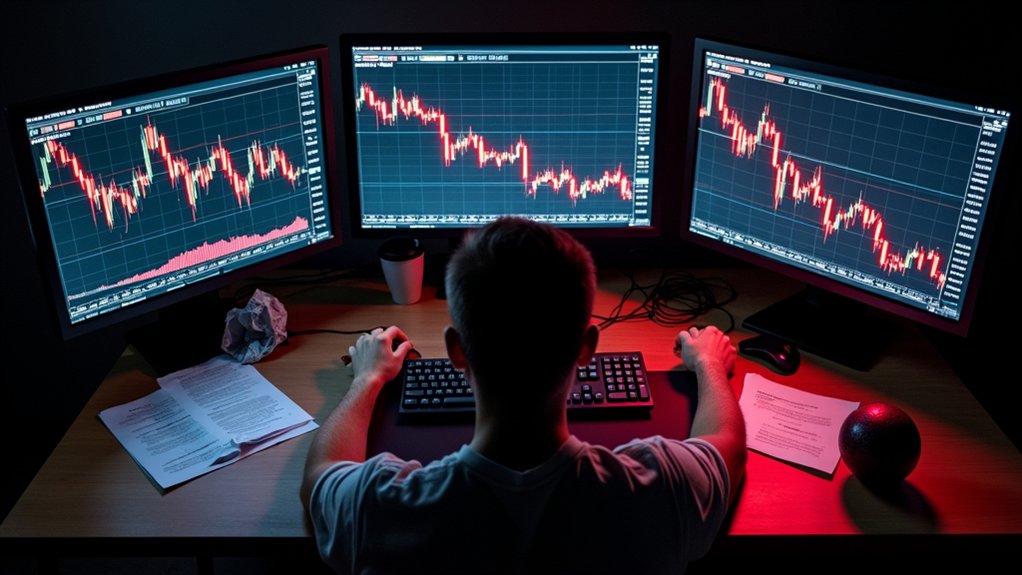
Chasing losses never ends well, but traders do it anyway. Revenge trading happens when someone enters new positions primarily to recover previous losses rather than following any defined strategy. It's not about analysis. It's about emotion. The motivation stems from feeling terrible about losing money and desperately wanting that feeling to go away.
Revenge trading replaces strategy with desperation, chasing emotional relief instead of rational profit through impulsive position entries.
The pattern looks predictable. Traders increase position size after a loss. They enter without clear setups. They jump back in immediately, often doubling down. If the revenge trade loses, the drawdown gets deeper. If it wins, something worse happens—a false belief that emotional trading actually works.

Frustration replaces discipline, even in experienced traders. That urge to “win it back” feels overwhelming, shifting the entire goal from making good trades to restoring emotional balance. Extended sessions drain mental energy. Anger makes traders feel cheated by the market. Strong emotions plus leverage equals depleted capital, fast.
Breaking the cycle requires stepping back temporarily. Implement a mandatory cooldown period—thirty minutes, maybe a full day. Walk away from the screen. Make tea. Meditate. Do literally anything else. Physical distance lowers cortisol and restores logical thinking. Some traders use a two-strike rule: two consecutive losses means done for the day.
After cooling down, analysis helps. Document the losing trades, including what triggered them, where the analysis went wrong, how execution failed. A mistake journal works better when it logs emotions like anger alongside outcomes. What feedback did the loss provide? What should the next trade look like?
Risk management needs to become habitual, not optional. Set predefined daily or weekly loss limits and actually stop when hitting them. Establish a five-minute mandatory break after each losing trade. Predetermine position sizes before opening anything. Never double after losses. Poor risk management is one of the primary reasons most forex traders fail, alongside unrealistic expectations and inadequate education.
Long-term prevention requires routine. Solid trading schedules include set times for trading, analysis, breaks. Check emotional state before starting. Stressed or exhausted? Don't trade. Keep a regular journal to identify emotional patterns before they escalate. Join a trading community for accountability. Reframe the market as a partner providing opportunities, not some adversary that needs punishment. Understanding the inherent volatility of currency markets helps traders maintain realistic expectations about both wins and losses. Successful capital preservation depends on treating your trading account as a business asset that requires consistent protection and strategic allocation.