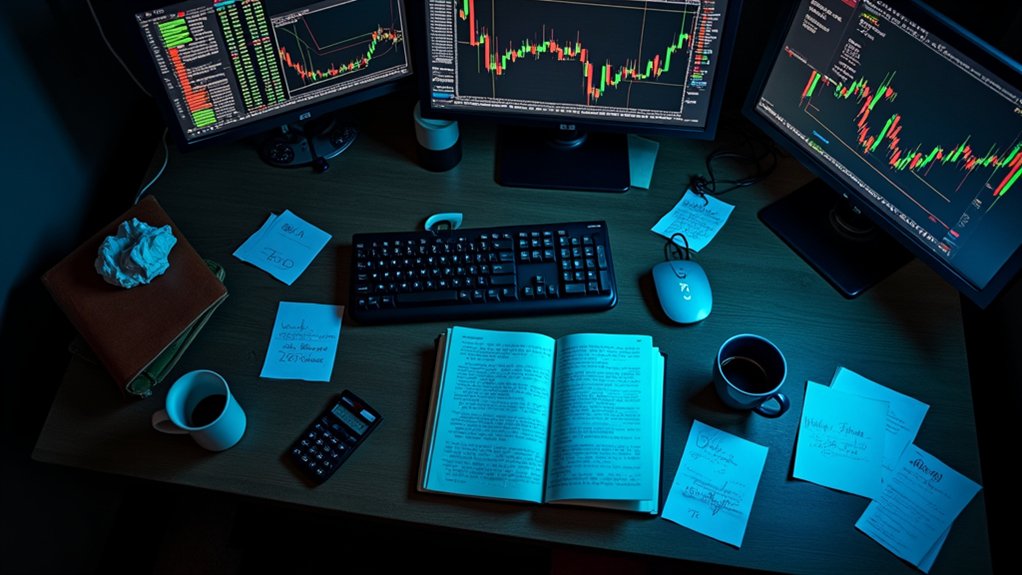

Trading Realities
Most people who open a trading account blow it up. The statistics are brutal: 80–90% of retail traders lose money within the first months or years. That's not a maybe. That's documented, verifiable data from brokerages and industry reports.
80–90% of retail traders lose money within months. That's not opinion—that's documented, verifiable data from brokerages.
Here's what most overlook. Trading isn't about being right on every single trade. Even profitable traders win only 40–60% of the time. Profitability comes from risk–reward ratios, not prediction accuracy. Without a repeatable edge—actual positive expected value—results devolve into random-walk outcomes minus transaction costs. Which means losing money, slowly or quickly.

Yet new traders obsess over “secret strategies” and magic indicators instead of defining, testing, and validating an edge with objective data. They skip the boring work. The journaling. The post-trade analysis. The years of deliberate practice required to reach professional-level performance. They treat trading like a hobby or a gamble, not a skilled profession demanding research, testing, and constant refinement.
Risk management separates survivors from statistics. Single-trade risk above 3–5% of account equity dramatically increases probability of ruin, even with a profitable strategy. All-in positions or heavy leverage can wipe out an account in one move. Doesn't matter how many winners came before. Consistent stop-losses and position sizing formulas are non-negotiable. Professional traders set maximum daily or weekly loss limits to avoid emotional revenge trading and compounding disasters. Even successful forex professionals see monthly income vary substantially based on market conditions, trade opportunities, and risk parameters.
And emotions? Studies show over 70% of trading errors stem from fear, greed, and FOMO—not lack of technical knowledge. Traders hold losing positions too long because of loss aversion, cut winners too early, and chase entries after news shocks or social media hype. Discipline and psychological resilience matter more than indicator complexity. That's not motivational fluff. That's observed reality from trading desks. Many traders enter the market with unrealistic expectations of quick wealth, failing to recognize that consistent profitability requires years of education, practice, and psychological development.
Intraday trading demands extended screen time, rapid decisions, and constant adaptation. The cognitive load is relentless. Success requires self-awareness, emotional control, and treating the process like work. The currency markets operate 24 hours across global time zones, creating opportunities but also demanding constant vigilance and strategic timing. Most underestimate the effort. Most skip the unsexy fundamentals. And most blow up their accounts right on schedule.