
A forex trading journal tracks every trade's essential data—date, instrument, direction, entry, exit, position size, and outcome—while capturing the technical setup through screenshots and documenting the trader's emotional state and strategic rationale. Recording this information after each trade creates a database that exposes patterns in both winning setups and recurring mistakes. Weekly reviews compare actual decisions against the original plan, revealing whether fear or overconfidence hijacked execution. The accumulated records become a personal accountability system that transforms gut feelings into measurable performance data worth analyzing further.
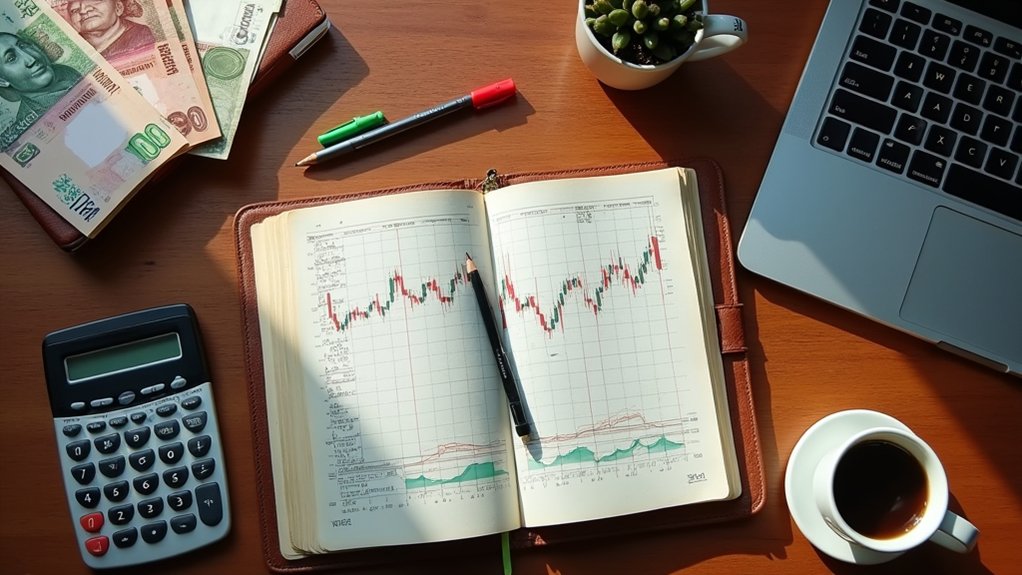
Keeping a Forex Trading Journal
Trading without a journal is like driving across the Sahel with no map and wondering why you keep getting lost. A Forex trading journal is a thorough record-keeping tool that tracks trading activity, strategies, and emotions systematically. It's not optional for anyone serious about surviving African markets where volatility swings harder than a Lagos thunderstorm and currency pairs like USD/NGN or USD/ZAR move with their own stubborn logic.

The journal enables structured self-reflection and objective assessment of trading decisions. It serves as a reference for performance evaluation and strategic justification. Every trade gets documented. Date, instrument, direction, entry, exit, position size, stop loss, take profit, result. The basics. Then comes the vital part: the rationale behind each trade and the emotional state during execution. Screenshot the chart setup. Capture the context. Was there breaking news from the Central Bank of Kenya? Did South Africa's rand suddenly spike on political rumors? Write it down.
This detailed record reveals patterns and trends in profitability and loss. Traders can identify their strengths and weaknesses through systematic review. Maybe every trade on EUR/EGP during Cairo's trading hours loses money. Maybe emotional decisions after three consecutive losses always end badly. The journal shows this. It compares actual decisions versus initial trading plans and assesses which market conditions and setups yield the best results. Understanding realistic income expectations helps traders set achievable goals and evaluate whether their monthly performance aligns with professional standards.
The psychological component matters intensely. The journal documents emotions and uncovers links between emotional responses and outcomes. Fear. Greed. Overconfidence. These psychological triggers get monitored and analyzed over time. This reduces impulsive or emotionally-driven decisions and promotes rational trade execution. A Nigerian trader who revenge-trades after a loss will see that pattern staring back from the pages. Understanding psychological factors that influence trading decisions helps traders maintain discipline even when the market tests their resolve.
Risk management tracking is equally critical. The journal records personal risk management rules and their execution in live trades. It identifies recurring errors like overexposure or poor stop-loss placement. It quantifies risk-reward ratios to highlight patterns in money management and reduces the frequency of costly mistakes through pattern recognition and corrective action. Proper capital management ensures that no single trade or series of losses can devastate the trading account. Traders should consider whether they truly understand CFDs and their risks before incorporating these complex instruments into their documented trading strategies.
The journal acts as a personal accountability partner. It highlights deviations from the trading plan and provides a record for honest self-evaluation regarding discipline and consistency. It reinforces commitment to trading rules and enables benchmarking present performance against historical trades. A well-maintained journal supports the development of a reliable trading approach that can adapt and improve with accumulated experience. Weekly reviews allow traders to spot mistakes faster and adapt before issues compound into larger problems. Consistency in journaling matters. Updates should happen after every trade to make certain accurate details get recorded. Both qualitative notes and quantitative statistics belong in there. No excuses.
Common Questions
Can I Keep My Trading Journal in Local Currency Instead of USD?
Yes, African traders can absolutely keep their journals in local currency—Naira, Rand, Cedi, Shilling, whatever.
The point is tracking performance, not appeasing the dollar. Recording in familiar currency helps avoid conversion headaches and keeps things simple. Nigerian traders use Naira. South Africans use Rand. Kenyan traders stick with Shillings.
The journal's purpose is analyzing patterns and improving strategy, not currency posturing. Local currency works fine. Dollar amounts aren't mandatory for effective record-keeping.
Which Free Journaling Apps Work Well With Limited Internet Connectivity in Africa?
TradeBench works completely free with offline capabilities—no subscription trap.
Trading Journal Book App (50K+ downloads on Google Play) lets traders save data in clicks and filter without constant connectivity.
Edgewonk handles Excel uploads offline, then sync later.
FX Journal tracks trades with manual entry when internet drops.
TraderSync's mobile app manages trades offline too.
The reality? Most African traders need manual entry options because broker auto-sync assumes reliable internet—which isn't everyone's daily experience across the continent.
How Do I Record Trades When My Broker's Platform Goes Offline Frequently?
When brokers go dark—and they do in Africa—traders grab whatever works.
A basic spreadsheet does the job.
Some use TradesViz or similar tools that sync later when connection returns.
Physical notebooks sit ready for the worst outages.
Mobile apps that work offline save the day during power cuts or data failures.
The trick? Having multiple backup methods running simultaneously.
Nigerian and Kenyan traders learned this fast after repeated platform crashes.
No automation means manual hustle, always.
Should I Note Mobile Money Deposit Delays in My Trading Journal Entries?
Yes, absolutely. Mobile money deposit delays directly impact when a trader can execute positions—especially brutal during high-volatility sessions on pairs like USD/ZAR or NGN crosses.
Recording these lags creates a paper trail showing how M-Pesa, MTN Mobile Money, or Airtel Money hiccups cost real opportunities. It separates broker problems from payment rail issues.
Over time, patterns emerge. Maybe one provider consistently drags. That data becomes gold when evaluating whether to switch brokers or funding methods across markets like Nairobi or Lagos.
Do Successful Nigerian or South African Traders Share Their Journal Templates Publicly?
Most successful Nigerian and South African traders don't publicly share their actual journal templates. Bit of a letdown, honestly.
What circulates in WhatsApp groups and Telegram channels are usually generic spreadsheets borrowed from global sites like BabyPips—nothing locally famous. Some trading educators bundle basic templates with paid courses, but truly personalized systems from proven local traders? Rare as hen's teeth.
Closed communities occasionally swap customized Excel sheets, though public attribution remains practically nonexistent across the region.