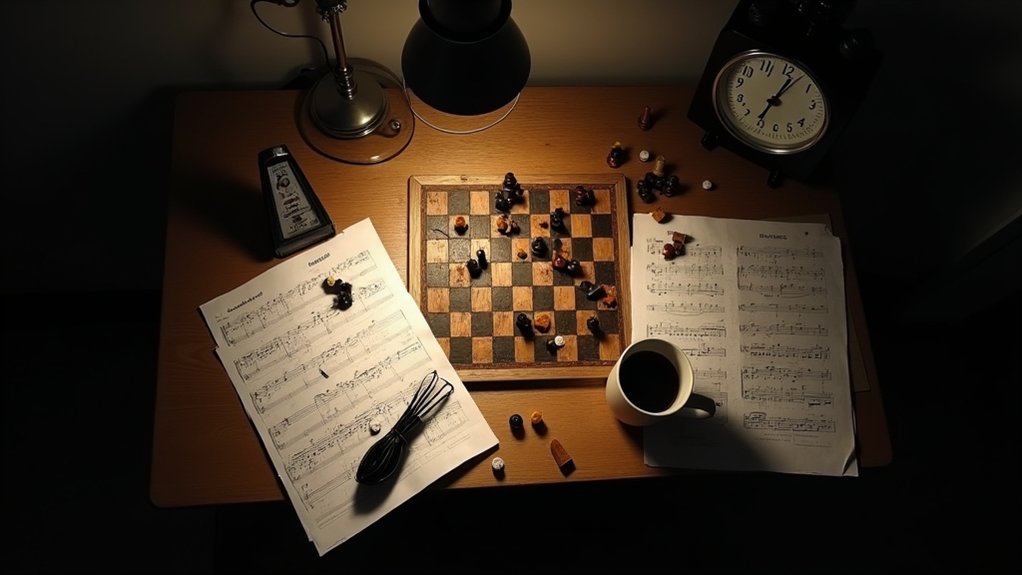

In the world of self-improvement, deliberate practice has been sold as the great equalizer—work hard enough, put in your 10,000 hours, and you too can become a master. Except that's not quite how it works. The reality is messier, harder, and frankly more depressing than motivational speakers want you to believe.
Ericsson's research on deliberate practice gets credit for explaining most expert performance. But here's the problem: Gobet and Campitelli's 2007 chess study found four participants who logged over 10,000 hours of deliberate practice and still remained intermediate players. They never reached expert level despite all that effort. Talent isn't completely overrated after all. Not everyone achieves mastery through hard work alone, no matter how egalitarian that sounds.

Hard work doesn't guarantee mastery—some chess players practiced 10,000 hours and still never reached expert level.
The framework only works in fields with established training methods—music, chess, math. These domains have decades-developed rigorous techniques. Most career skills don't have “highly-developed, broadly accepted training methods,” which makes pure deliberate practice impossible. People end up discovering mental models and creating custom training methods in uncharted territory. That's purposeful practice, not the real thing.
Real deliberate practice demands expert teachers providing constant, frequent, rapid feedback. Without feedback, repetition yields no improvement. Performance must be carefully monitored. Teachers need to pass on proven practice methods. Good luck finding that in most fields. Even professional forex traders face similar challenges understanding realistic income expectations despite years of market experience.
Then there's the unpleasant truth nobody mentions enough: this stuff hurts. Focused, maximal effort practice feels terribly painful. It's highly demanding mentally, whether intellectual or physical. Not inherently enjoyable. Motivational barriers cause systems to sputter and fail because of short-term mental resistance. Playing familiar pieces or working on standard projects doesn't count as deliberate practice. Psychological factors like emotional discipline and patience prove critical to sustaining any practice regimen over time. Success requires behavioral patterns that distinguish those who persist through discomfort from those who abandon their training when difficulty increases.
The framework also doesn't apply to innovation. It develops skills others already mastered with established techniques. The greatest insights in science and medicine came from interdisciplinary dabblers, not 10,000-hour grinders. Nobel laureates emerged from broad exploration, not narrow deliberate practice.
Gladwell's Outliers popularized the unnuanced 10,000-hour claim, and now much “deliberate practice” gets misapplied. New research questions whether the deliberate practice view remains fully defensible for all expertise. Mere repetition without structure, goals, or feedback fails to build mastery. The framework isn't a magic bullet.