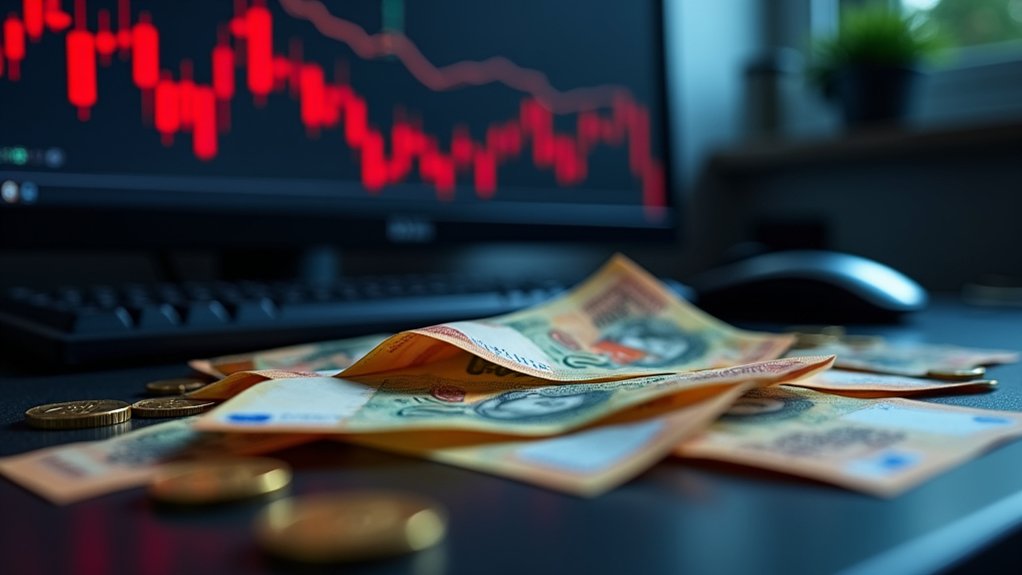

The South African rand is sliding again. Thursday saw the currency tumble as a firmer US dollar and spiking oil prices hammered market sentiment. Investors did what they always do when nerves kick in—they ran to the dollar. Riskier assets like the rand got left behind.
When investor nerves spike, the playbook never changes—flee to dollars, abandon riskier bets like the rand.
The oil price jump didn't help. Rising crude acts like a tax on South Africa, a net oil importer. It strains household budgets, jacks up costs for retailers and transport companies, and squeezes manufacturers already dealing with weak demand. Just what the economy needed.

Oil volatility also messes with rate expectations. Higher energy costs mean inflation worries, which means interest rate cuts become less likely. The rand, meanwhile, keeps bleeding value as investors brace for US inflation data that could strengthen the dollar even more.
This isn't new territory for the rand. The currency has seen some wild swings since its 1961 introduction, when it replaced the South African pound at two rand to one pound. Back then, it was worth US$1.40. The dollar didn't overtake the rand until March 1982. Different times.
Fast forward through decades of volatility. The 2014 Fed stimulus trim sent it to R11.25 per dollar. Brexit in 2016 triggered the largest single-day decline since 2008, an over 8% drop. Zuma's no-confidence vote survival in August 2017 knocked it down 1.7% in a single day. October 2022 brought a two-year low of R18.46 per dollar.
Recent years showed some stability. The rand held relatively steady against the dollar since 2016 and even appreciated in 2024. Low inflation compared to other African currencies helped. The rand never suffered the extreme devaluation seen elsewhere on the continent. It's subdivided into 100 cents, with the sign R and code ZAR.
But global forces always intrude. High US bond yields and dollar strength currently overshadow local indicators. South African stocks slid alongside the currency Thursday. The South African Reserve Bank monitors these developments closely while managing its monetary policy mandate. The rand's fate remains tied to dollar weakness and global uncertainties. As a popular emerging market currency, the rand continues to attract forex traders despite its volatility. The FSCA oversees forex brokers operating in South Africa to ensure market integrity and protect traders navigating this volatility. Emerging markets get whipsawed when developed economies sneeze. Same story, different day.