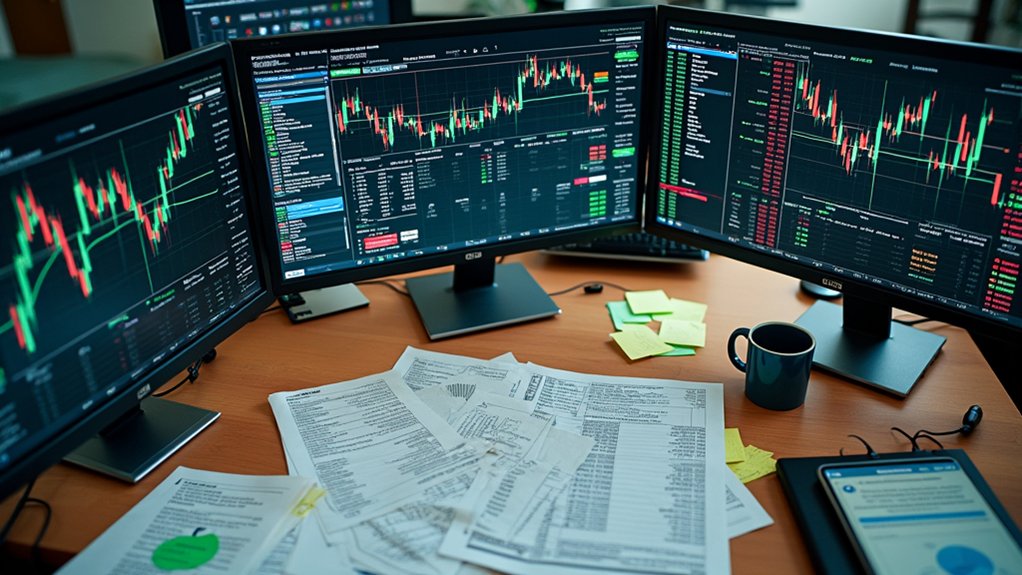

Information overload hits differently depending on who you ask. Twenty percent of Americans claim they're drowning in data, though that's actually down from 27% a decade ago. Meanwhile, 77% enjoy having endless information at their fingertips. The contradiction is almost comical until you realize that 80% of respondents now report experiencing overload, up from just 60% in 2020. Welcome to the digital age, where everyone loves information until they actually have to deal with it.
The numbers get worse when you zoom in on work. Knowledge workers burn 2.5 hours daily, roughly 30% of their workday, just hunting for information. Engineers have seen their search time spike 13% since 2002. Workers average eight separate searches per document. That's not productivity. That's chaos with a spreadsheet.

Information overload happens when the volume of data exceeds someone's processing capacity, creating an inverted U-shaped performance curve. More information helps until it doesn't. Beyond that ideal threshold, decision-makers default to habit, delay everything, or simply screw up from cognitive fatigue. Prolonged exposure triggers stress, confusion, and legitimate psychological problems. The causes span characteristics of the person, the information itself, tasks, processes, organizational structure, and technology. Digitalization keeps making it worse.
The Pareto Principle offers one escape route. The 80/20 rule suggests 20% of information delivers 80% of the impact. Focus on key indicators. Ignore the noise. Cognitive offloading helps too, using external tools and threat intelligence platforms to filter risks rather than relying on exhausted brains. Decision-support dashboards surface what matters. Automated playbooks handle routine responses. Forex traders illustrate this challenge perfectly, monitoring scheduled economic indicators that trigger rapid currency movements while filtering out irrelevant noise. Traders face similar challenges when tracking scheduled economic events across multiple markets and time zones, requiring systematic approaches to filter relevant data releases from the noise. Currency markets especially demand this discipline, as trading session timing affects both volatility patterns and the volume of incoming price data across the 24-hour cycle.
Chunking breaks information into digestible units, improving retention through reduced cognitive load. Bite-sized reports beat lengthy documents every time. Hick's Law backs this up: fewer choices accelerate decisions. Frameworks like the OODA Loop (Observe, Orient, Decide, Act) keep teams moving quickly. The goal shifts from consuming everything to managing key variables. Building an adaptability culture matters more than hoarding data. Sometimes the smartest move is a deliberate pause to recalibrate priorities. Information overload isn't about lacking data. It's about drowning in it.