
In the hours before bombs fall and pipelines rupture, markets are already moving. That's the uncomfortable truth about geopolitical shocks. Investors don't wait for confirmed supply disruptions or body counts. They price in worst-case scenarios immediately, front-running the headlines everyone else will read tomorrow.
Markets don't wait for confirmation—they price in catastrophe the moment tensions spike, leaving everyone else behind.
When strikes threatened to escalate in early March, Brent crude didn't politely wait for actual damage assessments. It surged to $119.50, driven purely by what might happen. Then came peace signals, and the same barrel dropped below $90 within days. Nothing fundamental changed. No new oil fields came online. The volatility wasn't about reality. It was about perception.

Markets are expectations machines, not news reporters. Capital rotates into U.S. Treasuries and gold the moment geopolitical temperature rises, pushing interest rates down as bond prices climb. Equities get hammered, not because earnings collapsed, but because the probability distribution of future outcomes just got wider and uglier. By the time CNN covers the story, institutional money already repositioned hours earlier.
The pattern repeats with almost mathematical precision. Volatility concentrates in initial shock phases. March 31 delivered a 2.9% equity rally in a single session after perceived de-escalation signals, even though nothing material resolved. Relief rallies reverse when optimistic signals fail to produce lasting outcomes, leaving retail investors whipsawed by movements they never saw coming.
History offers cold comfort. Average equity returns one and two years after past geopolitical shocks remain positive, but only after gut-wrenching initial drops. Conflicts without genuine oil supply disruptions, like Iraq from 2003 to 2011 or Gaza currently, track above-average return paths. Genuine macro shocks that actually disrupt physical supply, like Russia-Ukraine in 2022, produce below-average outcomes for extended periods.
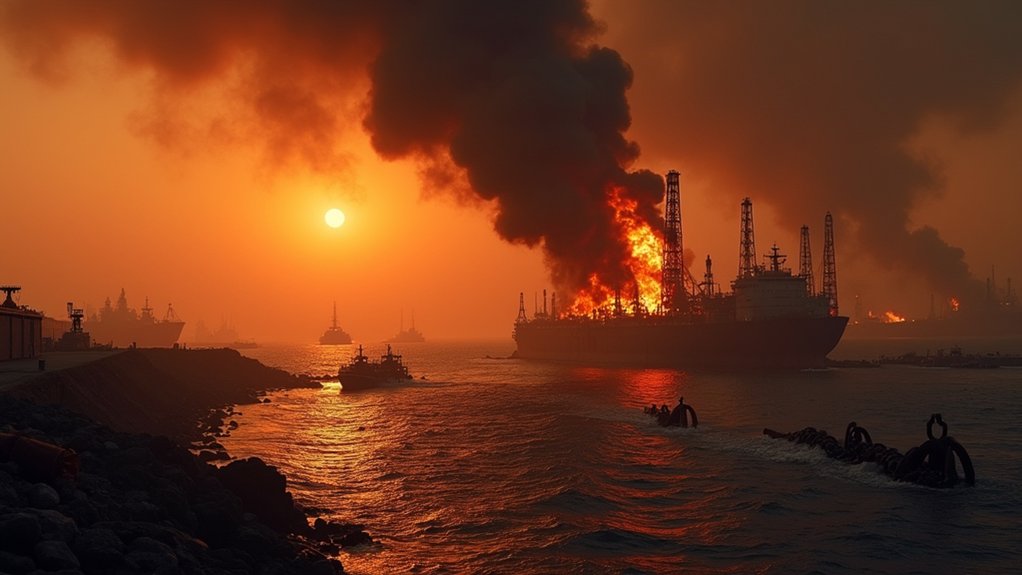
The Strait of Hormuz remains the nightmare scenario, a choke point for global oil and liquefied natural gas that could turn theoretical risk into actual supply shock. Even if ceasefires emerge, energy flows normalize slower than anyone hopes. Damaged fields don't heal overnight. Central banks and commercial banks, as dominant participants in currency markets, often respond to geopolitical crises by adjusting monetary policy and foreign exchange interventions that ripple across asset classes. Just as forex market volatility varies predictably across different trading sessions throughout the global 24-hour cycle, geopolitical shocks trigger heightened price swings that cluster around specific market opening hours when liquidity concentrations shift. When interest rate decisions shift in response to crisis conditions, currency values adjust rapidly as traders recalibrate exchange rate expectations across major pairs. Markets ultimately refocus on earnings, growth, and innovation, but getting there requires surviving the volatility storm that hits before the first shot fires.