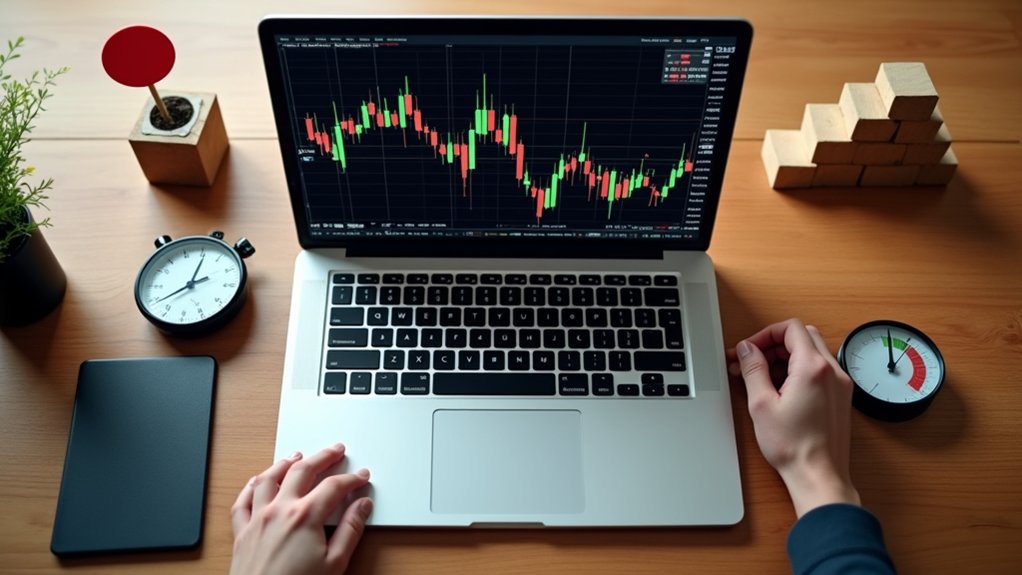

Scroll through any social trading platform and the damage becomes obvious. Retail investors constantly exposed to top performers start making irrational decisions. The comparison triggers something primitive in the brain, something that has nothing to do with sound financial strategy.
Social comparison hijacks the primitive brain, triggering irrational trading decisions that have nothing to do with sound financial strategy.
Research shows upward social comparison markedly increases risk-taking activity. Traders presented with peer performance data report substantially lower satisfaction with their own results, even when those results are objectively solid. The cognitive dissonance is real. Experienced investors who know better still fall into the trap.

The emotional component drives the worst behavior. Affective reactions manifest as small-volume, repeated transactions that scream unplanned impulse rather than calculated strategy. Excitement from peer attention intensifies trading activity and cranks up risk exposure. Fear and greed shape buying and selling behaviors more powerfully than economic fundamentals ever could. Strategic thinking gets moderated by affect rather than reason, and portfolios suffer accordingly.
The numbers tell an ugly story. Higher trading activity correlates with lower portfolio diversification and worse risk management outcomes. Followers of social trading strategies often obtain worse performance than the leaders implementing those strategies. The platforms present only best-performing portfolios, promoting herding in strategy selection. Everyone chases the same winners.
Upward social comparison increases the fraction of risky assets in investor portfolios, and this elevated risk-taking persists over time even as initial excitement wears off. The behavioral patterns mirror gambling more than investing. Bitcoin and cryptocurrency investors display higher novelty-seeking and lower conscientiousness scores. Sensation-seeking personalities demonstrate excessive trading tendencies and higher loss frequencies. Poor risk management across forex markets compounds these psychological vulnerabilities, leaving comparison-driven traders particularly exposed to catastrophic losses.
Even financial literacy provides no immunity. Comparison-induced trading behavior persists among educated investors who understand market fundamentals. The disposition effect and other biases intensify through social comparison exposure. Humans demonstrate fundamental irrationality in trading environments despite all the economic models assuming otherwise. Maintaining emotional discipline requires recognizing when comparison anxiety begins driving decisions rather than market analysis.
Serious traders recognize this psychological minefield and refuse to play. They understand that comparative pressure leads to portfolio decisions driven by emotion rather than cognitive strategy. Understanding collective market mood becomes impossible when personal ego and comparison anxiety cloud judgment. The inability to resist impulses from peer comparison links directly to higher trading activity and worse financial outcomes. Sometimes the smartest move is simply looking away.