
The gold-fueled resurgence of South Africa's rand is turning heads as the currency trades around R17.2 to the US dollar on December 12, 2025—a welcome sight for a nation that's grown accustomed to watching its money lose value. Gold hit $4,343.65 per ounce that same day, not far from October's all-time high of $4,381. When your primary export is literally catching fire, good things tend to happen to your currency.
When your primary export hits record highs, your currency gets a much-needed shot in the arm.
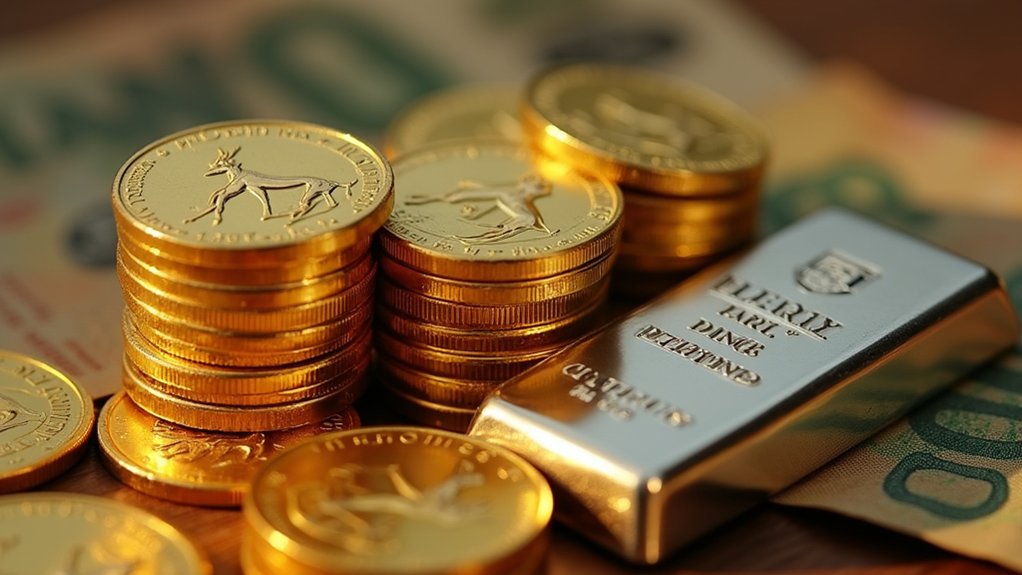
The rand posted gains in early trade on December 15, riding the precious metals wave. Platinum joined the party too, reaching $2,361.23 per ounce on December 23 and logging its longest consecutive streak above $2,300. Record prices have investors scrambling for Krugerrands like they're going out of style.

This isn't just about shiny rocks, though. The South African Reserve Bank cut its repo rate by 25 basis points in November, bringing the total 2025 cuts to 100 basis points. The repo rate now sits at 6.75%, with more easing expected in 2026. Oh, and they tightened the inflation target to 3% with a 1% tolerance band. Ambitious.
Then came the real shocker: S&P Global upgraded South Africa to BB in November 2025. The first upgrade in nearly two decades. Turns out fiscal discipline actually matters. Who knew? The move recognizes tighter policies that have stabilized debt and produced a primary surplus. Suddenly eurobond issuances look a lot more attractive.
A stronger rand means cheaper imports, which helps control inflation just as officials tighten the target. Gold exports boost foreign reserves. Mining companies pay more corporate tax. The fiscal outlook improves. Everything's coming up roses, right?
Not so fast. Forecasts still suggest the rand could fluctuate between 18.00 and 19.50 through 2025. A power crisis could push it to 21.00. High US rates could do the same. On the flip side, Federal Reserve cuts or domestic reforms might strengthen it to 16.00-17.00. As an emerging market currency, the rand remains particularly sensitive to shifts in global risk appetite and capital flows. Traders monitoring the EUR/ZAR exchange rate are watching closely to see if euro strength compounds these pressures or provides a counterweight.
The question isn't whether precious metals are propping up the rand—they clearly are. It's whether South Africa can maintain fiscal discipline and implement reforms when the gold bull run inevitably cools. Beyond rate decisions, SARB's FX interventions can also play a critical role in managing currency volatility during periods of external shock. That's the real test.