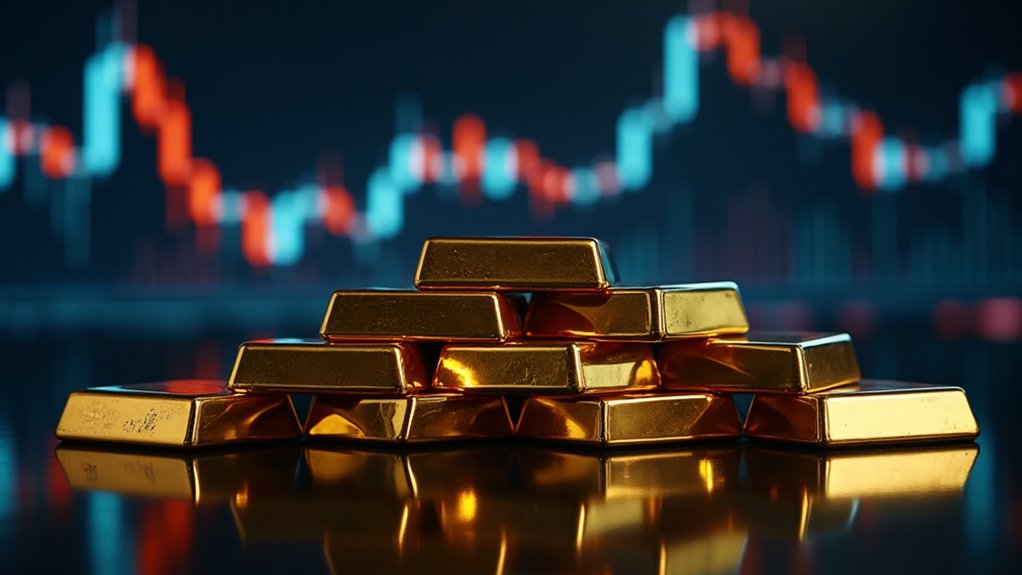

While most investors were busy panicking over tariff headlines and recession fears, gold quietly shattered record after record—blowing past $2,900 in 2024, rocketing over 30% year-to-date in 2025, and briefly kissing $3,500 in April. Yet somehow, analysts insist this rally has barely started. J.P. Morgan projects an average gold price of $3,675 per ounce in Q4 2025, climbing toward $4,000 by Q2 2026. That's not speculation. That's their actual forecast.
The driving force? Central banks are hoarding gold like it's going out of style. Unprecedented global buying has become the primary surge driver, with official sector purchases remaining historically elevated. Countries are actively reducing their reliance on the US dollar, diversifying reserves into tangible assets instead. When central banks pivot this hard, markets pay attention.

Geopolitical chaos isn't helping either. Trade wars, tariff uncertainty, mounting US debt concerns—all of it pushes investors toward safe-haven assets. The probability of a global recession keeps climbing, and fiscal policy remains a mess. Meanwhile, real interest rates stay low or negative, amplifying gold's relative appeal. Sovereign debt looks increasingly unattractive in real terms, making bullion the obvious alternative. Professional forex traders who understand currency market dynamics see gold's inverse relationship with the dollar as a key indicator of shifting global monetary confidence.
Supply can't keep up. Production growth lags far behind accelerated investment and central bank demand. New mine development remains limited, and scrap gold recycling isn't offsetting the structural surge in buying. Physical supply constraints are tightening while reserves accumulation accelerates. Add potential mining cost inflation, and the required price floor keeps rising.
Market technicals tell an equally bullish story. Spot price breakouts above historical resistance levels signal strong momentum. Major price drops? Analysts view them as technical pullbacks within a broader bull structure, not reversals. Consensus forecasts for 2026-2027 still sit markedly below current spot prices, suggesting optimism isn't fully priced in yet.
The structural shift in demand, geopolitically influenced pricing, and persistent macroeconomic instability point toward prolonged strength. Central banks like SARB understand how monetary policy decisions influence currency markets and asset allocation, reinforcing gold's role in global reserve diversification. These institutions use foreign exchange interventions to stabilize their currencies while simultaneously building gold reserves as a hedge against dollar volatility. Gold isn't peaking. It's rebasing higher. Whether it hits $4,000 or beyond depends on how long the chaos lasts. And right now, chaos shows no signs of slowing down.