Forex trading in Angola exists in a legal gray zone—technically permitted since 1997 but squeezed by chronic currency shortages, heavy central bank intervention, and zero local brokers. The Banco Nacional de Angola controls everything through position limits, transaction caps, and mountains of compliance paperwork that locals describe as “theatre.” Traders rely entirely on offshore platforms like Exness and Pepperstone, steering a market shaped more by oil revenues and government liquidity injections than actual free trading. The kwanza dropped 9.1% in 2024 while reserves sit at $15.7 billion, down from a $34 billion peak. Social media scams run rampant. The reality below cuts through the confusion.
Quick Facts That Matter
- Forex trading operates in a legal gray area; no local brokers exist, forcing traders to use offshore platforms like Exness and Pepperstone.
- The Banco Nacional de Angola tightly controls currency operations through licensing, position limits, and a $250,000 annual transfer cap per person.
- Severe foreign exchange shortages cause withdrawal delays up to three months and drive retail traders toward risky unregulated channels.
- The kwanza depreciated 9.1% in 2024; reserves dropped from $34 billion (2013) to $15.7 billion, reflecting oil-dependent economic vulnerability.
- Thirty-two percent of forex scams originate on social media, exploiting beginner investors through fake accounts and account takeovers.
Overview: Forex Trading in Angola
In a country where oil revenues dictate nearly everything, forex trading in Angola remains a tightly controlled affair.

The kwanza dropped 9.1% against the dollar in 2024. Not great.
Reserves sit at $15.7 billion, steady but nowhere near the $34 billion peak from 2013.
The National Treasury and BNA pump dollars into commercial banks—$2 billion and $953.5 million respectively in 2024—just to keep things moving.
Exchange rates get determined on Bloomberg's FXGO platform now, which sounds modern.
But make no mistake: this market runs on oil money and government intervention, not free-market dreams.
Commercial banks purchased $10.8 billion in foreign exchange during 2024, reflecting a 9.8% increase from the previous year.
By June 2025, reserves held firm at $15.7 billion, showing no month-to-month change and suggesting consistent economic policies heading into the year's second half.
Unlike Angola's heavily regulated environment, other African nations have developed distinct regulatory frameworks that shape how traders access foreign exchange markets.
Is Forex Trading Legal in Angola?
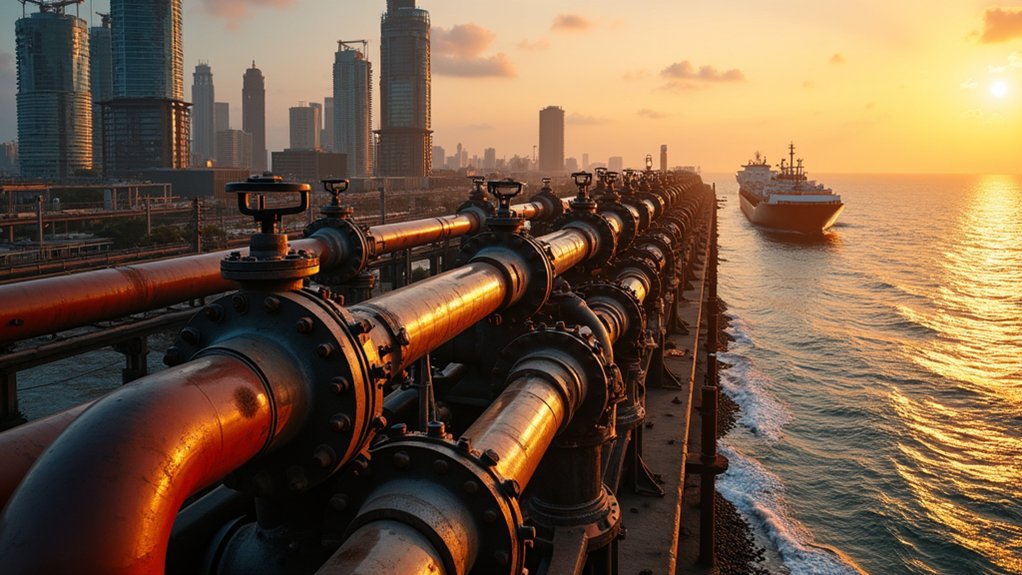
Forex trading sits in a legal gray zone in Angola—permitted but not exactly celebrated. The National Bank of Angola oversees currency operations under Lei No. 5/97, enacted back in 1997.
Individual traders won't face criminal charges for trading forex. That's the good news. The bad? No local brokers exist. Zero. Traders must rely entirely on international platforms like Exness, Pepperstone, and Moneta Markets—brokers regulated elsewhere.
Angola's government hasn't banned forex trading outright, but it hasn't exactly rolled out the welcome mat either. Trading licenses are required by the National Bank of Angola for forex operations. The infrastructure is foreign. The framework is minimal. Notice No. 3/21, which came into force in April 2021, established specific forex rules for the natural gas sector, including requirements for foreign currency bank accounts to be held in Angolan banks. The Angolan Kwanza operates within global FX markets with its own unique exchange rate dynamics and trading characteristics. Trading happens anyway.
Who Regulates Forex Trading in Angola?
Who's minding the store in Angola's forex world? The Banco Nacional de Angola (BNA) runs the show. Period. They're the ones calling shots under Lei No. 5/97 from 1997—yeah, that law's been around forever. BNA cranks out regulations, issues orders, and drops Instrutivos (regulatory instructions) whenever they feel like updating the rules.
BNA controls Angola's forex market through decades-old legislation, issuing regulations and instructions as they see fit.
Here's the basic setup:
- BNA controls everything through Lei Cambial (Lei No. 5/97)
- All forex transactions need authorized institutions as middlemen
- Banks face position limits: 2.5% of regulatory capital (Aviso No. 14/19)
- Fines hit hard: up to 21,120,000 Kwanzas for violations
- Recent changes: Order 3/2021 added special rules for natural gas sector
Individual traders got licensing exemptions in 2023. Banks must maintain documented account opening processes and conduct risk-based due diligence on customers before validating any forex operations. Oil companies in the non-associated natural gas upstream business must deposit export proceeds in local hard currency accounts. Like Egypt's setup with the Financial Regulatory Authority, Angola's BNA handles both licensing and oversight functions for forex activities. Small victory.
How Forex Trading Works in Angola
When retail traders in Angola actually click “buy” or “sell” on their screens, they're jumping into a decentralized Over-The-Counter (OTC) marketplace that never sleeps—well, except weekends.
No central exchange. Just brokers, platforms like MT4 or MT5, and currency pairs flickering across monitors 24/5.
Traders deal with leverage through CFDs—contracts that magnify wins and losses alike.
Liquidity shifts with sessions: thin during Asian hours, packed when London and New York overlap.
Understanding forex market structure helps traders recognize how these different participants—from central banks to retail brokers—interact to create the price movements seen on charts.
Brokers? They're required to hold serious capital, keep client money segregated, and answer to regulators. At least that's the rulebook version.
Best Time to Trade from Angola
Angola sits in the UTC+1 time zone—Central Africa Time—which puts local traders in an awkward spot when global forex sessions kick off. The reality? There's no solid data available on Angola-specific trading patterns.
What retail traders deal with:
- London opens at 8:00 AM UTC, meaning 9:00 AM local—decent timing
- New York starts at 1:00 PM UTC, hitting 2:00 PM in Luanda
- Asian session runs overnight, mostly while Angolans sleep
- Volume peaks during London-New York overlap, around 2:00–5:00 PM local
- Broker platforms show global hours, not regional analysis
Understanding optimal trading hours for specific currency pairs can help Angolan traders maximize their activity during periods of higher liquidity and tighter spreads. The information simply isn't there. Angola's forex timing remains under-researched.
Payments, Deposits and Withdrawals in Angola
Getting money in and out of Angolan forex accounts is messy. The economy runs on cash, though cards work in cities—Visa, Mastercard, the usual suspects. Digital wallets like Apple Pay exist. Some brokers accept USDC stablecoins for faster transfers. Mobile money helps people without bank accounts.
Deposits? Bank transfers, mobile money, prepaid cards, ATMs.
Withdrawals? That's where it gets ugly. Foreign exchange shortages cause delays. Remittance withdrawals can take three months. Three. Months. Fees hide everywhere—1-2% in conversions, 1.5-7.5% forex margins. ATM limits add friction. Digital platforms beat traditional banks on rates, barely. To minimize exposure to fraud and excessive charges, traders should verify secure withdrawal methods before moving profits from their forex accounts.
Taxes, Reporting and Money Rules in Angola
Under the National Bank of Angola‘s framework—effective April 2023—retail forex traders navigate a thicket of rules that make moving money feel like bureaucratic performance art.
Banks hold exclusive authority to process transactions. Mess up? Fines hit 21,120,000 Kwanzas—roughly USD 40,000. Licenses vanish. Executives get disqualified.
Key restrictions shaping the landscape:
- Annual unilateral transfers capped at USD 250,000 per person
- Transaction limits tied to documented financial capacity assessments
- Banks scrutinize Credit Risk Information Center records for 90-day defaults
- Risk profiles determine how often capacity gets recalculated
- Customer due diligence requirements adjust based on assigned risk levels
Like Egypt's central bank, Angola's monetary authority wields intervention mechanisms to influence currency markets and stabilize exchange rates.
It's compliance theater, Angolan edition.
Forex Trading Scams and Risks in Angola
Desperation makes for terrible investment decisions. Angola's currency shortage pushes retail traders toward unregulated offshore platforms—exactly where predators hunt.
Thirty-two percent of forex scams originate on social media: Facebook, TikTok, Instagram, Twitter, Telegram. Account takeovers drain funds fast. Fraudsters exploit signup bonuses with fake identities. Chargebacks from stolen credit cards hammer legitimate brokers.
Angola lacks domestic forex regulation entirely. Foreign brokers—regulated by FSCA, FCA, CySEC, FSA—dominate the market, but oversight remains external.
Past banking scandals haunt the landscape: $6.8 billion in unsecured loans laundered through offshore accounts. Beginner investors concentrate here. Vulnerability runs deep.
Quick Q and A
Can Angolan Traders Access International Forex Brokers Outside Angola?
Angolan traders face significant barriers accessing international forex brokers due to strict capital controls and foreign exchange restrictions imposed by the National Bank of Angola, though some traders attempt access through unofficial channels despite regulatory limitations.
What Internet Speed Is Needed for Reliable Forex Trading in Angola?
Forex platforms typically require 1-5 Mbps for reliable trading, with stable latency below 100ms being essential. Angola's average broadband speed of 23.21 Mbps generally suffices, though traders should prioritize connection stability over raw speed.
Do Angolan Banks Allow Wire Transfers to Foreign Forex Brokers?
Angolan banks permit wire transfers to foreign forex brokers through authorized financial institutions, subject to USD 250,000 annual limit per individual. All transactions require BNA registration via SINOC and banks must verify legitimacy and customer financial capacity before processing.
Are There Local Forex Trading Communities or Mentors in Angola?
Information about organized local forex trading communities or mentors specifically in Angola remains limited. Most Angolan retail traders rely on international online resources, broker-provided education, and global forums rather than established domestic mentor networks or formal trading communities.
Can I Trade Forex Using Mobile Data in Angola?
Yes, traders can use mobile data to access forex platforms in Angola, given the country's 44.8% internet penetration and mobile broadband infrastructure. However, connection stability and data costs may vary depending on the specific mobile network provider chosen.
The Bottom Line
Forex trading in Angola? It's messy. No real regulation, no local oversight, just Angolans wiring money to offshore brokers and hoping for the best. Capital controls make moving cash a nightmare. Internet's spotty. Scammers are everywhere. Yet people keep trading anyway, chasing profits in a system that barely acknowledges they exist. The infrastructure's weak, the risks are high, and honestly, nobody's watching out for retail traders here.