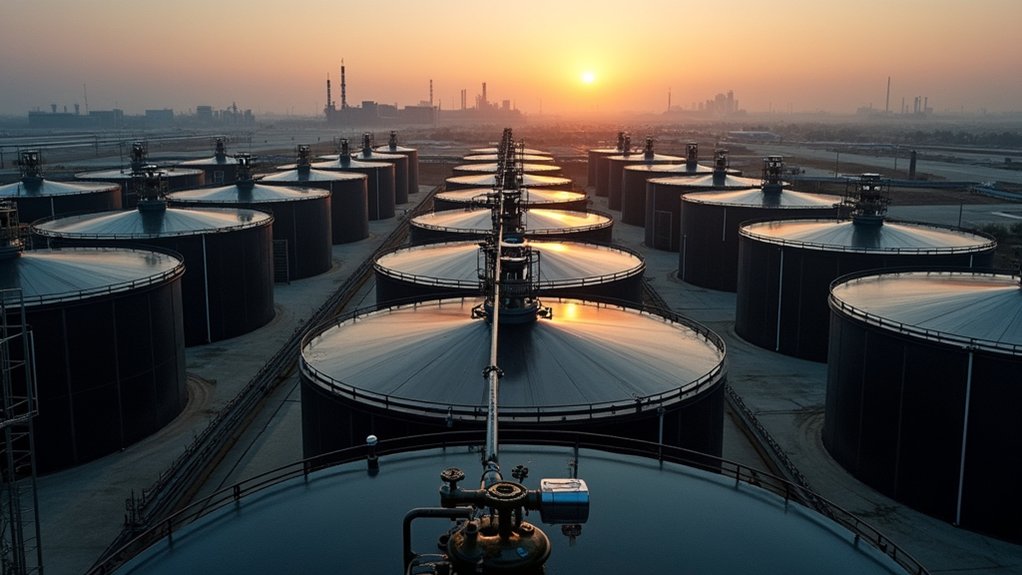
Oil traders woke up to a familiar cocktail of chaos on Monday—geopolitical drama in Iran and the usual supply-and-demand circus. WTI crude futures jumped, posting a five-week high as thousands of Iranians took to the streets protesting economic collapse and currency meltdown. Iranian security forces responded by killing hundreds of protesters. Nothing says “oil market volatility” quite like regime instability in OPEC's fourth-largest producer pumping over 3 million barrels per day.
Regime instability in OPEC's fourth-largest producer serves up the perfect recipe for oil market volatility and price spikes.
February WTI crude oil closed up 0.38 dollars, a 0.64 percent gain, hitting intraday highs of 0.83 percent. The January contract settled at 59.99 dollars per barrel. Not exactly moon-shot territory, but enough to remind everyone that Middle East chaos still moves markets.

Meanwhile, the dollar weakened—always a nice tailwind for commodity prices. Colder US weather forecasts sparked natural gas short covering, with February Nymex nat-gas surging 7.57 percent. February RBOB gasoline climbed 0.74 percent because apparently everything decided to rally at once.
But here's the kicker. WTI remains down nearly 16 percent over the past year, off 8.82 percent over three months, and dropped as low as 55.85 dollars just last month on December 16. The structural picture looks less than stellar. Late-fall storage levels remain stuffed, cushioning prices even as winter demand kicked in. US natural gas stocks fell more than expected, but supply dynamics tell a messier story.
Commercial positions showed longs at 829,757 contracts on January 6, up over 21,000 from the prior week. Front-month settle odds cluster around the 59 to 59.99 dollar range for January 16. Translation: the market expects sideways action unless something big breaks.
President Trump got briefed on military options regarding Iran. That's the kind of detail that keeps risk premiums alive. But Iran turmoil colliding with supply glut creates an awkward standoff. Prices pop on fear, then reality smacks them back down when traders remember there's plenty of crude sloshing around. Institutional investors and hedge funds tracking commodity markets adjust positions rapidly when geopolitical risk spikes, amplifying short-term price swings in energy futures.
Oil hit 58.10 dollars in January 2026 after closing December at 59.04 dollars. Not exactly a rip-roaring bull market. Just volatile noise masquerading as direction. Currency pressures in emerging markets like South Africa often amplify commodity volatility, as central bank interventions and monetary policy shifts ripple through forex markets tied to resource-dependent economies. Forex traders watch interest rate decisions closely since monetary policy changes directly influence exchange rates and can shift capital flows between commodity-exporting and importing nations.