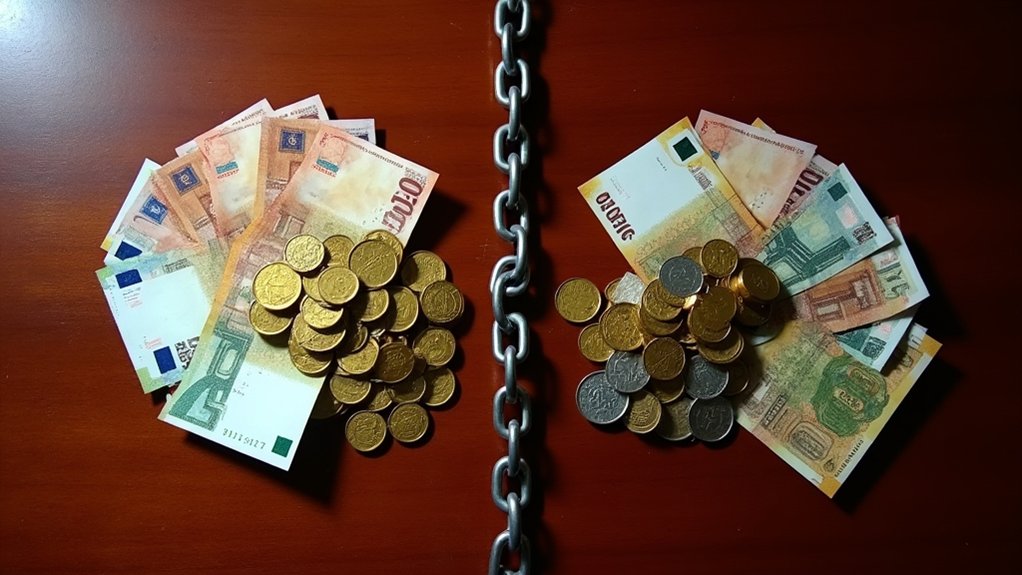

In the heart of global finance, fourteen African nations face an uncomfortable truth: they can't print their own money. Decades after independence, they still rely on France to produce their currency. It's 2025, and this colonial relic is alive and well.
The CFA franc was born in 1945, designed to stabilize France's African colonies. Independence came and went. The currency stayed. Today, it operates in two zones: West African countries like Benin, Burkina Faso, Ivory Coast, Mali, Niger, Senegal, Togo, and Guinea-Bissau use one version. Central African nations—Cameroon, Central African Republic, Chad, Equatorial Guinea, Gabon, and Republic of Congo—use another. The Union of Comoros has its own Comorian franc, but the French connection remains. Some countries diversify, printing in the UK and Germany too.

The system has perks. The CFA franc pegs to the euro, providing monetary stability and easy convertibility. Trade gets simpler with fixed exchange rates. Inflation stays controlled. But here's the catch: these nations have virtually zero monetary sovereignty. France holds veto power over monetary decisions. Until recently, 50% of foreign exchange reserves sat in the French Treasury. That's right—their money, locked in Paris.
The constraints run deep. Monetary policy prioritizes inflation control over investment, limiting economic development. Intra-regional trade lags far behind what the Eurozone manages. Meanwhile, France maintains its economic grip through currency oversight. In West Africa, institutions like BCEAO and CREPMF regulate foreign exchange markets and securities within the CFA franc zone.
Criticism has exploded in recent years. Activists demand change. West African leaders proposed the ECO currency as an alternative. Reform discussions bubble up regularly. Yet the CFA franc persists. Why? That perceived stability. Countries fear the chaos that might follow independence from the system. Political shifts have accelerated the pressure—Mali, Burkina Faso, and Niger expelled French troops while simultaneously questioning monetary arrangements. Outside the CFA zone, countries like Ghana manage their own monetary policy, with the USD/GHS exchange rate reflecting independent currency dynamics in the Forex market.
It's a peculiar arrangement. Former colonies, sovereign nations in name, can't control their own monetary destiny. France prints the money. France holds reserves. France wields veto power. The setup guarantees stability but extracts a price: real economic independence remains elusive. The problem extends far beyond the CFA zone—at least 40 of Africa's 54 countries print banknotes abroad, relying on foreign suppliers in the UK, France, and Germany. Seventy-plus years after decolonization began, the financial umbilical cord stays firmly attached. Independence, it turns out, doesn't always mean freedom.