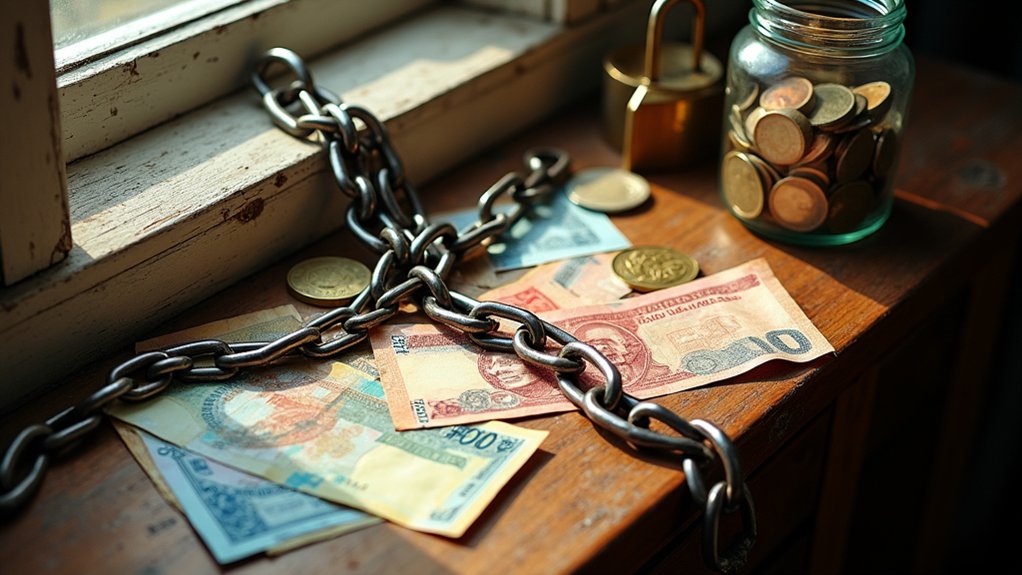

Across the continent, most African nations don't just let their currencies float freely in the global market—they control them, manage them, peg them to other currencies, or outright dictate their value. Free-floating exchange rates? Those are rare. Very rare. Since 2023, only a handful of countries have adopted fully market-determined systems.
Free-floating currencies remain the exception across Africa, not the rule—most nations still tightly control or manage their exchange rates.
Take the CFA franc zone. Fourteen West and Central African countries peg their currency to the euro, backed by the French treasury. It's stable, sure. Inflation stays low. Cross-border trade flows smoothly within the zone. But here's the catch: these countries surrendered monetary policy flexibility. The European Central Bank‘s decisions ripple through their economies whether they like it or not.

Then there's the hardcore control crowd. Algeria keeps the dinar on a tight leash—so tight that a massive black-market discount exists between official and street rates. Eritrea maintains strict fixed exchange rates with government-backed currency control propping up the Nakfa. Morocco and Tunisia both run managed float regimes, but don't be fooled by the word “float”—they intervene constantly and restrict foreign currency access. Egypt recently operated multiple official rates before grudgingly moving toward flexibility.
Nigeria claims to be reforming its FX system. Controls and interventions remain frequent anyway. Ghana and Kenya have loosened direct controls, yet their central banks jump in whenever volatility spikes. Botswana pegs the pula to a currency basket and deliberately weakens it each year through what they call an “annual downward crawl.” When governments choose to deliberately lower their currency's value like this, it's called devaluation versus depreciation, which happens naturally through market forces. Ethiopia still allocates foreign exchange through state channels and maintains a multiple-rate system that would make anyone's head spin. Ethiopia's official market traded around ETB 114–118 per USD by early 2025 following its transition from a fixed rate of ETB 56 in 2023.
The exceptions? South Africa operates a genuinely free-floating regime with minimal intervention. The South African Reserve Bank uses monetary policy decisions and occasional interventions to influence the rand without imposing direct exchange controls on the currency itself. Uganda has built one of the continent's most market-responsive FX systems. Egypt, Ghana, and Kenya are inching toward transparency and market-determined rates, though intervention remains on the table when needed.
Exchange rate regimes matter. They affect inflation control, export competitiveness, and whether foreign investors show up or run away. Most African countries have chosen stability and control over market forces. Whether that's wise depends on who you ask.