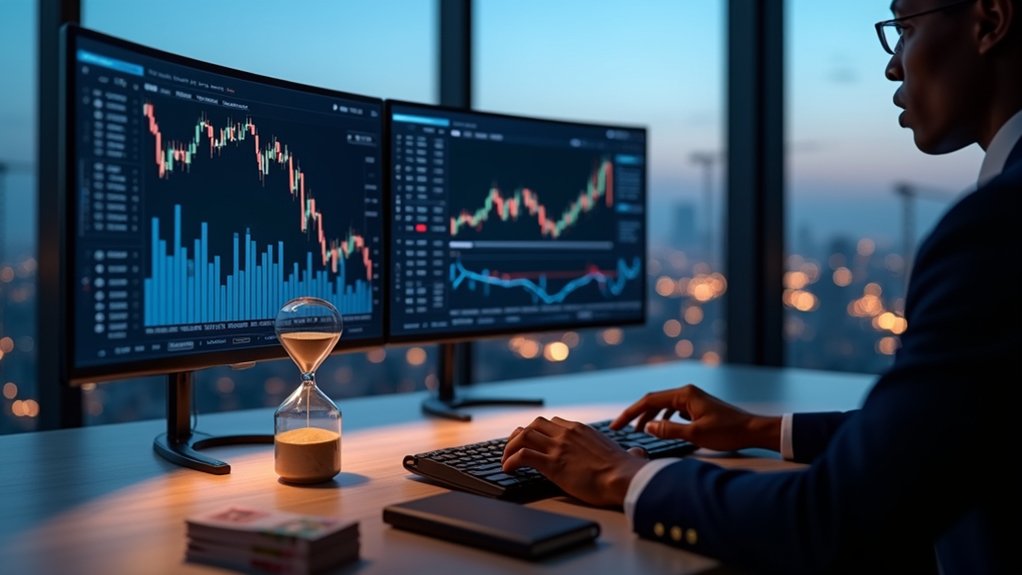

Traders like to think they're cool, calculated machines making rational decisions in the heat of market chaos. Reality check: they're not. Even the most seasoned professionals experience measurable physiological activation when markets move. Their bodies respond to portfolio changes and financial transactions whether they want them to or not.
Your body doesn't care about your trading philosophy. When the market moves, physiological reactions happen whether you approve or not.
Here's the twist. Moderate stress isn't actually the villain in this story. It can enhance motivation and performance, serving as a catalyst when traders need to act decisively. The problem isn't stress itself—it's the difference between beneficial stress and the chronic, soul-crushing variety that tanks performance.

Research shows traders exhibit significant psychophysiological activation during market events, but the variation is wild. Some maintain elevated activation for just 8% of their working hours. Others hit 17%. Recovery times range from under 30 seconds to a brutal 17 minutes, depending on individual characteristics. Experience matters, but not how most people think. Both highly experienced and moderately experienced traders show substantial autonomic responses when markets get volatile or portfolios take hits.
The experienced traders do have an advantage though. They return to baseline activation faster and demonstrate more controlled emotional responses. Still, they're not immune. Emotions remain significant factors in real-time financial risk processing across all experience levels, which makes evolutionary sense. Markets eliminate unsuccessful traders over time, suggesting emotional involvement isn't just unavoidable—it's probably necessary.
The line between helpful and harmful stress matters enormously. When stress crosses into excessive territory, traders develop tunnel vision, fixating on losses and reacting impulsively. Cognitive distortions emerge. Information gets overlooked. Discipline evaporates. Emotional exhaustion creates analysis paralysis, with fear and anxiety overwhelming rational thought.
Major losses trigger cortisol release, which studies link to higher risk-taking behavior. That's the chemical foundation of revenge trading, and cortisol doesn't just disappear. It persists for days or weeks as traders mentally replay losses and catastrophize about future outcomes. Self-control deteriorates. Decision-making suffers. The downward spiral accelerates.
Stress isn't the enemy. The pressure to achieve unrealistic wealth expectations from forex trading often transforms manageable stress into the chronic variety that destroys accounts and careers. Implementing disciplined strategies helps traders maintain emotional equilibrium even when markets test their psychological limits. Effective capital management provides a buffer against this transformation, allowing traders to absorb losses without triggering the destructive stress responses that lead to poor decisions. But chronic stress? That's a different beast entirely.