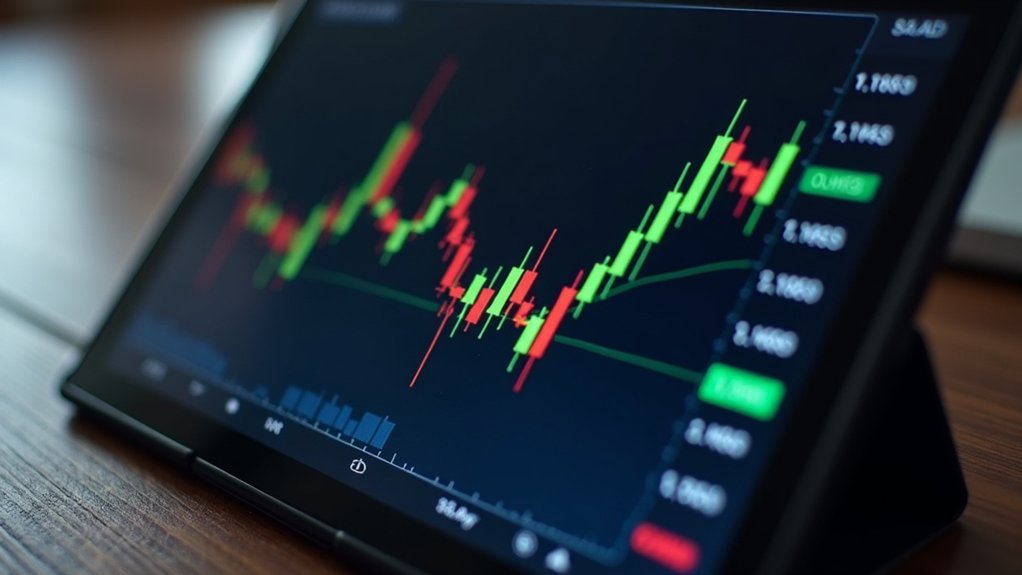

New traders gravitate toward trend trading because following the market direction just makes sense. Range trading works when prices bounce predictably between support and resistance, buying low and selling high on repeat. Breakout trading catches the moment price smashes through a level, though false breakouts love to trick beginners. Scalping demands lightning-fast decisions and zero life outside charts. Swing trading stretches positions across days or weeks with less babysitting required. The strategies below break down exactly how each approach works in practice.

New traders in Nigeria, Kenya, South Africa, and across the continent often stumble into Forex with grand plans and little structure. They open accounts, deposit money, and then realize they have no actual plan. That's where trading strategies come in. Not magic formulas. Just structured approaches to making decisions when real money is on the line.

Trading strategies aren't magic formulas—they're structured approaches for making real decisions when your money is actually at risk.
Trend trading is where many beginners start. The idea is simple: find the direction the market is moving and trade with it. Tools like moving averages, trendlines, and MACD help confirm whether a pair is heading up or down. Entries typically happen after a breakout or pullback, moments when momentum is already visible. It's suited for medium to long-term horizons, which means less stress and fewer daily decisions. Popular with beginners because it feels logical. The market is going somewhere. You follow.
Range trading works differently. It's for pairs bouncing between support and resistance without breaking out. Traders buy at the bottom, sell at the top, repeat. It works in sideways markets, not volatile trending ones. The catch is identifying those boundaries correctly. Miss them and you're guessing. Stop-losses go just outside the range to manage the risk of unexpected breakouts. Simple Moving Averages can help identify these support and resistance zones by acting as dynamic levels where price tends to bounce.
Breakout trading targets the moment a pair breaks through support or resistance. That break often signals the start of a new trend. If timed right, the profit potential is significant. But false breakouts are common. Price breaks, then reverses. Traders add filters like waiting for a candle to close beyond the level to avoid getting tricked. Volume spikes can help confirm the breakout is real before committing capital. It works across timeframes, so it appeals to both day traders and those holding longer.
Scalping is the opposite of patient. It's about taking tiny profits from dozens of trades daily. Trades last minutes or seconds. It requires high liquidity pairs like EUR/USD, fast execution, and intense focus. Transaction costs can kill profitability if spreads and commissions aren't low. Stressful. Not ideal for someone with a day job in Lagos or Johannesburg.
Swing trading sits in the middle. Positions are held for days or weeks, targeting intermediate price swings. It uses both technical and fundamental analysis. Less time staring at charts, wider stop-losses, and bigger targets. Suited for beginners who want involvement without constant monitoring. Effective risk management principles protect capital by limiting exposure on any single trade to a small percentage of the account.
News trading capitalizes on sharp moves after economic releases or geopolitical events. Economic calendars guide timing. Quick reaction is essential. Volatile. Risky. Not beginner-friendly unless paired with solid risk management. Carry trading exploits interest-rate differentials between currencies, earning returns by holding higher-yielding currencies funded by lower-yielding ones. Strategies exist. But none work without discipline, practice, and realistic expectations. A consistent trading approach requires clear entry and exit rules that remove emotion from execution. Building foundational knowledge through structured learning helps traders avoid costly mistakes before committing real capital.
Common Questions
Which African Brokers Allow Trading With Less Than $50 Initial Deposit?
Several FSCA-regulated brokers accept under $50 to start. Exness allows deposits from $1—yes, a single dollar—and supports ZAR accounts.
Octa sets the bar at $25 with commission-free trading. FP Markets sits right at $50.
Axi and ActivTrades? No minimum at all on certain account types. All offer micro lot trading, so beginners aren't forced to bet the farm.
Regulation matters here—stick with FSCA oversight to avoid the cowboys lurking in unregulated corners.
Can I Trade Forex Legally in Nigeria Without a Domiciliary Account?
Yes, Nigerians can trade forex legally without a domiciliary account.
Most brokers—local and international—accept Naira deposits directly through bank transfers or fintech platforms. The dom account myth needs to die. It's only necessary if a broker specifically requires foreign currency deposits or withdrawals in USD or EUR.
ISA 2025 mandates using registered brokers, not specific bank accounts. Trading in Naira is perfectly legal, common, and straightforward for retail traders.
How Do Power Outages in My Area Affect Open Trades?
Power cuts disconnect traders from platforms instantly. Open positions keep running on broker servers—exposed to live market swings—while the trader sits in the dark, helpless. Pre-set stop losses placed server-side still trigger automatically. Client-side stops? Gone. No protection. Margin calls can fire off during the blackout, liquidating positions at terrible prices. Without backup power or mobile data, there's zero control. Markets don't pause for NEPA or Eskom failures. The risk stays live, unmanaged.
Do South African Rand Pairs Behave Differently Than Major Currency Pairs?
Yes. ZAR pairs are wild compared to majors. USD/ZAR swings harder, gaps more, and costs more to trade—wider spreads, worse slippage. It's classified as an exotic for a reason.
Majors like EUR/USD move on central bank policy and scheduled data. ZAR? It jumps on commodity prices, load shedding headlines, political drama, and emerging market panic. Liquidity's thinner. Execution's messier. Historically, it's one of the most volatile pairs out there. Different animal entirely.
Which Mobile Apps Work Best With Slow Internet in Rural Areas?
MT4 and MT5 dominate rural Africa for good reason—they're lightweight, sip data, and work on ancient Android phones. cTrader's decent too. OANDA and Forex.com apps keep bandwidth demands low without killing core functions. Most cache charts and trade history locally, so a dropout won't leave traders blind. MT4/MT5 even let users review charts offline. Pepperstone and eToro auto-resume interrupted sessions, which matters when connectivity's patchy.
Bottom line: stick with MetaTrader apps—they're built for exactly this problem.