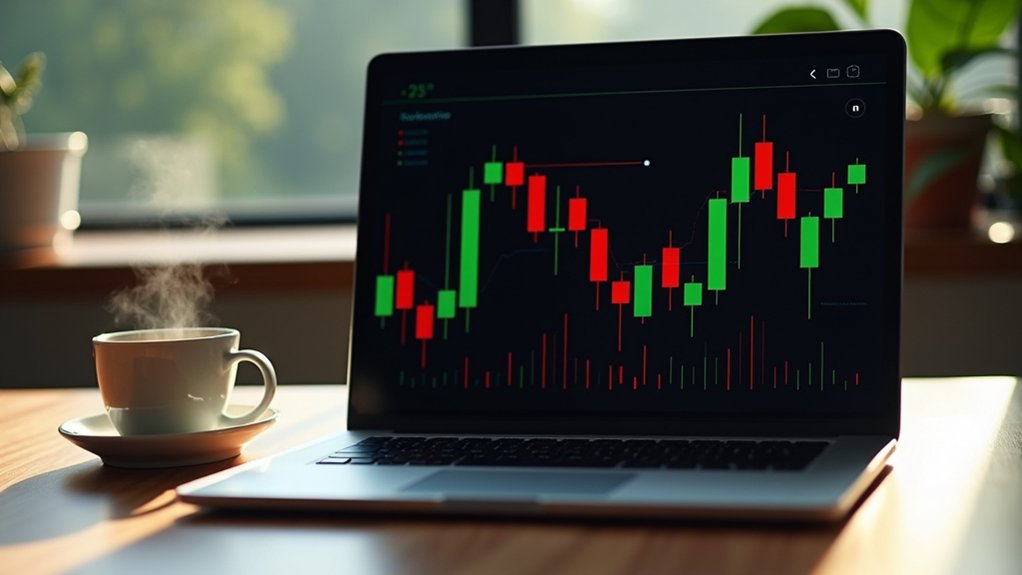

Price action forex trading ditches indicators and focuses on naked price movement—candlesticks, support and resistance zones, and trend patterns that show where buyers and sellers actually fight it out. Traders read pin bars, engulfing candles, and doji formations like a language, believing the chart already bakes in every news event and economic report. It works across any time frame or currency pair, demands zero expensive software, and boils down to one thing: watching what price does, not what some lagging oscillator claims it might do next. The mechanics get clearer below.
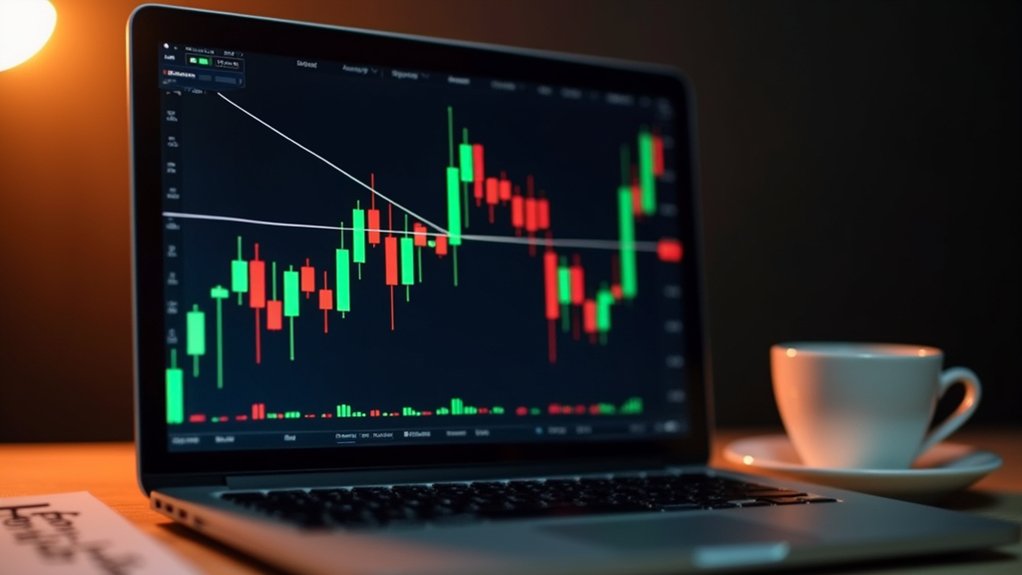
Across the trading floors of Nairobi, the quiet internet cafés of Lagos, and the bustling financial districts of Johannesburg, African forex traders are learning that the cleanest path to reading the market doesn't come from a pile of fancy indicators—it comes from watching price itself. Price action trading strips everything down to what actually matters: the raw movement of price over time. No lagging indicators. No complex formulas. Just the chart, the candlesticks, and what they're telling you about where the market might go next.

Price action cuts through the noise—no indicators, no formulas, just raw price movement telling you what the market is actually doing.
The concept is straightforward. Every piece of news, every economic report, every geopolitical shake-up from Accra to Cairo eventually shows up in price movement. Traders who focus on price action believe the chart is the ultimate truth-teller. They watch candlestick formations—pin bars, engulfing candles, doji—looking for momentum clues. They mark support and resistance levels where price tends to bounce or stall. They classify trends as up, down, or sideways by tracking higher highs and lows or lower highs and lows. When multiple signals line up, that's confluence. When price breaks a key level, they watch for confirmation or a fake-out.
For traders across Botswana, Ghana, or Tanzania dealing with limited access to expensive software, price action is beautifully democratic. It works on any time frame, any currency pair. Whether someone in Kampala is trading EUR/USD or a Moroccan trader is watching GBP/JPY, the same patterns appear. The strategy offers real-time signals, clear entry and exit points, and straightforward risk management through stop-loss orders and position sizing. It's applicable beyond forex too—stocks, commodities, crypto.
But it's not foolproof. Reading charts demands skill, and there's real subjectivity involved. Two traders in Dar es Salaam might look at the same candlestick and see different things. High volatility, common in African trading hours when liquidity thins, can trigger false breakouts. New traders often struggle without indicators to filter the noise. The learning curve is steep. Naked chart trading sounds simple until someone realizes how much pattern recognition and discipline it actually requires. Some traders complement their price action strategy by replicating expert trades through copy trading platforms to learn how professionals interpret the same patterns. Indicator-laden charts reduce the visible price area and pull focus away from what truly drives decisions.
The psychology behind price action is what makes it work. Every candlestick reflects the collective decisions of buyers and sellers. Sharp moves signal aggression. Consolidations show hesitation. Institutional money leaves footprints in volume and direction. What traders are really observing is order flow—the total sum of all executed buy and sell orders from participants worldwide creating market equilibrium or imbalance. Traders in Abidjan, Lusaka, or Tunis who master this method learn to read market sentiment without waiting for news releases. They don't chase headlines. They watch price, let it speak, and respond accordingly. Most experienced practitioners focus on recent price action from the last three to six months rather than distant historical data. Understanding where buying and selling pressure historically shifts direction helps traders anticipate future reversals and identify optimal trade locations. This approach analyzes historical price movements to identify repeating patterns that suggest future market behavior. Evaluating risk-reward ratios before entering trades helps ensure potential profits justify the risk taken on each position. Simple doesn't mean easy.
Common Questions
Which African Brokers Allow Price Action Trading With Low Minimum Deposits?
AvaTrade (Official Site 🔗) sits at $100 minimum with FSCA regulation for South Africans doing price action setups.
Interactive Brokers drops that barrier to $0—yeah, zero—giving direct market access without dealing desk nonsense.
Pepperstone offers raw spreads from 0.0 pips for transparent charting, though minimum deposits vary by region.
PrimeXBT keeps spreads tight at 0.9 pips on EUR/USD, decent for reading pure price.
All four support MetaTrader platforms.
Leverage hits 1:400-1:500 depending on jurisdiction.
No fluff, just execution.
Can I Trade Price Action Effectively With Unstable Internet in Rural Areas?
Trading price action with spotty internet in rural Africa? Not impossible, but painfully difficult.
Price action demands real-time chart reading—pin bars, breakouts, support zones. When connection drops mid-move, traders miss entries or can't close losing positions.
Rural areas across Nigeria, Kenya, Tanzania, and elsewhere face frequent outages. Workarounds exist: mobile data backups, pending orders, daily timeframes instead of scalping. But honestly, unstable internet kills the core advantage of price action—reacting instantly to what price *just did*. It's a major handicap.
How Do Currency Restrictions in My Country Affect Price Action Strategies?
Currency restrictions crush price action strategies across Africa. They choke liquidity, widen spreads, and slow execution—turning clean setups into costly gambles.
When countries cap leverage or block international brokers, traders lose the tools that make price action work. Artificial exchange rates distort charts. Capital controls trap funds. Stop-losses slip in thin markets.
The usual patterns break down when governments intervene unpredictably. Traders adapt by shifting to longer timeframes or blending fundamentals with technicals. It's survival mode.
Are Candlestick Patterns Reliable When Trading African Currency Pairs Like Zar/Ngn?
Candlestick patterns show decent reliability on African pairs like ZAR/NGN, but there's a catch.
These exotic crosses lack the liquidity of major pairs, so patterns break down more often. Wild spreads and thin volume mean false breakouts happen regularly.
Patterns work better on longer timeframes—daily charts beat hourly noise. Combining them with support levels helps, but don't expect the 65-70% success rates seen on EUR/USD.
The fundamentals—inflation reports, central bank moves—often steamroll technical signals completely.
Do Mobile Trading Apps Support Proper Price Action Chart Analysis?
Modern mobile apps handle price action analysis just fine for African traders. Most platforms include candlestick charts, multiple timeframes, and essential indicators like Moving Averages and RSI.
Nigerian and South African traders regularly draw trendlines and mark support levels using touch screens. The main issue? Small screens make detailed multi-timeframe analysis harder than desktop setups.
Some advanced tools available on computers don't make it to mobile versions. But for basic price action work, mobile apps get the job done.