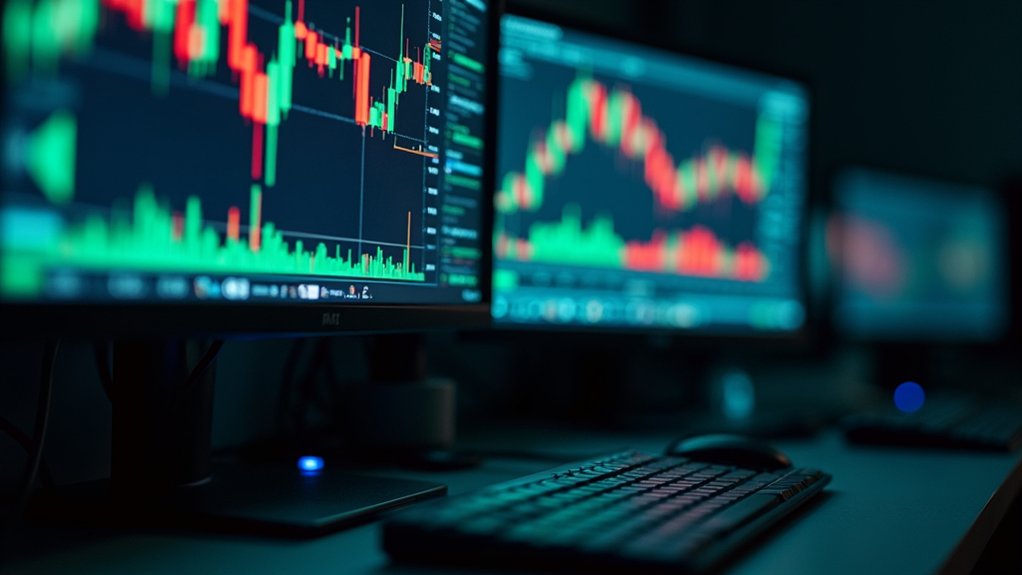
Forex trading is real—a $9.6 trillion daily market where central banks, hedge funds, and multinational corporations exchange currencies under regulatory oversight from bodies like the UK's FCA and Australia's ASIC. The fake part? Those WhatsApp groups promising guaranteed profits and easy money. Seventy percent of retail traders lose capital, institutions move billions while beginners move hundreds, and unregulated brokers across Africa vanish with funds regularly. The market exists and functions exactly as designed—just not for the people being pitched fantasy returns on social media.

Every week, thousands of traders across Nigeria, Kenya, South Africa, and Ghana open forex accounts hoping to turn small stakes into financial freedom—and most of them lose money. That's not opinion. That's data. Seventy percent of retail traders lose capital trading forex, and no amount of Instagram success stories changes that math.

Seventy percent of retail traders lose capital trading forex, and no amount of Instagram success stories changes that math.
But losing money doesn't mean forex is fake. It means it's risky.
The global forex market averaged $9.6 trillion in daily turnover as of April 2025, making it the largest and most liquid financial market on the planet. Over 1,100 banks and dealers participate. The US dollar appears in 89% of all trades. Central banks, pension funds, governments—they're all in. This isn't some backroom Ponzi scheme. It's a real asset class with institutional backing and regulatory oversight.
The problem is how it's sold. Across African markets, unregulated brokers and signal sellers flood WhatsApp groups and Facebook pages with promises of easy money. They show fake account balances. They tout “guaranteed strategies.” They prey on desperation. And they disappear when the money runs out. The US CFTC and SEC issued record fines in 2025 for fraud and misleading practices in forex, and offshore brokers operating in Africa often face zero accountability.
Regulation matters. Legitimate brokers operate under authorities like the UK's FCA, Australia's ASIC, or Cyprus's CySEC. They maintain segregated client funds, submit to annual audits, and enforce leverage caps. Compliance costs for brokers jumped 25% in 2025 due to new digital oversight mandates. That's not a coincidence. Regulators are tightening the screws because scams proliferate when oversight is weak. Around 85% of brokers expanded AML controls and monitoring capabilities in 2025. Understanding legal frameworks helps traders distinguish between compliant brokers and fraudulent operators in the market. In Nigeria specifically, traders must navigate local forex regulations that govern currency exchange and broker operations within the market. The Central Bank of Nigeria plays a critical role in shaping market conditions through monetary policy interventions and exchange rate management. Regulatory oversight ensures that brokers keep client funds separate from operational capital, protecting traders if the broker faces financial difficulties.
Retail traders—people trading from phones in Lagos, Nairobi, or Johannesburg—represent just 2.5% to 6% of total forex turnover. The rest? Institutional investors, corporations, hedge funds, and reporting dealers. These players move billions. Retail traders move hundreds or thousands. The market doesn't care about individual accounts. It moves on global capital flows, central bank policy, and macroeconomic data. The UK accounted for 38% of global FX trading location share, maintaining its position as the world's top trading hub. Five entities held roughly 40% of the market share in 2019, with JPMorgan and Deutsche Bank leading the institutional pack.
Mobile forex trading now accounts for 65% of retail trades in 2025. Technology has democratized access, but it hasn't changed the fundamentals. High risk remains high risk.
Forex is real. The brokers can be real. The profits—for a tiny minority—are real. But so are the losses. And in Africa, where financial literacy gaps and regulatory enforcement remain inconsistent, the line between real opportunity and outright fraud is thinner than anywhere else.
Common Questions
Can I Trade Forex Legally in My African Country?
Forex trading isn't banned across Africa, but legality depends entirely on the specific country.
South Africa, Kenya, and Nigeria have real regulators—FSCA, CMA, and SEC/CBN respectively—that license brokers and enforce rules.
Ghana's working on formal oversight.
Some countries have zero framework, leaving traders in a regulatory gray zone.
Check if the local authority actually regulates forex before opening an account.
Each nation writes its own rules.
No continental law exists.
Verify broker licensing through official databases, not slick websites promising easy riches.
Which Brokers Accept Mobile Money Deposits From African Traders?
Several brokers accept mobile money from African traders. Exness, XM (Official Site 🔗), and FXPesa support M-Pesa, MTN Mobile Money, and Airtel Money across multiple countries. Pepperstone, Axi, and CM Trading also integrate mobile payments.
Minimum deposits vary wildly—Exness and SuperForex start at $1, XM and FXPesa at $5, IQ Option at $10.
Regulation matters: Exness holds licenses from FCA, FSCA, CySEC; XM from FSC; Pepperstone from ASIC and FCA. Not all mobile money options work everywhere, though.
Do I Need a Dollar Account to Start Trading Forex?
No, a dollar account isn't required to start trading forex.
Many brokers serving African traders accept accounts in local currencies—NGN, ZAR, KES, and others—avoiding conversion fees upfront. Some brokers offer EUR or GBP accounts too.
The catch? Most currency pairs involve USD anyway, so profits and losses still get calculated against it behind the scenes. Dollar accounts remain common because of global liquidity, but they're not mandatory.
Choose what saves you money on deposits and withdrawals.
How Do Currency Restrictions Affect My Forex Trading in Africa?
Currency restrictions hit African forex traders hard.
Over 60% of African countries limit access to USD and EUR, forcing traders into black markets where rates run 40–60% higher than official channels.
Withdrawals and deposits crawl through compliance hoops.
Transaction costs spike.
In Nigeria, multiple FX windows exist but restrictions remain.
South Africa leads with solid infrastructure.
Kenya's CMA bans unlicensed brokers outright.
Bottom line? These controls squeeze profit margins, create liquidity gaps, and make trading unpredictable across most of the continent.
What Happens if My Broker Blocks Withdrawals to My Country?
When a broker blocks withdrawals to an African trader's country, funds get frozen—sometimes indefinitely. The platform simply won't process the request.
Regulatory issues, sanctions, AML flags, or capital controls trigger this. The trader faces verification loops, forced account closures, or outright fund seizure.
Legal recourse? Almost none if the broker's offshore and unregulated. Some brokers demand transfers only to the original deposit source. It's a nightmare scenario that highlights why checking withdrawal policies *before* funding matters desperately.