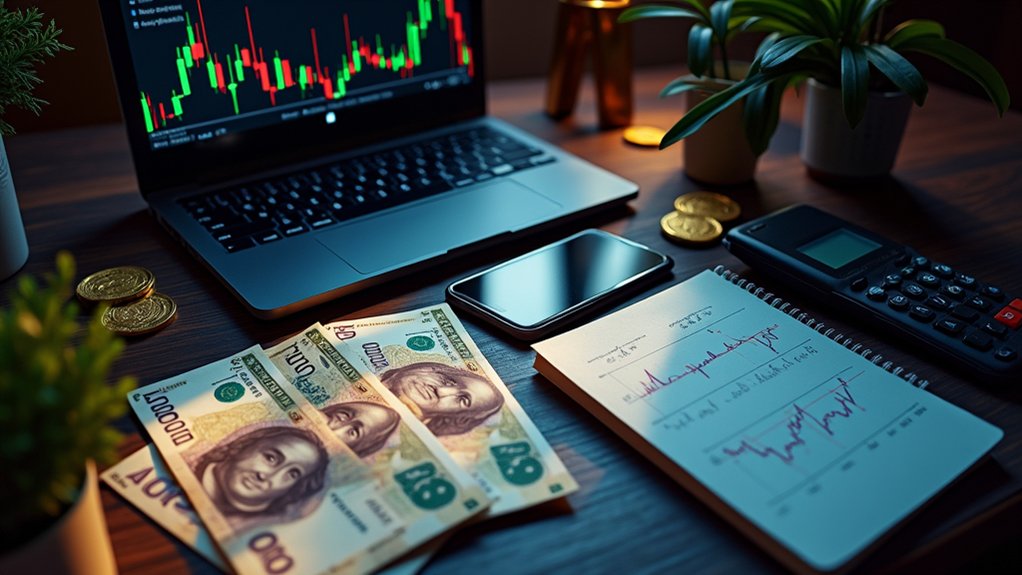

Starting forex trading means picking a regulated broker, opening an account with ID verification, funding it through whatever method actually works in your country, downloading a platform like MetaTrader 4 or 5, and placing orders on currency pairs with proper stop-losses attached. The whole setup takes one to three days depending on how fast verification clears and money moves. Demo accounts let traders practice without risking real cash first. The mechanics are straightforward; the devil lives in execution, strategy, and risk management—territory worth exploring further.
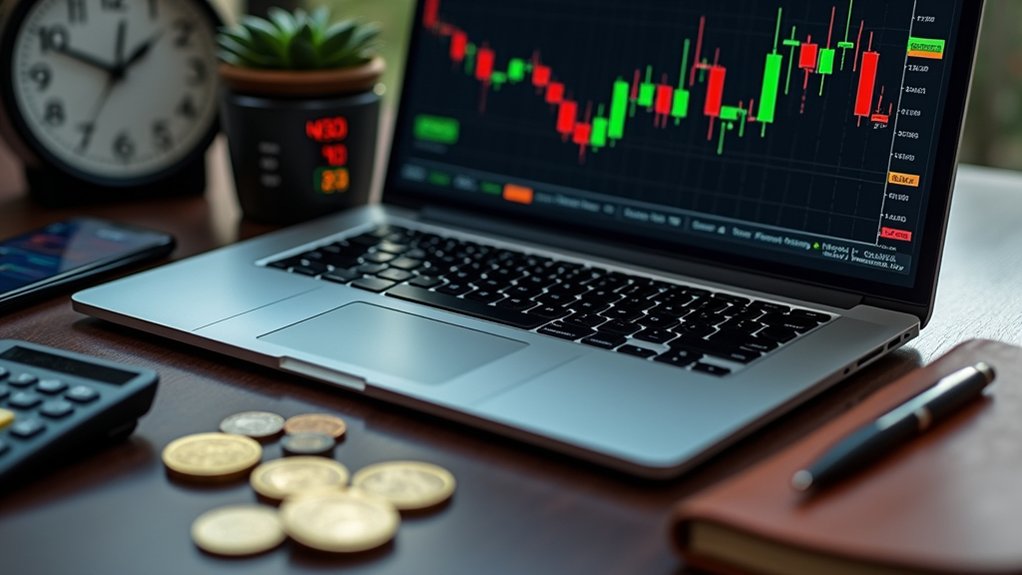
The forex market doesn't care where a trader lives. It's a $6 trillion daily beast that operates 24 hours, five days a week, and it welcomes anyone with internet access and capital. For traders across Africa—from Lagos to Nairobi, Cairo to Johannesburg—the entry point is the same as anywhere else. But the path? That's where things get interesting.

The forex market's $6 trillion daily volume operates indifferently—same entry point worldwide, but vastly different paths for African traders.
Understanding comes first. Currencies trade in pairs. Always. EUR/USD, GBP/ZAR, USD/NGN. A trader buys one currency while simultaneously selling another. The market is decentralized, over-the-counter, meaning no central exchange. Prices fluctuate constantly. Leverage amplifies both gains and losses. The potential exists. So does the risk.
Learning the language matters. Pips. Lots. Spreads. Margin. Leverage. These aren't optional vocabulary words—they're the operating manual. Technical tools like candlestick charts, support and resistance levels, indicators. Order types: market, limit, stop-loss, take-profit. Most brokers offer demo accounts. Free practice. No real money at stake. Smart traders use them. A demo account allows practicing trading strategies and gaining experience without risking real money before entering the live forex market. Many beginners start with free educational resources including video tutorials, webinars, and trading courses that require zero financial investment.
Broker selection becomes critical for African traders. Regulation varies wildly across the continent. South African brokers fall under FSCA oversight. Nigerian traders navigate CBN restrictions. Kenyan options differ from Egyptian ones. Spreads, fees, deposit methods, withdrawal processes—these aren't uniform.
Mobile money integration matters in East Africa. Bank transfers dominate elsewhere. Platform stability during volatile African internet conditions? Non-negotiable. Brokers function as middlemen between retail traders and the interbank market, providing leverage and matching orders. Lower spreads mean lower trading costs and more profit retained by the trader.
Setting up an account involves paperwork. Identity verification. Risk disclosures. Minimum deposits that range from reasonable to absurd depending on the broker. The trading platform—MetaTrader 4, MetaTrader 5, proprietary systems—needs configuration. Customer support availability during African time zones isn't guaranteed with international brokers. Evaluating account features like minimum deposits, available leverage, and execution speed helps narrow down broker options.
Strategy development separates hopefuls from survivors. Day trading, swing trading, position trading—each demands different timeframes and temperaments. Risk rules matter: never stake more than 1-2% per trade. Testing strategies using historical data and demos reveals what works, what doesn't, and what only works in theory.
Entry criteria, exit criteria, stop-loss placement, take-profit targets. All decided before emotion enters. Understanding foreign currency pairs and their behavior patterns becomes essential for executing any consistent strategy.
The first trade feels monumental. It isn't. Choose a pair. Determine position size based on risk rules. Buy if anticipating a rise, sell if expecting a fall. Set the entry order. Attach stop-loss and take-profit levels. Done.
Managing positions requires discipline. Monitor trades. Adjust stop-losses. Close partially or completely based on conditions, not feelings. Record everything. Review outcomes. Learn. After closing trades, review performance objectively to identify strengths and areas for improvement. The market teaches harshly but effectively.
African traders face unique challenges—currency controls, capital restrictions, infrastructure gaps—but the core mechanics remain universal. The forex market still doesn't care where anyone lives.
Common Questions
Which Brokers Accept Mobile Money Deposits From Kenya, Nigeria, or Ghana?
HFM, Pepperstone, Exness, and Trade Nation all accept mobile money from Kenya, Nigeria, and Ghana.
HFM takes M-Pesa, Airtel Money, and MTN Mobile Money.
Pepperstone supports M-Pesa in Kenya (minimum $200).
Exness works in Ghana, Uganda, Cameroon, and Rwanda with MTN and other local networks—deposits start at just $10.
Trade Nation handles M-Pesa and Airtel in Kenya.
These brokers are regulated internationally and process deposits fast, often within hours.
Can I Trade Forex Legally in My African Country Without Government Restrictions?
Trading Forex legally in most African countries? Yes, absolutely possible. South Africa, Nigeria, Kenya, and others allow it under regulated frameworks. But—and here's the kicker—government restrictions vary wildly. Exchange controls, trading caps, and currency movement limits exist in many nations.
Some countries have zero clear laws, which isn't exactly reassuring. Tanzania tightens foreign currency use. Sharia-compliant nations may ban it outright. Legal? Often. Restriction-free? Rarely. Always check local rules before diving in.
How Do Power Outages and Poor Internet Affect My Trading in Africa?
Power cuts and dodgy internet brutally disrupt African forex traders. Sub-Saharan Africa averages over 70 hours of outages monthly—some countries hit 100-plus. South Africa alone lost 2,000+ hours in early 2023. Traders miss entries, can't exit positions, get stuck mid-trade. Mobile networks drop. Platforms freeze. Stop-losses fail to trigger.
Around 600 million Africans lack electricity access entirely, creating the world's worst digital divide. Generators and batteries cost money, eating into already thin margins. It's a constant operational nightmare.
What Happens to My Funds if My Broker Suddenly Exits the African Market?
When a broker exits, the outcome depends heavily on regulation—or lack of it. South African brokers under FSCA must segregate client funds, offering some protection.
Elsewhere? Not so much. Traders face withdrawal freezes, platform lockouts, and vanished balances. Reputable brokers notify clients and facilitate transfers. Shady offshore operators just disappear. Currency controls and liquidity crunches worsen the mess. Recovery? Often slow, incomplete, or impossible without strong local regulators and compensation schemes that barely exist across most of Africa.
Do I Need to Convert My Local Currency to USD Before Depositing?
Not necessarily. Many brokers accept Nigerian naira, South African rand, Kenyan shillings, or other African currencies as account base currencies. If the broker supports it, traders can deposit directly without conversion.
But if they pick USD as their base currency and deposit local money, the broker converts it—and charges a fee. Some African traders open multi-currency accounts with digital banks to dodge repeated conversion hits. It depends on the broker's options and the chosen base currency.