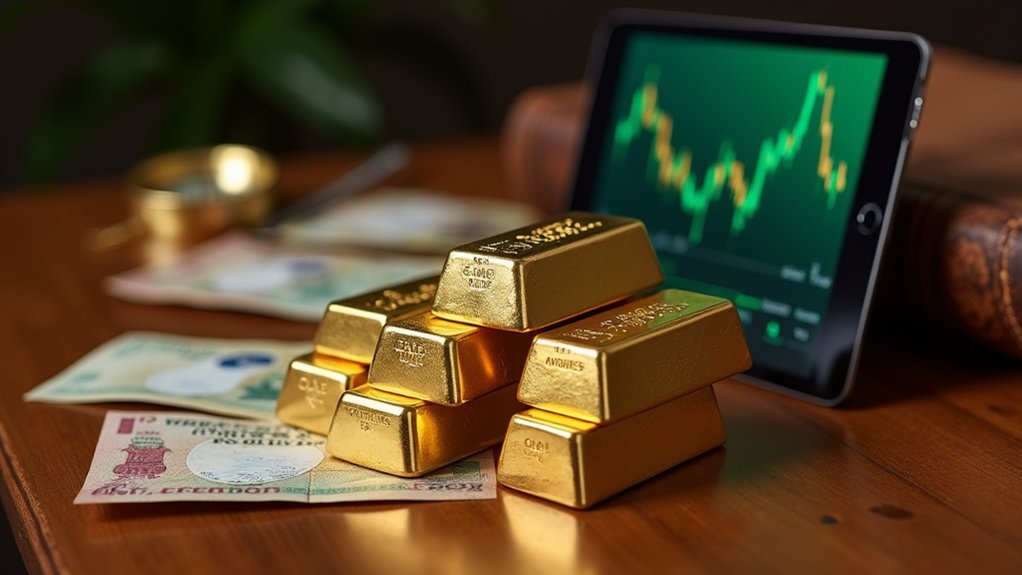

Central banks went on a gold-buying spree in September, tripling their purchases from the sleepy summer month before. Goldman Sachs pegged global central bank gold acquisitions at 64 tonnes for the month, while the World Gold Council reported 77 tonnes. Either way, it's a massive jump from August's measly 21 tonnes.
The third quarter overall saw a 10% year-on-year rise in gold buying, totaling 199.5 tonnes. September alone marked the strongest monthly price increase since 2016. Gold eventually rocketed above $4,380 per ounce in October, hitting record highs.

Middle Eastern buyers led the charge. Qatar grabbed 20 tonnes, Oman added 7 tonnes. Poland and Uzbekistan joined the party. China officially reported 26 tonnes, though Goldman estimates the real September figure at just 15 tonnes. The discrepancy matters because official numbers often understate reality. Goldman and Société Générale estimate China's 2023 purchases could hit 250 tonnes total. Some countries report only a fraction of what they actually buy.
India's Reserve Bank has been systematically stacking gold too. Russia's data reflects the pre-2022 sanctions era, back when transparency was slightly less fictional.
Why the rush? Geopolitical chaos, financial uncertainty, and the ever-popular de-dollarisation strategy. Central banks want portfolio resilience and aren't thrilled about sanctions weaponizing reserve assets. This isn't price-driven buying. It's structural, strategic, and probably not stopping anytime soon.
Goldman projects average monthly purchases will hover around 80 tonnes through Q4 2023 and into 2026. They see gold hitting $4,900 per ounce by end-2026. Central bank demand creates a floor during market downturns, and when you combine that with ETF inflows and private sector buying, the dual pressure becomes intense. Unlike professional forex traders who chase monthly returns, central banks play the long game with multi-year allocation strategies. Gold also eliminates the settlement risk inherent in foreign exchange transactions, where counterparties must wait for sequential currency deliveries across different time zones.
Seasonal acceleration in Q3-Q4 is typical, but this year's surge stands out. July and June saw Chinese purchases around 1.9–2.2 tonnes monthly. September's spike wasn't just seasonal. It was a statement.
The market structure is evolving. Institutional and private demand are colliding. Central banks are diversifying reserves for the long haul, and that trend looks locked in for years. The shift away from dollar-denominated assets has increased the cost of currency hedging for many central banks, making unhedged gold holdings more attractive as a reserve diversification tool.