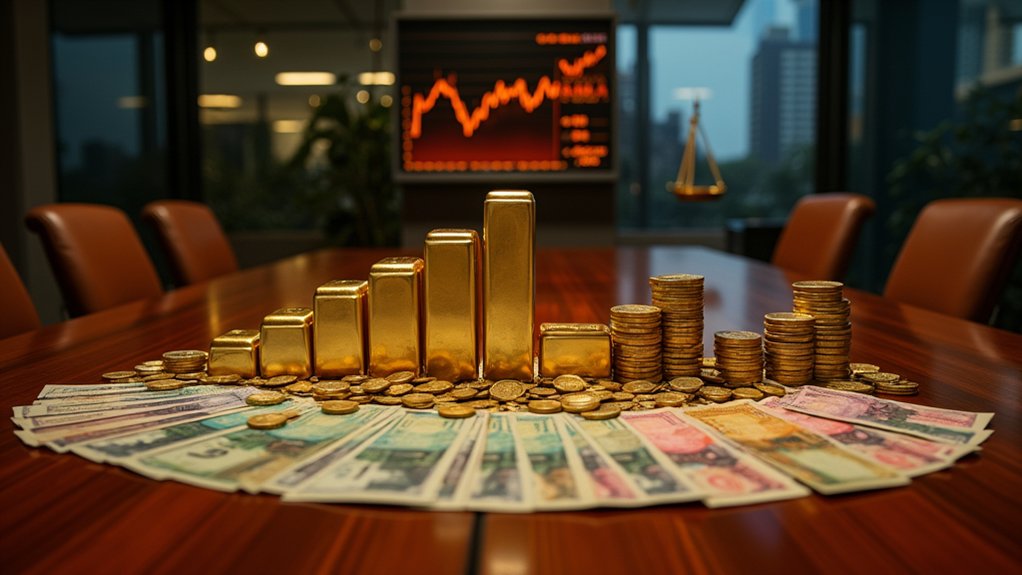
Africa's central banks are playing both sides of the gold trade, and it's getting messy. Some are buying. Others are selling. And everyone's trying to figure out what the hell is happening with their reserves.
Ghana just dumped 18.6 tonnes—51% of its gold holdings—in late January 2026. The reason? Gold had ballooned to over 40% of its reserves. Too much exposure, they said. Not enough diversification. Classic central bank paranoia about concentration risk. Never mind that gold helped rebuild those reserves after they got depleted in 2022. Never mind the cedi posted its first annual gain in over 30 years thanks to gold prices.

But now the cedi's down 4.8% against the dollar in early 2026, and FX auctions are seeing $295 million to $356 million in bids while the bank supplies just $125 million each round. The Bank of Ghana has deployed various monetary policy tools to stabilize the foreign exchange market, but currency pressures persist despite these regulatory interventions.
Meanwhile, other African central banks are loading up. Egypt became the continent's biggest buyer in 2025, desperate to stabilize reserves. Kenya's planning purchases to diversify its $12.46 billion stash. Rwanda, Namibia, DRC, Nigeria, Zimbabwe, Tanzania—all adding gold. Zimbabwe's even linking it to currency stabilization, which is either ambitious or delusional depending on who you ask. Nigeria's reserve management strategy comes amid ongoing pressure on the Nigerian Naira in global FX markets, where chronic dollar shortages continue to test monetary policy interventions. Morocco's central bank faces similar FX pressures, with the Moroccan Dirham navigating a managed float system that limits volatility but constrains flexibility in responding to external shocks.
The numbers are wild. African official gold holdings jumped from 605 tonnes in 2014 to over 738 tonnes in 2025. That's $70 billion, roughly 15% of total foreign exchange holdings.
Ghana mined 140 tonnes last year, earning $20.9 billion in exports. Mali hit 100 tonnes despite labor chaos. Burkina Faso recorded a historic 94 tonnes. Sudan cranked out 70 tonnes and pulled in $1.8 billion.
Ghana's GoldBod strategy is particularly interesting. The government body became the sole licenser for gold traders in 2025, formalizing artisanal production and curbing smuggling. It exported over 25,780 kg in Q3 alone, beating large-scale miners.