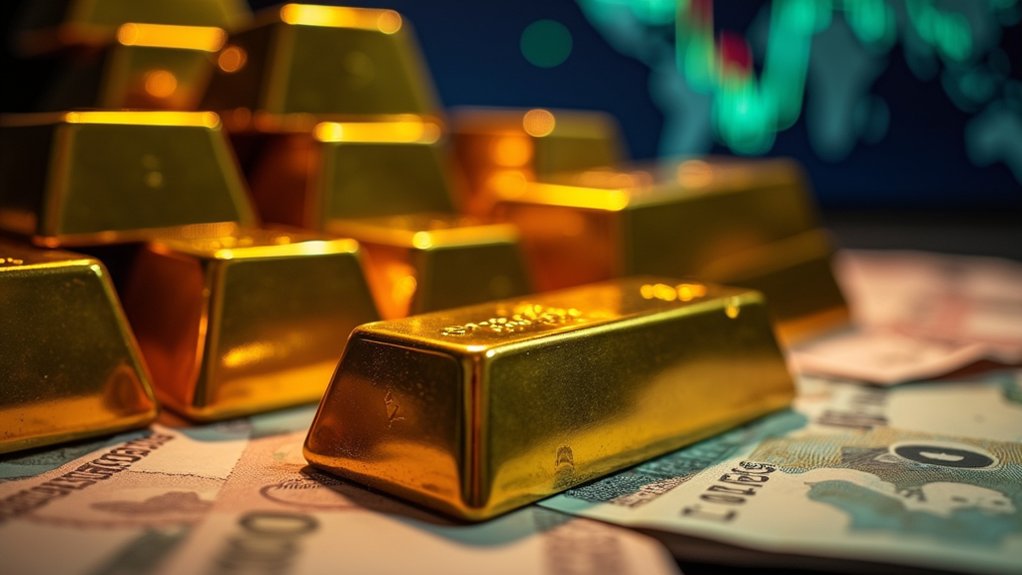

Gold just did something it's never done before. On January 26, 2026, the precious metal blasted past $5,000 per ounce, hitting an all-time high of $5,104. That's not a typo. Five thousand dollars for a single ounce of shiny metal.
The surge reflects a massive shift toward safe-haven assets. Investors are nervous. Geopolitical tensions, economic uncertainty, tariff disputes—pick your poison. When the world feels shaky, money flows into gold. It's been that way for centuries, and 2026 is proving no different.

This rally didn't come out of nowhere. Gold broke $3,000 in March 2025. Then $4,000 in October 2025. Now $5,000 just three months later. That's a blistering pace. Silver prices climbed sharply too, signaling this isn't just about gold—it's about precious metals broadly.
Multiple factors converged to push prices higher. A weakening dollar added fuel to the fire, making gold more attractive to international buyers. Sticky inflation, despite being lower than recent years, continues gnawing at purchasing power. Meanwhile, economic growth in developed economies looks fragile. Political uncertainty remains elevated globally, particularly in January when investors typically get jittery.
The Federal Reserve‘s policy meeting on January 27-28 looms large. Rates are expected to stay put after three cuts in late 2025. But traders are laser-focused on Chair Jerome Powell‘s guidance about future rate cuts. Lower interest rates make non-yielding assets like gold more appealing. When bonds pay less, gold starts looking better by comparison. Monetary policy decisions by central banks create ripple effects across forex markets, influencing the relative strength of currencies and driving investors to reassess their portfolio allocations.
Some analysts see gold's trajectory as justified given the macroeconomic landscape. Others wonder if we're witnessing a bubble inflating in real time. The answer probably depends on whether these underlying pressures persist or fade.
What's clear is that gold's remarkable run reflects genuine investor unease. Risk aversion is driving broad-based safe-haven flows. Mixed economic data, upcoming Big Tech earnings, and policy uncertainty all contribute to the volatility. Central banks around the world have also been accumulating gold reserves as part of their broader strategy to diversify away from dollar-denominated assets and maintain economic stability amid currency market turbulence.
Inflationary pressures continue to influence currency valuations and drive traders toward tangible assets as hedges against eroding purchasing power. Whether this new reality holds or eventually pops remains anyone's guess. For now, gold is having its moment—and then some.