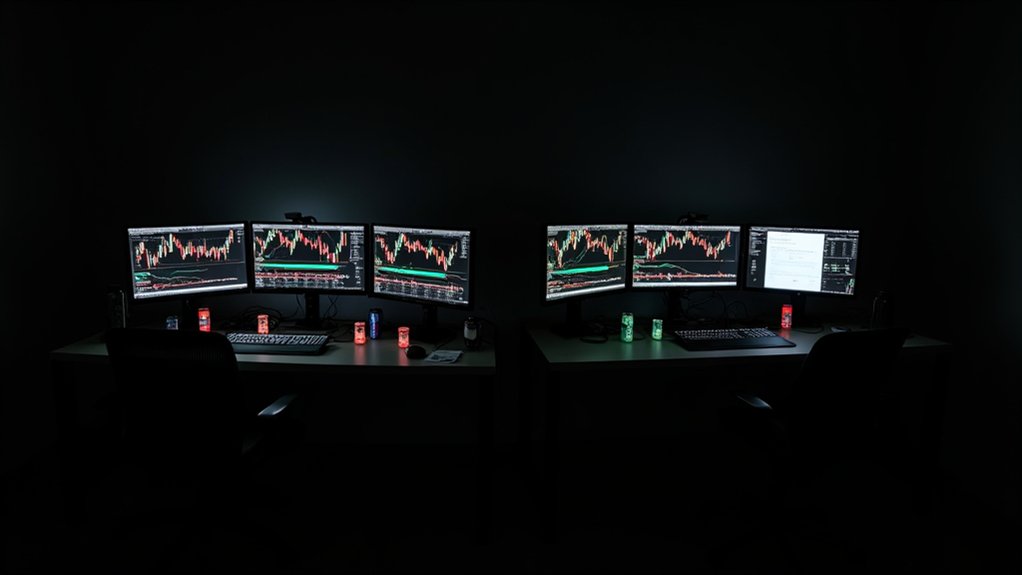
Spot FX refers to the foreign exchange market where currencies are bought and sold for immediate delivery, typically settled within two business days (T+2).
Spot FX enables immediate currency exchange at current market rates, with standard settlement occurring within two business days of the transaction.
When you execute a spot FX transaction, you agree to exchange one currency for another at the current market rate, known as the spot rate or spot price.

This is the most straightforward type of currency trade and represents the largest segment of the forex market.
Unlike forward contracts or futures, spot FX involves no future delivery date beyond the standard settlement period.
For example, if a business needs euros immediately to pay a European supplier, they would use the spot market to convert their dollars to euros at today's prevailing exchange rate.
The value date represents when the actual exchange of currencies occurs between parties, which is the settlement date two business days after the trade execution date.
The mechanics involve currency pairs, where one currency is quoted against another to determine the exchange rate for the transaction.
In short: Spot FX is the immediate purchase or sale of currencies at the current market rate, with settlement typically occurring within two business days.
Example in Action
You want to buy US dollars immediately using South African rand at the current market rate. The USD/ZAR spot rate is 18.50, meaning one US dollar costs 18.50 rand for settlement in two business days.
You exchange 18,500 rand and receive exactly 1,000 US dollars at that precise rate with no future contract or delayed delivery. This immediate exchange at the prevailing market price is a spot FX transaction, the most common way retail traders and travelers convert currencies.
Understanding how to read forex quotes is essential, as the first currency in the pair (USD) is the base currency and the second (ZAR) is the quote currency, with the rate showing how much of the quote currency is needed to purchase one unit of the base currency. When executing this trade, you would see bid and ask prices that represent the rate at which you can sell or buy the currency pair, with the difference between them forming the spread that determines your trading cost.
Why It Matters
At the heart of every cross-border payment, every remittance sent home to Lagos or Nairobi, every manufacturer in Johannesburg buying equipment from China, sits the spot FX market—moving $2.1 trillion a day and setting the price for nearly everything that crosses a border.
It's where real-time supply and demand collide to determine what your currency is actually worth. Central banks watch it. Corporations hedge with it. Your grocery bill reflects it.
Common Questions
Can African Traders Access Spot FX Markets With Local Bank Accounts?
African traders can access spot forex markets with local bank accounts, primarily in South Africa via FSCA-regulated brokers accepting ZAR deposits. Outside South Africa, access depends on broker support for local banking, which remains inconsistent across the continent.
Which African Currencies Have the Highest Liquidity in Spot FX Trading?
South African Rand leads African spot FX liquidity, followed by Nigerian Naira and Kenyan Shilling. Botswana Pula and Ghanaian Cedi also show strong trading volumes, driven by exports, remittances, and active central bank interventions across the continent.
Do African Brokers Offer Better Spreads Than International Platforms for Local Pairs?
African brokers generally offer tighter spreads on local pairs like USD/ZAR and EUR/ZAR compared to international platforms, benefiting from regional liquidity, faster execution during African market hours, and lower intermediary costs for traders.
How Do Currency Controls in African Countries Affect Spot FX Execution?
Currency controls mandate prior approvals and documentation, delay cross-border transfers, ration hard currency access, and shrink liquidity pools. These restrictions widen spreads, distort pricing, trigger parallel markets, complicate hedging, and increase operational risks across multiple African jurisdictions.
Are There Regulatory Differences for Spot FX Trading Across African Regions?
Yes, significant regulatory differences exist across African regions. South Africa and Kenya maintain robust frameworks through FSCA and CMA, while Nigeria's SEC guidelines are developing. CEMAC offers regional oversight, and many countries remain loosely regulated or unregulated.
« Back to Glossary Index