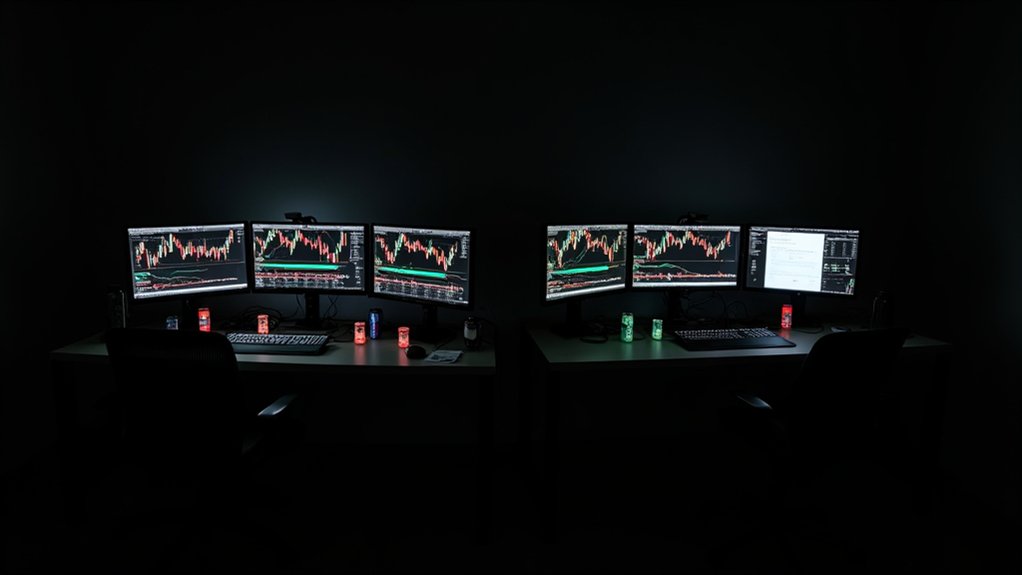
Single-dealer platforms (SDPs) provide access to forex prices and execution from one financial institution, typically a major bank. When you trade on an SDP, you see only that institution's quotes and liquidity.
Single-dealer platforms limit traders to one bank's quotes, restricting access to that institution's pricing and liquidity pool alone.
Multi-dealer platforms (MDPs), by contrast, aggregate prices from multiple banks and liquidity providers simultaneously, displaying the best available rates from all sources. Think of it like shopping: an SDP is similar to buying from one store at their listed price, while an MDP is like comparing prices across several stores before choosing the best deal.

MDPs generally offer tighter spreads and more competitive pricing due to competition among dealers, while SDPs may provide deeper relationships and customized services from a single banking partner. Major institutional platforms like EBS and Reuters Matching facilitate forex trading by connecting buyers and sellers through their order matching systems. Some retail forex brokers operate as Market Maker models where they may take the opposite side of client trades, while others use STP or ECN execution to route orders directly to liquidity providers.
In short: Single-dealer platforms offer quotes from one bank, while multi-dealer platforms aggregate and compare prices from multiple liquidity providers simultaneously.
Example in Action
You want to trade 10,000 USD/ZAR and check prices on both platforms.
On a single-dealer platform, one bank quotes you 18.5000 and you must accept or reject that price alone.
On a multi-dealer platform, you see five banks competing: Bank A at 18.5000, Bank B at 18.4800, Bank C at 18.4900, Bank D at 18.5100, and Bank E at 18.4750—you pick Bank E and save 250 ZAR (18.5000 minus 18.4750 times 10,000) compared to the single-dealer option.
The multi-dealer setup gives you transparency and better execution because dealers compete for your order in real time.
Multi-dealer platforms often operate as Electronic Communication Networks that aggregate quotes from multiple liquidity providers and route your order to the best available price. These liquidity providers continuously offer bid-ask spreads that allow trades to execute immediately without waiting for a counterparty.
Why It Matters
For traders operating across Nigeria, Kenya, South Africa, and the rest of the continent, the choice between single-dealer and multi-dealer platforms isn't just technical jargon—it shapes how they access liquidity, what prices they actually get, and whether they're stuck with one bank's view of the market or can shop around.
Multi-dealer setups let you compare. Single-dealer setups lock you in—sometimes for better execution, sometimes not.
Common Questions
Which Platform Type Offers Better Spreads for Trading South African Rand Pairs?
Multi-dealer platforms generally offer tighter spreads on South African Rand pairs due to aggregated liquidity and real-time price competition among multiple banks, benefiting African corporate treasurers and traders seeking cost-effective execution in ZAR crosses.
Do Nigerian Traders Face Restrictions When Switching Between Platform Types?
Nigerian traders face no legal restrictions when switching between single-dealer and multi-dealer platforms. The Central Bank of Nigeria does not regulate individual retail forex activity, allowing free choice among international brokers, provided proper tax compliance is maintained.
Can Kenyan Mobile Money Be Used to Fund Multi-Dealer Platform Accounts?
Kenyan mobile money, primarily M-Pesa, can fund multi-dealer platform accounts indirectly through payment gateways like PesaPal or DPO. Direct integration remains limited due to licensing restrictions, pushing most international platforms to use intermediary processors for compliance.
Are Single-Dealer Platforms More Common Among Brokers Serving North African Traders?
No. Multi-dealer platforms like MT4 and MT5 dominate among brokers serving North African traders. Single-dealer platforms are less common in the retail space, used mainly by institutions and well-capitalized clients across the region.
Do Egyptian Regulations Favor One Platform Type Over the Other?
Egyptian regulations do not favor single-dealer or multi-dealer platforms. Both structures face identical Central Bank of Egypt licensing requirements, compliance standards, AML/KYC obligations, and operational oversight, ensuring equal treatment under current payment system and foreign exchange regulatory frameworks.
« Back to Glossary Index