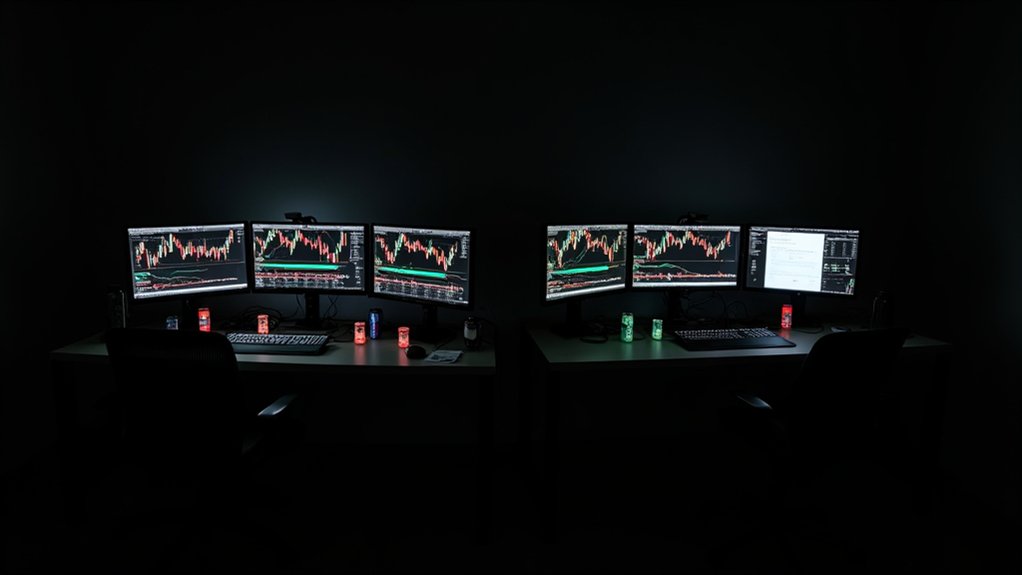
A requote occurs when a forex broker cannot execute your trade at the price you requested and instead offers you a different price. This typically happens during periods of high market volatility or when there's a delay between your order submission and execution.
A requote happens when your broker can't fill your order at the requested price due to market movement or execution delays.
When you click to buy or sell a currency pair at a displayed price, that price may have changed by the time your order reaches the broker's server. The broker then sends back a new quote, asking if you'll accept the updated price. You can either accept the new price or cancel the trade.

Requotes are more common with market orders and tend to occur during major news releases or when trading with dealing desk brokers who manually process orders. Brokers using ECN or DMA execution models typically experience fewer requotes since orders are routed directly to liquidity providers without manual intervention. Market maker brokers are more likely to issue requotes because they take the opposite side of client trades and may need to adjust prices to manage their risk exposure.
In short: A requote is when your broker offers you a different price than the one you originally tried to trade at because the market price changed before your order could be filled.
Example in Action
You place a market order to buy USD/ZAR at 18.5000, but before your broker can execute it, the market suddenly jumps to 18.5200 due to volatile news about South African interest rates.
Your broker sends you a requote notification showing the new price of 18.5200 and asks you to confirm whether you still want to proceed with the trade at this higher rate.
If you accept the requote, your order executes at 18.5200 instead of your intended 18.5000, meaning you pay 20 pips more per dollar.
This typically happens during fast-moving markets when prices change faster than orders can be processed.
Requotes are more common with dealing desk brokers who act as market makers, as they take the opposite side of your trade and may need to adjust prices to manage their own risk exposure.
While requotes ask for your confirmation at a new price, slippage in Forex occurs when the trade is automatically executed at a different price than expected without giving you the option to approve the change first.
Why It Matters
Requotes disrupt the entire rhythm of trading—that split-second decision to enter or exit a position suddenly becomes a negotiation nobody asked for.
Worse pricing eats profits.
Execution delays wreck entries.
Scalpers across Nigeria, Kenya, South Africa watch margins vanish.
Trust erodes when platforms keep demanding price acceptance.
Repeated requotes don't just hurt one trade. They compound, dragging down overall returns and making traders second-guess everything.
Common Questions
Do African Brokers With Poor Infrastructure Cause More Requotes Than International Brokers?
Yes, African brokers with weak infrastructure typically generate more requotes than international brokers due to slower servers, unstable internet, power outages, and limited liquidity access, particularly outside South Africa's better-regulated, better-capitalized trading environment.
Can Mobile Trading Apps Reduce Requotes for Traders in Rural African Areas?
Mobile trading apps can reduce requotes through faster execution and optimized technology, but their effectiveness in rural African areas remains limited by persistent connectivity issues, network outages, and inadequate infrastructure that undermine real-time order processing.
Which African Currency Pairs Experience the Highest Requote Rates During Volatility?
USD/ZAR experiences the highest requote rates during volatility among African currency pairs, driven by rapid price swings exceeding 1000–1500 pips daily, commodity dependence, political instability, and lower liquidity compared to major global pairs.
Are Requotes More Common When Depositing in Local African Currencies Versus USD?
Yes, requotes are more common when depositing in local African currencies versus USD. Thinner liquidity, wider spreads, slower broker infrastructure, and fewer liquidity providers for African currency pairs increase price slippage and requote frequency during volatile market conditions.
Do South African Regulated Brokers Have Fewer Requote Issues Than Offshore Brokers?
FSCA-regulated South African brokers generally report fewer requote issues than offshore brokers, due to local server infrastructure, stricter execution standards, transparent pricing policies, and regular audits that reduce latency and discourage manipulative requoting practices.
« Back to Glossary Index