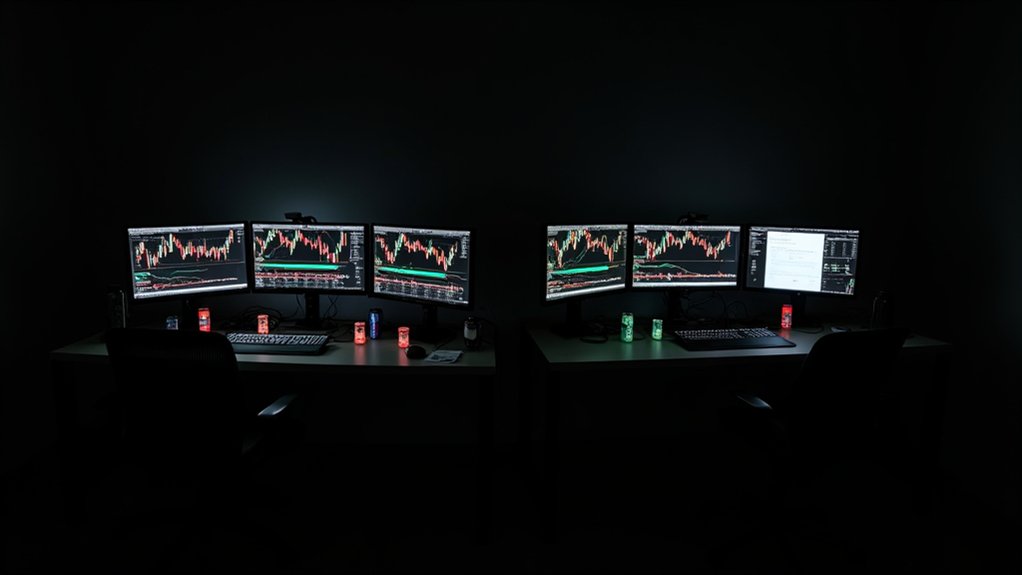
Leverage is the use of borrowed capital to increase the potential return of an investment. In forex trading, it allows traders to control larger positions than their account balance would normally permit. For example, 50:1 leverage means you can control $50,000 in currency with just $1,000 of your own money. Think of it like a lever in physics—a small amount of force (your capital) can move a much heavier object (your market position).
While leverage amplifies potential profits, it equally magnifies losses, meaning you can lose more than your initial investment if the market moves against you. Brokers typically express leverage as a ratio and require margin deposits to maintain leveraged positions. Margin functions as a deposit requirement that enables traders to open and hold these leveraged positions in the foreign exchange market. The primary goal of using leverage is to ensure that returns from the position exceed the borrowing costs, which in trading include interest charges and financing fees. To avoid over-leveraging, traders should implement proper risk management strategies including appropriate position sizing and stop-loss orders.

In short: Leverage lets you control large trading positions with relatively small capital, multiplying both potential gains and losses.
Example in Action
A South African forex trader has R10,000 in their account and uses 1:100 leverage to open a position on USD/ZAR at 18.00. With leverage, they can control a position worth R1,000,000 (100 times their capital).
If USD/ZAR moves up to 18.20, the R1,000,000 position gains R20,000 in value, which is a 200% return on their original R10,000. However, if the rate drops to 17.80 instead, they would lose R20,000, wiping out their entire account and potentially owing more. When opening this position, a portion of the trader's capital becomes used margin, locked in and unavailable for opening additional trades. When account equity falls below the required margin level, the broker may issue a margin call, requiring additional funds or automatically closing positions to prevent further losses. This scenario demonstrates how leverage amplifies both gains and losses, making it essential for traders to assess their comfort with debt levels before utilizing high leverage ratios.
Why It Matters
That example shows the mechanics.
Now, why does leverage matter to African forex traders? Simple: it amplifies both wins and wipeouts. High leverage magnifies returns when trades work—but destroys accounts when they don't. Kenyan, Nigerian, or South African traders face the same math. Brokers push 1:500 ratios knowing most will burn out. Leverage decides who survives and who funds someone else's profit.
Common Questions
Can Nigerian Brokers Legally Offer 1:500 Leverage Under CBN Regulations?
CBN regulations do not explicitly authorize 1:500 leverage for Nigerian brokers. All leverage products require prior CBN approval under the 2025 FX Code. Offshore brokers offering such ratios operate outside CBN jurisdiction and client protections.
How Does Leverage Affect Margin Calls When Trading South African Rand Pairs?
Higher leverage reduces margin requirements but amplifies losses on ZAR pairs, triggering margin calls faster when equity drops below broker thresholds—typically 50% for retail accounts or 10% for professional traders, forcing position closures to protect brokers.
Do Kenyan Traders Pay Higher Spreads When Using Maximum Leverage Ratios?
Available data shows no direct correlation between leverage ratios and spread pricing for Kenyan traders. Brokers typically maintain consistent spreads regardless of selected leverage, though CMA-regulated firms adjust leverage based on equity levels and market conditions.
Which African Countries Restrict Leverage Limits for Retail Forex Traders?
South Africa, Kenya, and Mauritius impose formal leverage restrictions through their financial regulators. South Africa allows up to 200:1, Mauritius permits 100:1, while Kenya's CMA enforces registration without publishing explicit leverage caps for retail forex traders.
Does Leverage Amplify Losses Faster When Trading Volatile African Currency Pairs?
Yes, leverage amplifies losses exponentially faster on volatile African pairs like USD/ZAR. When 12.9% volatility meets high leverage ratios, capital erodes rapidly through widened spreads, margin calls, and magnified pip movements against trader positions.
« Back to Glossary Index