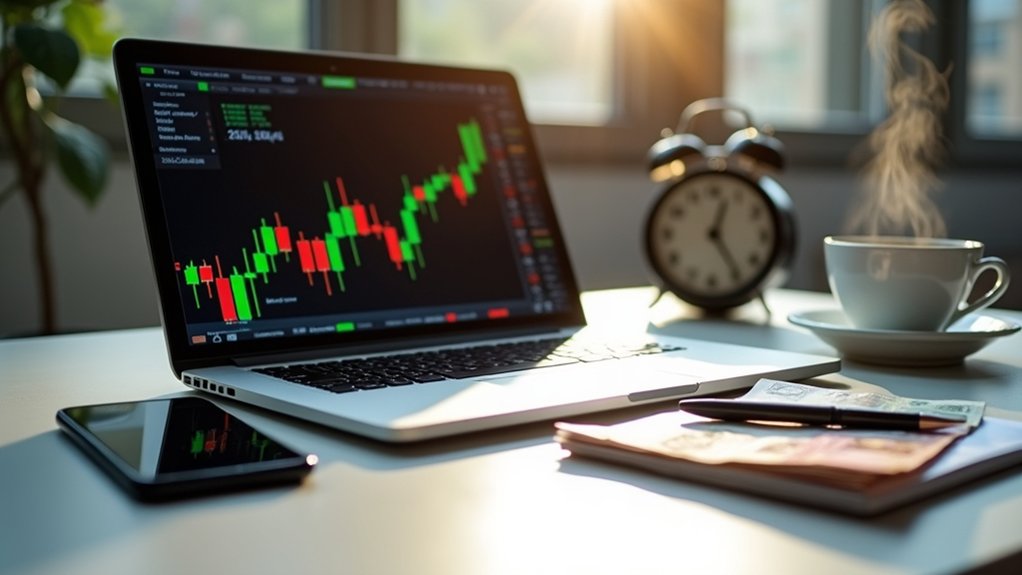
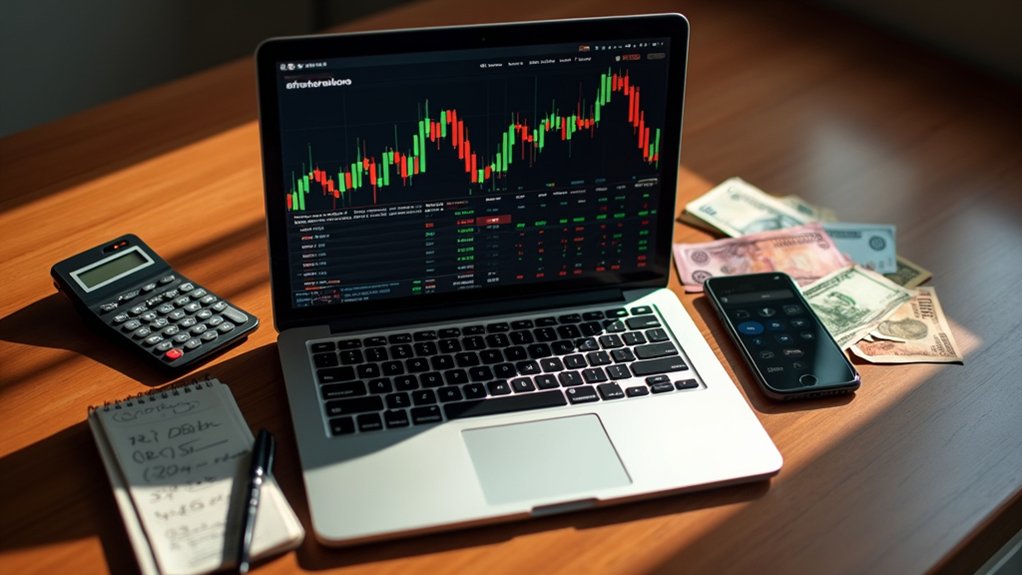
Forex trading signals are direct recommendations telling traders when to buy or sell currency pairs, complete with entry prices, exit targets, and stop-loss levels. They come from human analysts or automated algorithms, delivered through apps, SMS, or trading platforms. Traders use technical indicators like moving averages, RSI, and MACD to generate these signals, though free versions often disappoint. No signal guarantees profit—false calls happen constantly. They're decision-making tools, not crystal balls, and newcomers need basic market knowledge before jumping in. The mechanics behind effective signal interpretation reveal why most traders struggle.
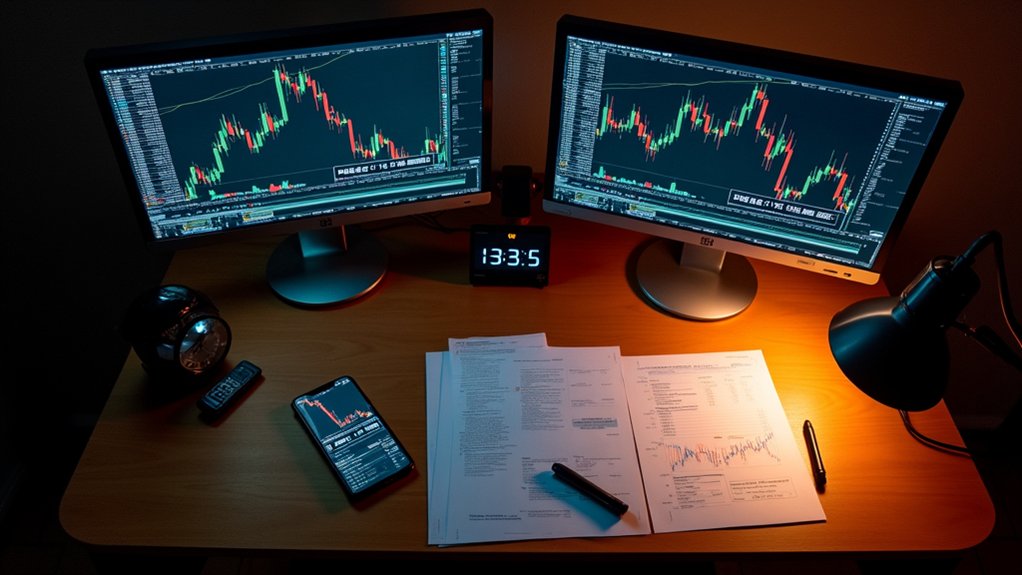
Forex Trading Signals
Forex trading signals promise something every African trader wants: a shortcut to profit in a market that never sleeps and rarely forgives mistakes. These signals are actionable recommendations telling traders when to buy or sell currency pairs, usually with specific entry prices, exit targets, and stop-loss levels included. They're generated through technical analysis, fundamental analysis, or both—incorporating everything from price trends on charts to economic news that might shake currencies like the Nigerian naira or South African rand.

The concept sounds simple enough. Signals identify potential trading opportunities and help manage risk. They're delivered in real-time via SMS, email, apps, or trading platform dashboards because timing matters when markets move fast. But here's the catch: signals are tools for decision-making, not guaranteed wins. No matter how polished the provider's track record looks.
There are different flavors. Manual signals come from human analysts who study markets and apply expertise. Automated signals are churned out by algorithms following predefined rules. Some are paid services with advanced analytics and coaching thrown in. Others are free, floating around Telegram groups and WhatsApp chats across Kenya, Ghana, Egypt, and beyond—though quality varies wildly. Aggregated signals pull from multiple sources or directly from trading software.
Signal services typically specify entry price, exit price, and stop-loss figures. Many include technical charts or analysis to justify the recommendation. Some display performance metrics like pips gained or lost, win rates, risk-reward ratios. A few offer trial access, managed accounts, or educational content. The delivery mechanisms are instant because volatile markets don't wait.
Generating signals involves analyzing currencies using price charts, indicators like moving averages or RSI, and economic events. Once the analysis is done, the signal is formulated with pair details and risk management levels, then transmitted immediately. Traders execute by placing orders based on those specifics. Monitoring follows—adjustments happen if conditions shift or new signals appear. Understanding signals requires familiarity with terminology like bullish and bearish trends, support and resistance levels, and common chart patterns that appear in the analysis. Beginners should also learn essential forex indicators that form the foundation of most signal generation methods.
Technical signal types vary. Moving average crossovers signal entries when short-term crosses long-term averages. RSI or Stochastic Oscillators flag overbought levels above seventy or oversold below thirty. MACD crossovers indicate bullish or bearish momentum. Chart patterns like head and shoulders or triangles spot reversals. Fibonacci retracement identifies support and resistance zones. Some traders favor price action analysis for extremely short-term ideas suited to scalping strategies. Bollinger Bands also generate signals by identifying price volatility and potential breakouts when prices touch or breach the upper or lower bands.
Now the reality. No signal guarantees accuracy. False signals happen. Losses occur even with reputable providers. Free signals especially may lack credibility or produce inconsistent results. African traders dealing with currency restrictions, limited broker options in countries like Zimbabwe or Angola, and fluctuating internet connectivity face additional hurdles. Many beginners explore free educational resources before committing to paid signal services, building foundational knowledge that helps them evaluate signal quality independently. Understanding currency correlation also helps traders diversify their portfolios by avoiding multiple positions on pairs that move together, reducing concentrated risk exposure. Executing signals effectively requires understanding different order types like market orders for immediate execution and limit orders for entering at specific price levels. Signals are useful. They're not magic. Vetting providers thoroughly matters because the market doesn't care about excuses.
Common Questions
Do Forex Signal Providers Accept Mobile Money Payments Like M-Pesa or MTN?
Yes, multiple forex signal providers accept mobile money payments like M-Pesa and MTN Mobile Money. It's particularly common in Kenya, Tanzania, Ghana, Uganda, and Rwanda where mobile money usage runs high.
Some providers list over 10 payment options including M-Pesa, MTN, Airtel Money, and Orange Money. The setup works for unbanked traders who only need a basic phone and registered SIM card.
Deposits often start from $10 to $200, with instant transfers and no extra broker fees in most cases.
Can I Trust Signal Providers Operating From Nigeria or South Africa?
Trust isn't automatic just because a provider operates from Nigeria or South Africa. Some legit services exist—particularly those regulated by FSCA or holding international licenses. But scams are rampant.
The real test? Independent verification. Check MyFXBook, Trustpilot, real track records. Look for transparent performance data, not flashy Telegram promises. Many providers lack regulation entirely, which screams risk.
Location matters less than credentials. Due diligence separates the real traders from the con artists.
What Happens When Signals Arrive During Frequent Power Outages in My Area?
Signals land when there's no power? They're gone. The trade opportunity evaporates.
Most African traders can't execute because their setup's dead—no laptop, no router, no nothing.
Server-side stops might survive, but anything client-side won't. Miss the entry, miss the exit, hold positions you shouldn't.
Power comes back, signal's stale, market's moved. Outages don't pause forex. They just erase your edge while the rest of the world keeps trading.
Are Whatsapp and Telegram Signal Groups Legal in My African Country?
Most African countries don't ban WhatsApp or Telegram groups outright.
The problem starts when admins dish out trade signals without proper licenses—that's where regulators like South Africa's FSCA or Nigeria's SEC get annoyed.
Free discussion groups usually fly under the radar.
Paid signal services? Different story. They're often illegal if the person running them isn't licensed.
Plus, scams are rampant.
Legality depends entirely on what the group does and who's behind it.
How Do I Verify Signals When Internet Data Costs Are Expensive?
African traders stuck with pricey data can verify signals offline by downloading historical reports as compressed PDFs or CSVs, then analyzing them later without burning through airtime. SMS-based signal services skip the data drain entirely.
Demo accounts with cached price data let them test strategies without streaming costs. Weekly performance summaries beat real-time feeds.
Some providers offer audited track records in lightweight formats—text files, not video dashboards. WhatsApp groups sharing compressed screenshots work too, though quality varies wildly across the continent.