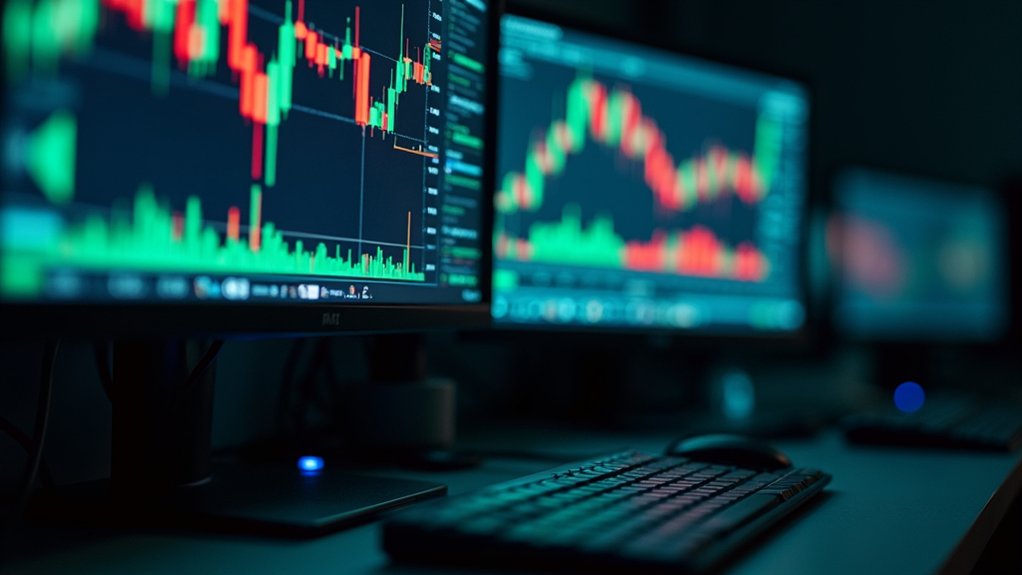

Forex trading in Uganda is 100% legal. No constitutional prohibition exists on buying or selling foreign currencies for profit. The Capital Markets Authority took over regulation in 2016 after an amendment granted it licensing powers. That's the legal framework, plain and simple.
Forex trading carries full legal status in Uganda—no constitutional barriers exist, only clear regulatory oversight since 2016.
Here's where it gets interesting. The Ugandan shilling's volatility has traders paying attention. Currency pressures mean opportunities—if you know what you're doing. Non-Dealing Online Foreign Exchange Brokers need CMA licenses to operate offices or solicit funds locally. Trading through personal accounts remains perfectly legal. Soliciting funds without a license? That's illegal.

International brokers get a pass if they're regulated by Tier-1 authorities like FCA, ASIC, or CySEC. The CMA isn't messing around. Licensed brokers must maintain capital reserves, segregate client funds, and follow reporting standards. The Foreign Exchange Amendment Bill 2023 set minimum paid-up share capital at 200 million shillings for money transfer businesses. That's real money.
Minimum deposits vary wildly. Some brokers accept as little as $10, though most traders start with $200-$500 for actual flexibility. Leverage amplifies everything—profits and losses. Over-leverage and you'll face margin calls when account equity drops below requirements. High market volatility represents the primary risk, not legal concerns.
Mobile Money integration through MTN and Airtel changed the game for unbanked Ugandans. Deposits and withdrawals happen via phone. That's accessibility the traditional banking system never offered.
The Uganda Revenue Authority classifies forex profits as taxable income. Earnings fall under capital gains or business income depending on whether you're trading as an individual or company. No specific forex tax category exists yet. Legal income generation requires tax compliance—surprise, surprise. Like other African markets with regulatory oversight, Uganda ensures brokers adhere to strict operational standards. Similar to Egypt's FRA oversight model, effective regulation protects traders while maintaining market integrity.
Popular strategies include trend following, breakout trading, and range trading within defined price ranges. Stop-loss orders limit damage. Take-profit orders lock in gains. Emotional biases like fear and greed kill accounts faster than bad trades. Growing internet penetration and economic expansion fuel participation. Kampala traders monitor global sessions and news events for short-term plays. Uganda's financial market continues to develop infrastructure that supports both retail and institutional currency exchange activities. The market doesn't care about expectations.