Forex trading is legal in Eswatini, but there's a catch—no local retail brokers exist, so traders funnel money through offshore platforms that often don't support the lilangeni. Most convert SZL to USD or ZAR via South African banks, then wire funds to international brokers regulated elsewhere. The Central Bank oversees monetary policy, FSRA handles non-bank financial services, yet local safeguards like segregated funds aren't guaranteed. Profits get taxed between 20% and 33%, counterfeit platforms are rampant, and cybersecurity awareness is practically zero. The details get messier from here.
Quick Facts That Matter
- Forex trading is legal in Eswatini, but no local retail brokers exist; traders must use offshore platforms regulated by international authorities.
- The Swazi Lilangeni rarely trades internationally, forcing most traders to fund accounts in USD, EUR, or ZAR through South African banks.
- Wire transfers take three to five days, and brokers rarely optimize services for Eswatini, causing withdrawal delays and inconsistent fees.
- Counterfeit platforms and online fraud dominate risks, with 6.5% of traders reporting losses and minimal cybersecurity awareness among users.
- Optimal trading windows align with London-New York overlap (2–6 PM local time), but low liquidity periods increase slippage and execution problems.
Overview: Forex Trading in Eswatini
In Eswatini, forex trading exists in a peculiar state of regulatory limbo. The Swazi Lilangeni is pegged 1:1 to the South African rand, which sounds stable until you realize the SZL barely trades internationally. Most brokers don't even offer it. The Financial Services Regulatory Authority oversees non-bank financial services, while the Central Bank of Eswatini maintains monetary policy.

But here's the kicker: there are zero local forex brokers. None. Traders must use offshore platforms, which creates its own mess of complications. When choosing an offshore broker, traders should verify regulation by reputable authorities like CySEC, FCA, SCB, or IFSC. Similar to neighboring markets, successful traders need to understand trading strategies and risk management principles when operating in the foreign exchange market. The country's $5 billion GDP depends heavily on financial services, yet retail forex operates entirely outside its borders.
Is Forex Trading Legal in Eswatini?
Forex trading sits in a perfectly legal zone in Eswatini, though calling it “fully developed” would be generous at best.
The Financial Services Regulatory Authority oversees things, established back in 2010 to bring some order to the chaos.
Trading currency pairs involving the Swazi Lilangeni? Legal. Opening accounts with platforms? Legal.
The Central Bank of Eswatini maintains the broader financial regulatory environment.
But legal doesn't mean sophisticated. The regulatory framework exists, sure, but it lags behind developed markets by a considerable margin.
Many traders look to international regulators like the Seychelles FSA for offshore broker options, though these operate outside Eswatini's direct oversight.
It's functional, not fancy. Traders can operate without breaking laws, but expectations should stay realistic about oversight quality.
Who Regulates Forex Trading in Eswatini?
The Financial Services Regulatory Authority sits at the top of Eswatini's forex regulatory pyramid, though “top” might oversell the situation. FSRA supervises non-bank financial services—brokers, investment firms, individual traders. Located on Mhlambanyatsi Road in Mbabane's Ingcamu Building, the authority maintains public databases of regulatory sanctions and issues warnings against unlicensed operators.
The Central Bank of Eswatini handles monetary policy, manages reserves, controls interest rates, keeps the Lilangeni pegged to the South African Rand.
Then there's the Exchange Control Division, issuing certificates to Authorized Dealers in Limited Authority under 1975 regulations.
The Eswatini Revenue Service collects 20-33% on profits.
Four regulators, one market. Most traders bypass this machinery entirely, opening accounts with FCA- or CySEC-licensed offshore brokers instead. These international brokers typically offer segregated client funds and negative balance protection—safeguards not always guaranteed under local frameworks. South Africa's FSCA regulatory body provides a regional benchmark for market integrity standards that neighboring countries often reference when evaluating their own frameworks.
How Forex Trading Works in Eswatini
Opening a retail forex account from Eswatini means stepping outside the country's borders—digitally, at least.
No local brokers exist in Eswatini—forex trading means going offshore, hunting platforms that'll actually take you.
No local brokers exist. Traders hunt for offshore platforms willing to accept them, which isn't simple when the lilangeni barely registers on global forex radars.
Most brokers demand accounts funded in something more liquid—USD, EUR, maybe ZAR since the lilangeni pegs to it anyway.
The setup requires solid internet, a regulated broker (think CySEC, FCA, SCB), and a bank that plays nice with international transfers.
Many African traders gravitate toward platforms like AvaTrade (Official Site 🔗) that specifically accommodate the region's trading conditions and regulatory landscape.
Then it's just logging into MT4 or whatever platform, placing trades, watching prices move. Simple mechanics, complicated setup.
Best Time to Trade from Eswatini
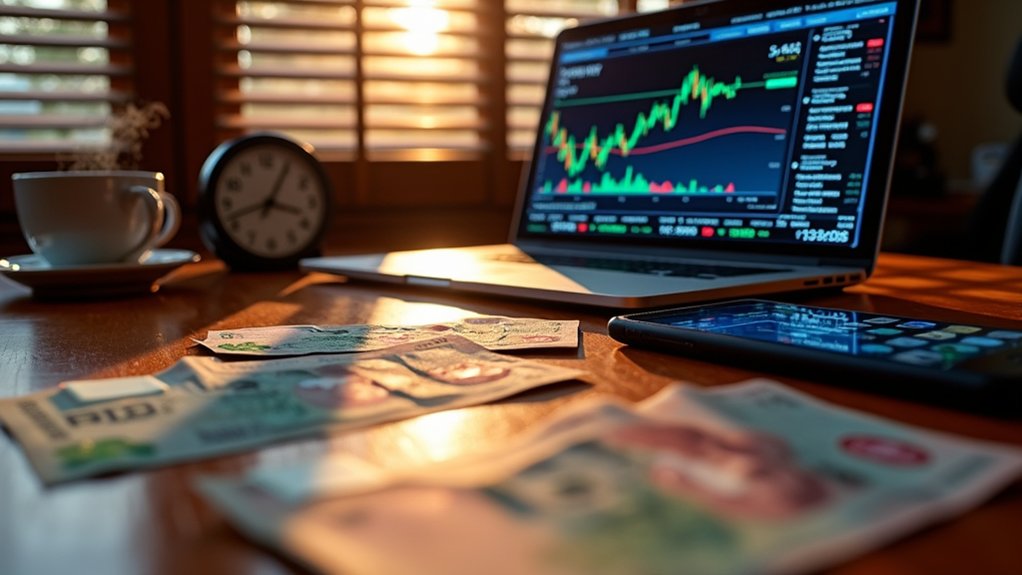
Timing matters when you're trading from a landlocked kingdom nobody's heard of. Eswatini sits in Central Africa Time (UTC+2), which creates overlap windows with major markets.
The London-New York crossover hits between 2 PM and 6 PM local time. That's when EUR/USD and GBP/USD pairs move. Wednesdays and Thursdays see the most action.
Asian sessions run early morning, good for JPY pairs if volatility scares you. Most traders aim for 10 AM to 4 PM SAST. Avoid 7 AM when Tokyo closes. Low liquidity around that hour increases slippage and execution delays.
The 3 PM to 6 PM window catches North American opening and European closing simultaneously. Understanding how trading session overlaps affect price movements helps identify when major currency pairs experience heightened activity. Platforms like MetaTrader 5 Mobile allow traders to monitor positions regardless of session timing.
Payments, Deposits and Withdrawals in Eswatini
Moving money in and out of forex accounts from Eswatini involves maneuvering a currency pegged to the South African rand, limited local banking infrastructure, and brokers who've never heard of Lilangeni.
Most traders convert SZL to USD or EUR through South African banks first.
Wire transfers take three to five days.
Credit cards work, sometimes.
E-wallets like Skrill or Neteller offer faster routes, assuming the broker accepts them.
Minimum deposits range from zero to two hundred dollars depending on the platform.
Withdrawal fees? They exist.
Processing times vary wildly.
Nobody's optimizing for Eswatini specifically.
Since the Lilangeni maintains a one-to-one peg with the rand, understanding ZAR trading characteristics helps predict conversion costs and timing when moving funds through South African channels.
Taxes, Reporting and Money Rules in Eswatini
Getting money into a trading account is one thing. Keeping it legal is another.
Eswatini's Exchange Control Regulations from 1975 say residents can't hold or deal in foreign currency except through authorized dealers. That's the law.
Speculative trading? Prohibited.
Forex profits get taxed between 20% and 33% by the Eswatini Revenue Service. Annual returns are due by June.
Here's the kicker: unused foreign currency from travel must be sold back within 30 days of returning home.
Foreign currency receipts must be declared and sold to authorized dealers for local currency.
The Central Bank watches everything.
Traders must also meet compliance requirements outlined in the broader regulatory framework governing foreign exchange activities.
Forex Trading Scams and Risks in Eswatini
Scammers love Eswatini's forex scene. Online fraud ranks among the most common economic crimes here. ATM fraud, card cloning, investment fraud—pick your poison.
About 6.5% of traders report getting burned by counterfeit platforms. The cybersecurity awareness? Nearly nonexistent, which criminals exploit gleefully. Banks handle fraud cases constantly, playing middleman for victims.
Money laundering investigations hit 151 cases, with banking representing 17% of the action. Real estate sucks up dirty money like a sponge.
High-profile embezzlement involves parliament members and military brass. Foreign actors from Asian and West African diasporas run cross-border fraud operations and money laundering schemes. The digital landscape expands, vulnerabilities multiply. Sophisticated networks exploit every technological gap available.
Quick Q and A
Can I Trade Forex Part-Time While Keeping My Job in Eswatini?
Yes, retail traders in Eswatini can legally trade forex part-time alongside regular employment using online platforms accessible via desktop, web, or mobile. However, all trading profits remain subject to taxation between 20-33% under Eswatini Revenue Service regulations.
What Happens if My Broker Goes Bankrupt While Holding My Funds?
If a broker becomes insolvent, segregated client funds should be protected and returned, though recovery depends on the broker's jurisdiction and regulatory framework. Offshore brokers may offer limited recourse, making regulatory verification essential before depositing funds.
Do I Need a Business License to Trade Forex From Home?
No, retail forex traders in Eswatini do not need a business license to trade from home for personal investment purposes. Trading one's own capital as an individual is not considered a commercial activity requiring registration or licensing.
Can I Open a Joint Forex Trading Account With My Spouse?
Most international forex brokers do not offer joint trading accounts. Each spouse typically must open an individual account in their own name. Retail traders in Eswatini should verify specific account options directly with their chosen broker beforehand.
Are Forex Trading Profits Considered Income or Capital Gains in Eswatini?
Forex trading profits in Eswatini are treated as ordinary taxable income rather than capital gains, subject to rates between 20% and 33%, with the Eswatini Revenue Service collecting taxes through annual returns filed by June.
The Bottom Line
Forex trading in Eswatini exists in a gray zone. No local brokers, no clear rules, no real safety net. Traders use offshore platforms and hope for the best. The potential for profit? Sure. But also scams, confusion, and plenty of ways to lose money fast. It's the Wild West with MetaTrader 4. Anyone diving in needs eyes wide open. The market doesn't care about good intentions. Neither do the scammers.