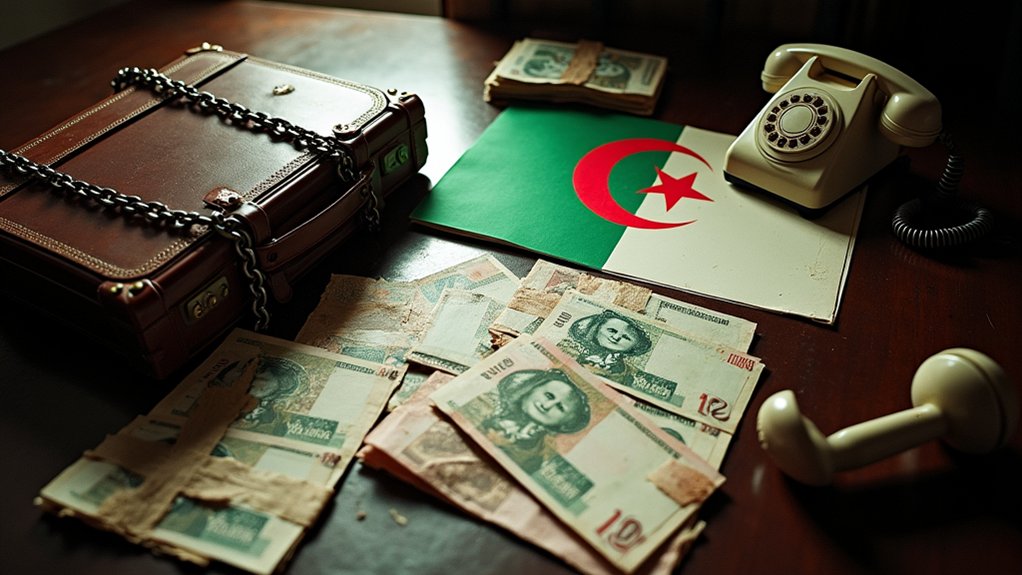
Forex trading in Algeria is technically legal but wrapped in so many rules and restrictions that it feels like walking through a regulatory minefield. The Bank of Algeria controls everything, requiring traders to use approved brokers—except hardly any exist locally. Most Algerians trade through international platforms instead, creating a massive gray area where enforcement is weak but penalties for violations are harsh. Cross-border transfers are capped at €7,500 annually, deposits need foreign currency, and repatriating profits triggers compliance checks. The reality is messier than the rulebook suggests.
Quick Facts That Matter
- Forex trading is legal in Algeria but heavily regulated by the Bank of Algeria under strict foreign-exchange controls.
- Licensed local brokers are scarce, so most Algerian traders use international platforms, creating a regulatory gray area.
- Annual cross-border transfers are capped at €7,500, with strict monitoring aimed at preventing capital flight and supporting the dinar.
- Violations of currency controls can trigger fines, sanctions, and harsher penalties from authorities who enforce rules strictly.
- Traders face high scam risks and weak consumer protection due to lack of local regulatory oversight on international platforms.
Overview: Forex Trading in Algeria
Algeria's foreign exchange landscape sits on a foundation of oil money and central bank maneuvering.

Algeria's forex story boils down to crude oil revenues and whatever the central bank decides to do that day.
Reserves hit $70 billion by end of 2024—sounds impressive until you realize that's just 25% of GDP.
Back in 2009? Nearly 98%.
The dinar actually appreciated 3.35% against the dollar recently, which is weird given everything else.
There's no legal parallel market for moving foreign currency, but there's a black market nobody really stops.
The Bank of Algeria shifted gears in 2016 after oil prices tanked, now actively managing liquidity instead of just absorbing it.
Central banks like Bank Al-Maghrib use intervention strategies to manage currency stability and foreign exchange markets in North Africa.
Oil exports drive everything here.
The 2025 budget projects a trade surplus of $4.83 billion with exports expected at $50.9 billion against imports of $49.07 billion.
Over the past quarter century, Algeria's reserves as a percentage of GDP averaged 49.664%, putting the current level well below the long-term norm.
Is Forex Trading Legal in Algeria?
The question everyone asks first is whether they'll get arrested for clicking “buy” on a forex platform—and the answer is no, it's legal.
The Algerian government has declared forex trading legitimate, governed by foreign exchange controls.
It's not crypto—that's completely banned under Law No. 25-10. Forex stands separate.
International brokers accept Algerian clients without issue, which tells you something about its recognized status.
The popularity has surged.
But legal doesn't mean easy. The Bank of Algeria maintains strict restrictions on foreign currency purchases and international transfers.
Central bank oversight watches everything, limiting how residents actually access markets.
Understanding the regulatory standards that govern forex activities helps traders navigate these restrictions more effectively.
Who Regulates Forex in Algeria?
Who watches the watchers in Algeria's forex world? The Bank of Algeria. That's it. They're the primary regulator handling foreign exchange activities, enforcing compliance through strict oversight. No dedicated forex body exists here.
Instead, regulations get baked into broader banking and financial laws. The central bank and associated financial agencies do the enforcing, monitoring everything from currency purchases to international transfers. They're serious about it too—violations bring penalties or legal action.
For Algerian traders using international platforms like Axi or CMC Markets? They're relying on foreign regulators—ASIC, FCA, DFSA—because local regulatory protection simply doesn't exist for retail forex trading. Like other central banks such as South Africa's SARB, the Bank of Algeria's monetary policy decisions directly influence currency stability and foreign exchange market dynamics.
How Forex Trading Works in Algeria
Beyond Algeria's borders, forex trading operates through a network of international brokers that locals tap into—sometimes smoothly, often with friction.
Traders open accounts online, pass KYC checks, then fund via debit cards or bank transfers—usually in foreign currency, not dinar.
The platforms? Proprietary or third-party software provided by offshore brokers.
Major pairs dominate; DZD pairs barely exist.
Profits sound great until withdrawal time hits. Moving money back triggers compliance checks, currency controls, potential penalties.
It's retail trading in a legal gray zone. No local regulation protects participants. Just you, your broker, and Algeria's strict capital rules watching closely.
Like Nigeria's approach to currency exchange trading, Algeria's market operates within a complex regulatory environment that shapes how traders access international forex platforms.
Best Time to Trade Forex from Algeria

Timing makes or breaks forex trades—everywhere, but especially in Algeria where traders operate on borrowed infrastructure and borrowed time.
The London/New York overlap (1:00 PM–5:00 PM local) delivers peak volatility and liquidity. EUR/USD, GBP/USD explode during these hours. XAU/USD moves best 8:00 AM–12:00 PM and again during the overlap.
AUD/USD and USD/JPY? That's 2:00 AM–9:00 AM territory—brutal for sleep schedules.
Outside these windows, spreads widen, movement dies. Daylight Saving Time shifts everything slightly, twice yearly. Low-activity periods mean range-bound hell and fewer setups. News releases amplify chaos during overlaps, mixing opportunity with landmines.
Understanding optimal trading hours for each currency pair helps Algerian traders avoid dead zones and concentrate effort when their chosen pairs actually move.
Payments, Deposits & Withdrawals in Algeria
Money moves differently in Algeria—always has, probably always will. Cash still dominates, even as payment infrastructure catches up with instant transfers and QR codes.
Most forex brokers want USD or EUR deposits—DZD rarely makes the cut. Bank transfers, cards, PayPal, Skrill, Neteller work for funding accounts. Minimums hover around $200.
Withdrawals? Many still prefer cashing out through local bank transfers, old-school style. Virtual cards help bypass currency headaches. Wise works for ATM pulls but won't hold DZD balances.
Fees bite harder without major currencies. Like neighboring Morocco's dirham, the DZD faces limited convertibility in forex markets, making direct currency pairs harder to trade. Regulatory limits on hard currency movement add friction. Banking gaps cause delays. It's workable, just clunky.
Taxes, Reporting & Money Rules in Algeria
Getting money in and out is one thing—keeping the taxman and regulators happy is another beast entirely. Algeria's tax system covers Forex income, though specific rates remain murky within broader financial policies. The Bank of Algeria watches everything. Declaration rules are strict: Algerians must declare over €1,000 at borders, foreigners over €5,000. Try leaving with more than 10,000 dinars cash? Illegal. The dinar can't be exchanged outside Algeria, period.
Economic reforms in 2022 promised transparency, and reserves hit $64.6 billion by 2024. Tourist allowances increased to €750 annually. Progress exists—barely.
Forex Scams & Trading Risks in Algeria
Every year, millions vanish into forex scams globally—Algeria's traders aren't immune.
UK losses alone hit $30.5 million in 2019. Fake brokers promise guaranteed profits—classic bait.
Romance scams drain wallets through fake online relationships.
Account takeovers wipe balances instantly; backend fraud exploits platform vulnerabilities without victims noticing until it's too late.
Stolen cards, bonus abuse, chargeback schemes—all part of the playbook.
Weak local enforcement makes recovery nearly impossible.
No licensed brokers operating openly means underground activity thrives.
Unsolicited contacts requesting upfront payments? Red flag.
Algeria's strict currency rules collide with black-market reality, and penalties are harsh when caught.
Algeria's forex regulatory framework operates under a simple rule: the Bank of Algeria calls all the shots. Everything runs through them. Want to trade forex legally? You need their approved broker. Good luck finding one locally, though. Most Algerians end up using international platforms instead, which creates a weird gray area.
The regulator watches cross-border transfers like a hawk, capping individuals at €7,500 annually with proper paperwork. It's all about controlling capital flight and propping up the Dinar. The system's tight. Really tight. And if you mess with currency controls? Fines, sanctions, maybe worse. They're not playing around.
Common Questions
Can Algerian Residents Open Forex Accounts With International Brokers?
Algerian residents face significant legal and practical barriers when attempting to open forex accounts with international brokers. Most international brokers lack required Bank of Algeria authorization, and strict currency controls restrict cross-border fund transfers, creating substantial compliance risks.
What Currency Pairs Are Most Profitable for Algerian Traders?
EUR/USD, USD/JPY, and USD/CAD prove most profitable for Algerian traders due to high liquidity, tight spreads, and alignment with local euro-dollar exposure. GBP/USD offers volatility-driven gains but demands advanced risk management skills.
Are There Algerian Forex Trading Communities or Mentorship Programs Available?
No large-scale Algerian forex communities or formal mentorship programs exist. Traders primarily engage through informal WhatsApp, Telegram groups, and international forums. International brokers offer Arabic webinars, but structured local mentorship remains undocumented and unregulated.
Do Algerian Banks Report Forex Trading Activity to Tax Authorities?
Yes, Algerian banks report Forex trading activity to tax authorities. They monitor foreign exchange transactions, maintain records for auditing purposes, and share information with regulators for tax compliance and anti-money laundering checks under current legal frameworks.
What Happens if I Get Caught Trading Forex Illegally in Algeria?
Individuals caught trading forex illegally in Algeria face criminal prosecution under Law No. 25-10, with penalties including two months to one year imprisonment and fines ranging from 200,000 to 1,000,000 Algerian dinars ($1,540-$7,700).
The Bottom Line
Trading forex in Algeria isn't exactly straightforward. It's not legal, not regulated, and the government really doesn't want you doing it. But people still find ways. The risks are real—scams, unregulated brokers, legal trouble, and financial losses. Getting money in and out is a headache. Taxes? Good luck figuring that out. Bottom line: it's a gray market operating in the shadows. Proceed at your own risk, because no one's coming to help if things go sideways.