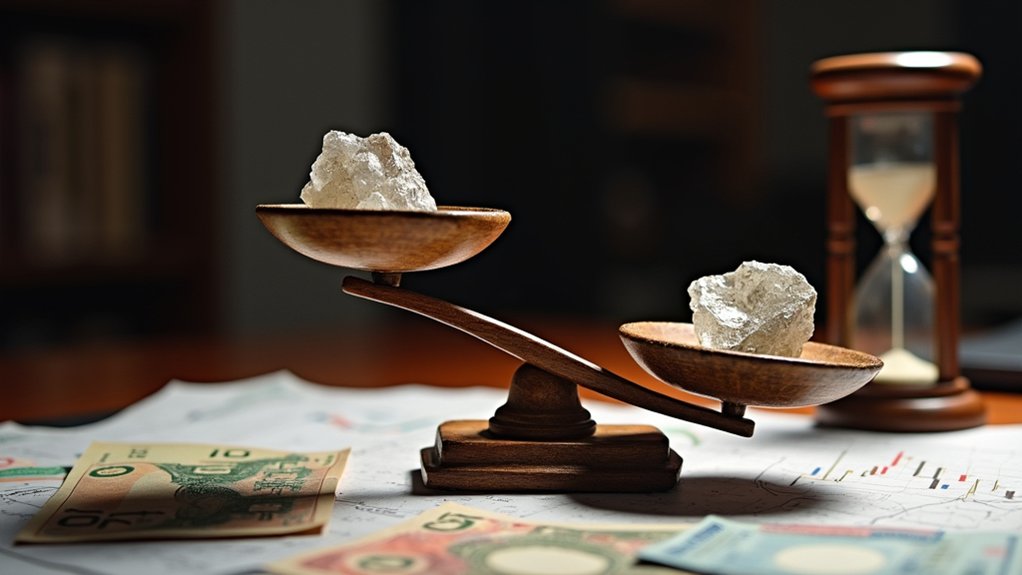

Botswana just let its currency slide—hard. The government cranked up the crawl rate for the Pula to -2.76% annually, nearly double the previous -1.51%. Translation? They're deliberately weakening their currency, and fast.
Botswana doubled its currency crawl rate to -2.76%—a deliberate, aggressive move to weaken the Pula amid economic contraction.
Why? Because the economy is buckling. Botswana contracted 3% in 2024 and is projected to shrink another 1% in 2025. The culprit is diamonds—or rather, the lack of demand for them. Mining output crashed 24% last year, and when diamonds make up that much of your economy, you feel it everywhere. Foreign exchange reserves dropped to just 5.2 months of import cover in February 2025, down from over 10 months in 2018. That's a scary decline.

So Botswana did what desperate countries do: mess with the exchange rate. They adjusted the currency basket too, shifting from 45% South African Rand and 55% IMF Special Drawing Rights to an even 50/50 split. They also widened trading margins, allowing the Pula to bounce around more each day. Since July, the Pula has dropped 6% against the dollar and 8.6% against the Rand.
The government calls it maintaining competitiveness. Makes sense on paper—cheaper currency means cheaper exports, which could help the non-mining sector. That sector only grew 2.8% in 2024, so it needs all the help it can get. The current account swung from a 1.5% GDP surplus in 2023 to a 4.2% deficit in 2024. Ouch.
The silver lining? Inflation has been running below the Bank of Botswana's 3-6% target, so there's room for the currency to weaken without immediately crushing consumers. And Botswana still has better reserve coverage than many African peers dealing with full-blown foreign exchange crises. Think Nigeria, Angola. Regional counterparts like Namibia have their own Financial Institutions Supervisory Authority actively monitoring forex market stability amid similar pressures. The Non-Bank Financial Institutions Regulatory Authority continues to oversee foreign exchange activities in Botswana as the currency adjustment unfolds.
Still, this is a gamble. Unlike South Africa's approach to managing cross-border capital flows through its Reserve Bank's regulatory framework, Botswana is taking a more direct devaluation route to address its forex pressures. The policy gets reviewed biannually, with the next check-in at year-end. If diamond markets don't recover and reserves keep falling, Botswana might have to get even more creative. Or painful, depending on how you look at it.