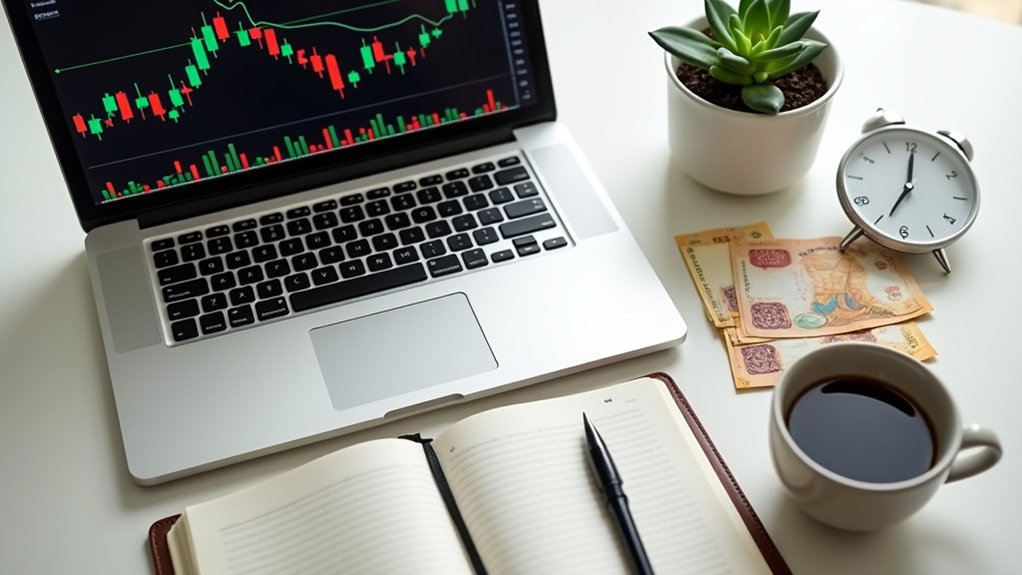
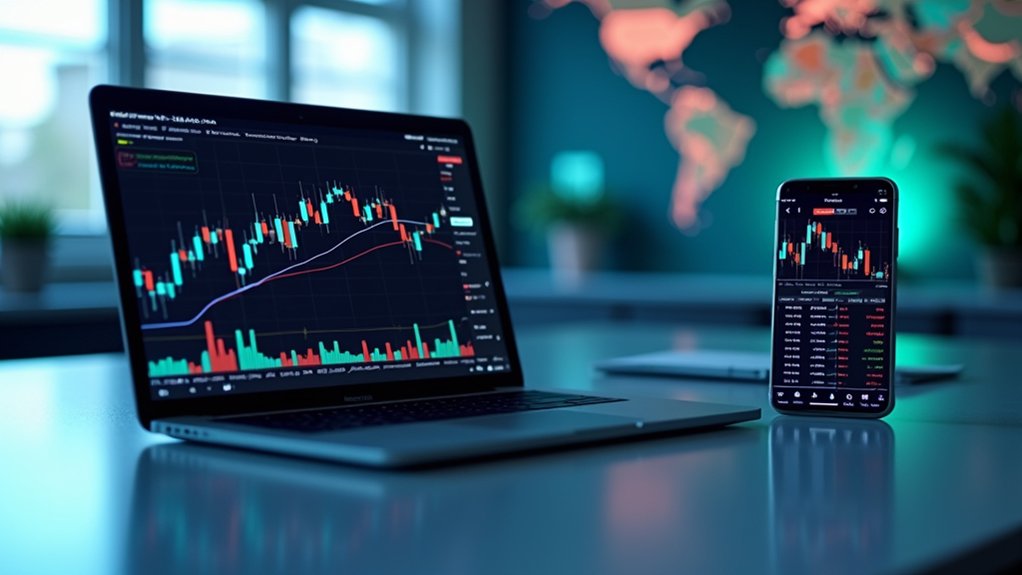
The forex market is a decentralized, over-the-counter network with no physical exchange—just banks, brokers, and electronic platforms moving over $6 trillion daily across four major trading sessions. At the top sits the interbank market where big banks trade in massive volume, followed by hedge funds and corporations, then retail traders at the bottom accessing liquidity through brokers. Price moves in structures: higher highs and lows signal uptrends, lower highs and lows mean downtrends, while equal highs and lows show consolidation. The mechanics below explain how these pieces actually fit together.
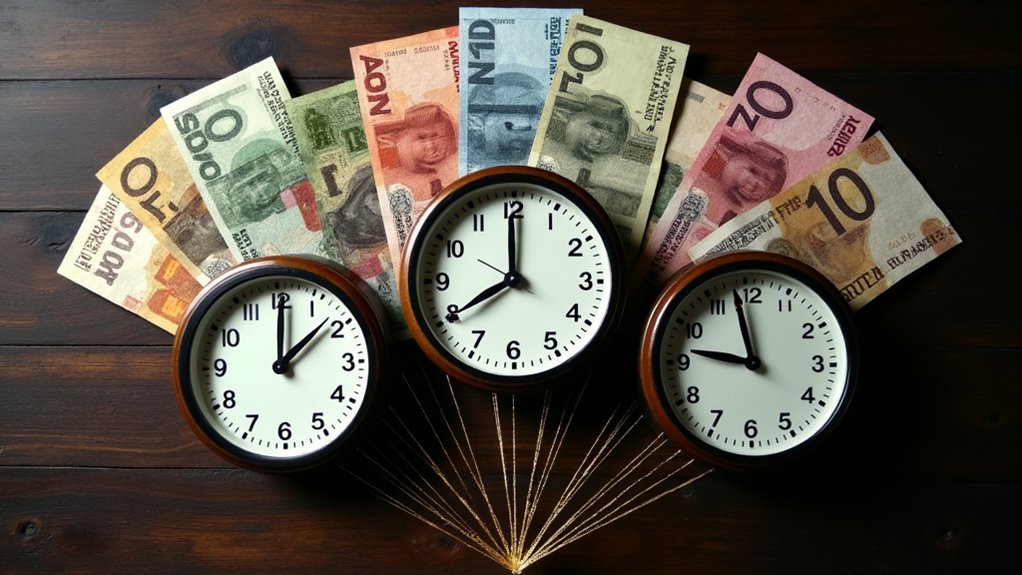
For African traders staring at their screens in Lagos, Nairobi, or Johannesburg, the forex market doesn't care about borders or time zones. It's a beast that runs 24 hours a day, five days a week, churning through over $6 trillion in daily volume. No central exchange exists. No single building in New York or London controls it. The market is decentralized, operating over-the-counter between banks, institutions, brokers, and retail traders scattered across continents. Sydney opens, then Tokyo, then London, then New York. The cycle repeats. Always moving, always liquid, always indifferent.

Three main segments define this structure. The spot market handles most of the volume, where currencies trade immediately at current prices. Spot trades typically settle within two business days because banks and time zones create delays. The forward market involves customized contracts to exchange currency at a set rate on a future date, traded OTC. The futures market uses standardized contracts on centralized exchanges, obligating currency exchange later. Most African retail traders focus on spot. Forwards and futures are mainly for hedging, used by corporations and institutions trying to manage risk.
Market participants operate in a hierarchy. At the top sits the interbank market, where massive international banks execute large-volume trades. Electronic brokering services like EBS and Refinitiv serve as central limit order books for price discovery. These platforms facilitate currency exchange by connecting buyers and sellers through their order matching systems that determine pricing in real-time. Central banks influence currency values through monetary policy decisions and interventions that ripple through every level of the market. Below them are hedge funds, corporations, governments, and brokers. At the bottom, retail traders in Accra, Cairo, or Kampala access liquidity through brokers connected to these upper tiers. The hierarchy matters because spreads narrow as you climb. Retail traders get the widest spreads. Banks get the tightest. Liquidity providers supply buy and sell orders that keep spreads tight and ensure sufficient market depth for smooth execution at every tier.
Understanding market structure means recognizing price trends. A bullish structure shows higher highs and higher lows. Bearish structure displays lower lows and lower highs. Sideways or ranging markets present equal highs and equal lows, signaling consolidation. Breaks in these patterns indicate shifts. When higher highs stop forming, the trend might be reversing. Candlestick patterns on charts visualize this structure. Price continuation happens when candles close above previous highs or below previous lows. Price failure occurs when wicks spike above resistance but close below, signaling weakness or potential reversal. Trading with the trend simplifies decision-making and increases win probability. Impulsive moves show strong momentum through large-bodied candles pushing price forward, while pullbacks display smaller bodies and mixed colors as the market temporarily consolidates.
Support and resistance levels mark where buying or selling interest concentrates. Support halts price drops due to demand. Resistance stops price rises due to supply. These concepts apply whether you're trading USD/ZAR in Cape Town or EUR/EGP in Alexandria. The structure remains the same. The execution differs based on broker access, spreads, and local regulations. Market structure reflects the continuous two-way auction where participants negotiate fair value through their buying and selling decisions. Liquidity provision from market makers and dealers ensures that currency pairs remain tradable even during periods of lower activity or market stress.
Common Questions
Can I Trade Forex Legally in My African Country Without Offshore Accounts?
Yes, most African traders can trade forex legally without offshore accounts—if they pick the right broker. South Africa, Kenya, and Nigeria have established regulators (FSCA, CMA, CBN/SEC) licensing local brokers. Ghana's SEC is rolling out its own framework. Stick with locally licensed platforms for legal protection and dispute resolution.
Trading offshore? You're on your own if things go sideways. Verify broker credentials through official regulators before depositing a cent. Many countries permit forex; few regulate it well.
Which African Currencies Are Most Liquid for Local Retail Traders?
South African Rand (ZAR) dominates—tightest spreads, best broker access, actual liquidity that matters.
Nigerian Naira (NGN) follows with volume but spreads hurt.
Moroccan Dirham (MAD) and Egyptian Pound (EGP) offer decent North African liquidity.
Kenyan Shilling (KES) is rising fast thanks to local broker infrastructure.
Most other currencies? Forget it—illiquid, wide spreads, painful execution. ZAR/USD pairing is the continent's retail workhorse. Everything else feels like swimming in molasses.
Do African Brokers Offer Better Spreads Than International Brokers for Local Pairs?
African brokers *sometimes* offer tighter spreads on major local pairs like USD/ZAR—thanks to direct regional bank access—but it's inconsistent.
Most local pairs? Expect 50–100+ pips, far wider than international brokers' major pair spreads (0.0–1.6 pips on EUR/USD).
International brokers rarely prioritize African pairs anyway, so liquidity suffers.
The real edge for African brokers isn't spread size—it's localized deposits, support, and knowing the market's quirks.
Spreads alone don't tell the whole story.
How Do Power Outages and Internet Issues Affect Trade Execution in Africa?
Power outages kill trades. Simple as that.
When the grid drops in Nigeria, Ghana, or South Africa—which happens constantly—traders lose platform access mid-execution. Stop-losses don't trigger. Orders hang. Internet dies when telecoms lose power too, cutting data feeds during volatile moments.
Over 600 million Africans lack electricity entirely.
Even connected traders face blackouts—South Africa logged 2,000+ hours in early 2023 alone.
Real-time markets don't wait for generators.
Are CFA Franc Countries Restricted From Trading Certain Currency Pairs?
CFA franc countries aren't banned from trading major pairs like EUR/USD or GBP/JPY. No legal restriction exists. The CFA franc is convertible, mainly through the euro.
But here's the catch: their currency is pegged to the euro, reserves sit in Paris, and all foreign flows route through French financial systems. So traders face practical barriers—banking access, liquidity limits, broker availability—not outright prohibitions. It's infrastructure and euro dependence that narrows options, not explicit forex rules.