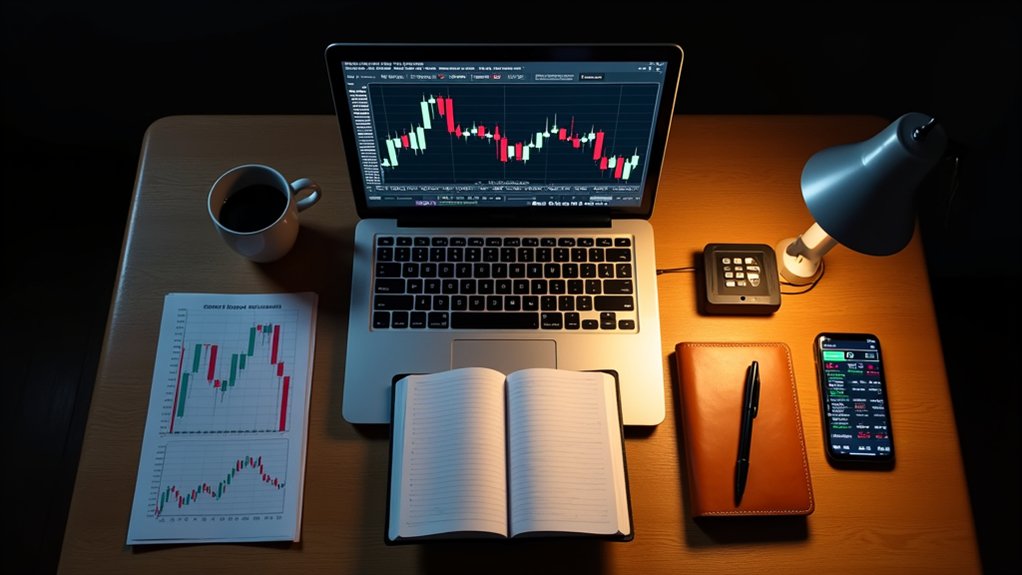

A simple forex trading plan starts with realistic monthly return targets, strict risk management rules like limiting each trade to 1-2% of capital, and documented entry and exit criteria that remove emotion from decisions. Traders pick specific currency pairs, define their style—scalping, swing trading, or trend following—and commit to stop-losses without exception. Daily loss limits prevent account blow-ups. Everything gets logged in a trading journal and reviewed outside trading hours, not during losing streaks when panic takes over. The structure keeps impulse trades from destroying capital, and the specifics matter more than most beginners realize.

A Forex trader in Lagos stares at their screen at 2 a.m., chasing a setup they haven't defined. No plan. No exit strategy. Just hope and a leveraged position on EUR/USD that's bleeding pips.

This scene plays out nightly across Nairobi, Accra, Johannesburg, and Cairo. The common thread? Traders enter the market without a written trading plan. Not a vague idea scribbled on a napkin. A real plan.
A vague idea scribbled on a napkin isn't a trading plan. Write it down or keep losing.
Building a simple Forex trading plan starts with realistic objectives. Not “I'll triple my account in a month.” That's fantasy. Traders in Kampala or Harare need specific targets based on account size and risk tolerance.
A monthly return target of 5-10% might sound boring compared to the Instagram millionaires, but it's sustainable. Track win rate, risk-reward ratio, and monthly ROI. Write these down. Keep them visible during trading sessions. They guide every decision when emotions spike.
Risk management determines who survives past three months. Set maximum risk per trade as a fixed percentage of total capital. Two percent is common. One percent if capital is thin or spreads from African brokers bite hard.
Every trade needs a stop-loss. No exceptions. Not even “just this once” when the setup looks perfect at midnight. Define daily and weekly loss limits before opening the platform. Hit that limit? Close the laptop. Walk away.
Leverage is the silent account killer across African markets where regulations vary wildly. Keep it low. Keep it controlled.
Trading strategy and setups need documentation. Scalping, swing trading, trend following—pick one style and commit. List the specific currency pairs to focus on. USD/ZAR for South African traders. EUR/NGN if available locally.
Document preferred trade setups like breakouts, retests, or moving average crossovers. Use defined entry and exit criteria. Not feelings. Not hunches. Rules. Before risking real capital, test these setups using a forex demo account to validate the strategy without financial exposure.
Market selection and time frames matter more than traders admit. Choose currency pairs with liquidity and reasonable spreads. Assign specific time frames for execution. Filter opportunities using volatility and news calendars.
Avoid trading during major announcements unless the plan specifically accounts for that chaos. Trade during peak liquidity periods, not during dead hours when spreads widen. The London–New York overlap offers the highest liquidity window when both major sessions operate simultaneously.
Trade execution requires checklists. Pre-trade analysis before entering any position. Entry triggers based on rule-driven setups.
Predefine exit signals and position size every trade according to the risk limit. Track everything in a trading journal. Review daily performance. Adjust strategies based on cumulative data, not last night's loss. Update the plan only outside trading hours to avoid reactive decisions during emotional market moments.
Discipline separates consistent traders from those who blow accounts quarterly. Follow the plan. Revise it when data justifies changes. Keep the plan simple to ensure rules remain enforceable rather than becoming an overwhelming list that gets ignored. Build the plan through sequential instructions that address each component methodically before moving to execution. Effective capital preservation requires adhering to predefined rules even when market conditions tempt deviation from the strategy. Implementing position sizing techniques helps determine the appropriate trade volume based on account equity and defined risk parameters. Ignore it? Then why bother writing it.
Common Questions
Which African Brokers Are Regulated and Safe for Traders in My Country?
South Africa's FSCA regulates the most credible African brokers.
Ava Capital Markets (FSCA No 45984), IG Markets South Africa, and IFX Brokers all hold FSCA licenses.
Traders can verify any broker using the FSP search function on the FSCA website—takes two minutes.
Outside South Africa? Pickings get slim fast.
Most other African countries lack serious forex regulation, so traders often rely on international regulators.
Check your broker's license number directly with the regulator.
Don't trust marketing claims alone.
How Do I Fund My Trading Account With Limited USD Access?
African traders typically fund accounts using local payment methods since USD is restricted in many countries.
Mobile money like M-Pesa works in Kenya and Tanzania.
Skrill and Neteller bypass banking headaches.
Some brokers accept ZAR, EGP, or NGN as base currencies—no conversion drama.
Cards work but banks often block international transactions.
Micro accounts start at $10-$100, perfect for limited capital.
Wire transfers through services like WISE handle cross-border payments when nothing else does.
Each country has different restrictions though.
Can I Trade Profitably With Unstable Internet and Frequent Power Outages?
Trading profitably with unstable internet and frequent power cuts? Not likely. Delayed executions, slippage, and missed stops pile up losses fast.
African traders in Nigeria, Kenya, Ghana, and Zimbabwe face this reality daily—power drops mid-trade, internet vanishes during news releases.
A UPS and mobile data backup help. Cloud VPS hosting keeps platforms running remotely.
But honestly, consistent outages kill consistency. Automation (stop-loss, take-profit) becomes survival, not strategy. Infrastructure matters more than most admit.
What's the Minimum Capital Needed to Start Forex Trading in Africa?
Brokers across Africa accept deposits as low as $10 to $50 for micro accounts, though FSCA-regulated platforms in South Africa typically start around ZAR 500 to $100.
International brokers often demand $100–$250. But here's the catch: industry experts recommend starting with $500–$1,000 to actually manage risk and survive drawdowns.
Anything less? High leverage turns small accounts into gambling chips. Premium accounts want $2,000 or more, and swing traders need at least $1,500 to hold positions properly.
How Do Currency Controls Affect Withdrawing Profits to My Local Bank?
Currency controls can turn profit withdrawal into a nightmare.
Countries like Zimbabwe and Nigeria restrict how much foreign currency citizens can access or move.
Brokers might pay out in local currency at official rates—which often differ wildly from black market rates.
Some African traders find their USD gains converted to naira or cedi at unfavorable government rates, losing 20-40% instantly.
Others face withdrawal caps or delays lasting months while banks “process” forex requests.