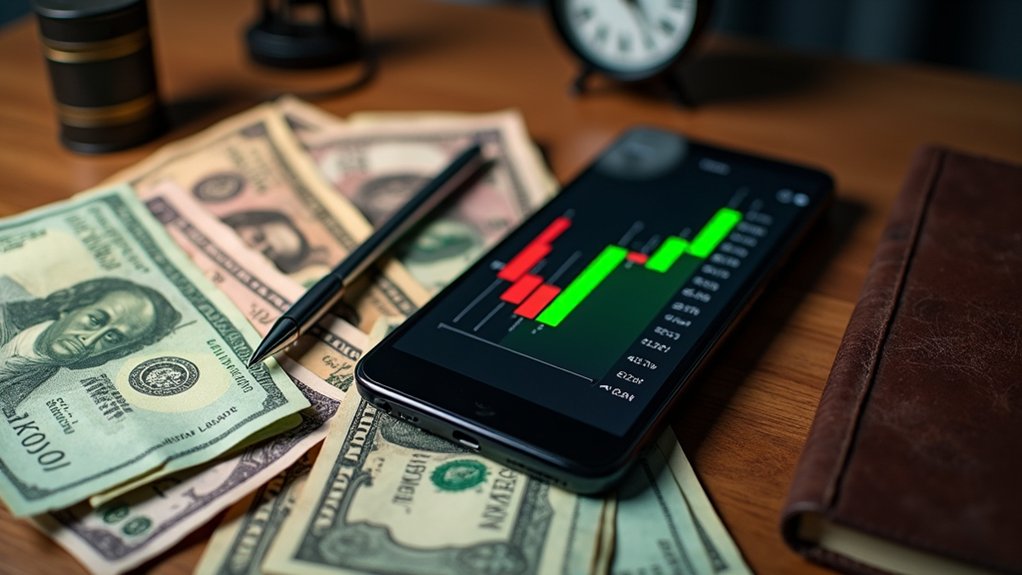
Forex trading wipes out 80% of retail accounts because high leverage turns small currency swings into total losses—$500 controlling $15,000 means a 3% move erases everything. Trade wars and central bank chaos whipsaw currencies while many African traders face minimal regulatory protection against broker fraud or platform meltdowns. Settlement risk, margin calls in minutes, and bid-ask spreads quietly bleed accounts dry. Only 23% profit after twelve months, and institutions crush retail traders with better tools and deeper pockets. The mechanics behind this carnage reveal why survival demands more than optimism.
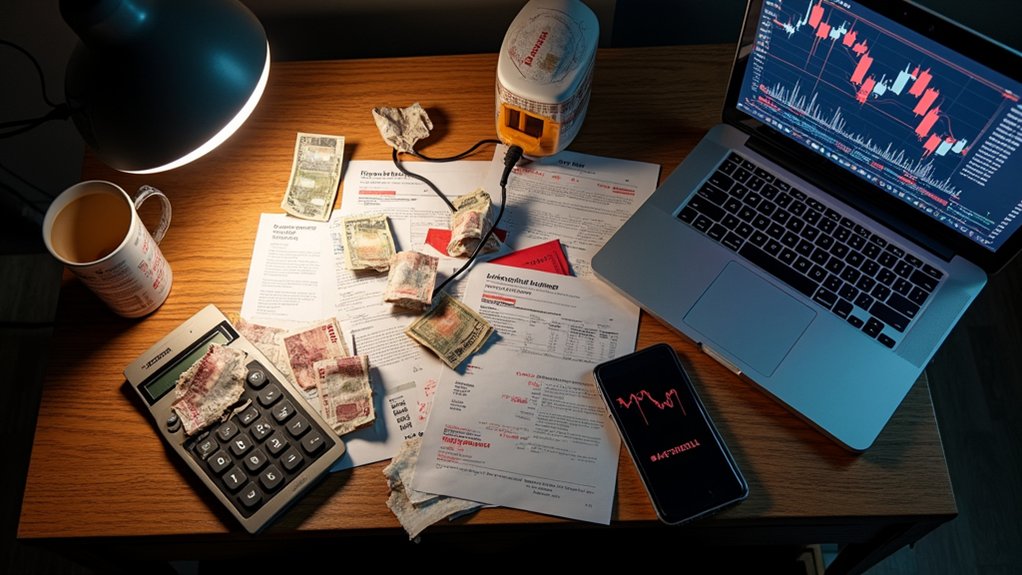
Why do four out of five African forex traders walk away lighter in the wallet? The UK's Financial Conduct Authority put a number on it in 2025: roughly 80% of retail forex traders lose money. High leverage and market volatility take most of the blame. For traders in Nigeria, Kenya, South Africa, or Ghana opening accounts with offshore brokers, those odds don't magically improve just because the Naira or Cedi is in play.

Four out of five African forex traders lose money—high leverage and volatility don't care which currency you're trading.
The math gets worse. Only 23% of retail traders turn a profit after twelve months. And 99% can't string together profits for more than four consecutive quarters. That's not a trading career. That's a slow bleed with occasional lucky breaks.
Leverage is the temptation brokers dangle. Ratios of 30:1 or higher let traders control positions far beyond their account balance. A Kenyan trader with $500 can suddenly move $15,000 worth of EUR/USD. Sounds empowering until a 3% swing wipes out the entire stake. Margin calls don't wait for explanations.
During volatile sessions, accounts get liquidated in minutes. The 2025 market delivered plenty of those moments. EUR/USD jumped 10.2% year-to-date, Yen/USD climbed 7.7%, and the US Dollar Index dropped 7.3%. Trade wars, geopolitical flare-ups, and erratic central bank moves kept things spicy. Political instability can trigger sudden currency swings that catch overleveraged traders completely off guard. Opportunity for some. Disaster for most.
Settlement risk adds another layer of trouble. One party delivers currency, the other vanishes or fails to send the countervalue. The FX market's expansion brought more participants, more complexity, and more ways for things to break. Platform outages during critical moments are common enough to plan for. Cybersecurity threats are rising. Trading platforms make juicy targets for attacks.
A trader in Tanzania or Morocco relying on a thinly regulated broker faces exposure not just to market moves but to operational failure. Currency mismatches on balance sheets create structural vulnerabilities that magnify losses when exchange rates shift unexpectedly. Global FX daily turnover reached $9.6 trillion in April 2025, a 28% increase since 2022 that brought expanded risk alongside expanded opportunity. The bid-ask spread quietly chips away at profitability with every trade, adding to transaction costs that compound over time.
Regulation varies wildly across Africa. South Africa's Financial Sector Conduct Authority offers some oversight. In other countries, retail traders operate in gray zones with minimal protection. Fraud, scams, and broker insolvency are real risks. Counterparty risk doesn't disappear just because a platform has a slick website. When a broker folds, funds evaporate. Some inexperienced traders turn to copy trading platforms that automatically replicate the positions of supposedly expert traders, only to discover they're mirroring the losses of strangers with equally poor judgment.
Overleveraging and emotional trading remain the top killers. Most retail traders use outdated methods and lack proper risk controls. The learning curve is steep. Professional-grade tools stay out of reach. And the house always has better information, faster execution, and deeper pockets. Meanwhile, the tiny fraction who survive long enough to develop genuine skill face monthly income variability that swings wildly based on market conditions and risk exposure. That's the reality for African forex traders steering a market built to favor institutions, not individuals.
Common Questions
Can Nigerian Regulators Recover Funds Lost to Unregistered Offshore Brokers?
Nigerian regulators can't recover funds lost to unregistered offshore brokers. The CBN only has power over locally licensed entities—offshore brokers operate beyond its reach. No mechanism exists for cross-border fund retrieval.
Victims are usually told to contact law enforcement or lawyers, but success rates are dismal. These brokers hide behind fake details and foreign legal shields. Recovery is complicated, rarely works, and involves lengthy legal battles most individual traders can't afford or win.
Do Mobile Money Withdrawal Delays Affect Stop-Loss Execution in Kenya?
No. Stop-loss orders execute automatically on forex platforms based on price triggers—mobile money has nothing to do with that.
Withdrawal delays only affect *accessing* profits or funds after a trade closes, not the execution itself.
M-Pesa or agent cash shortages slow down fund retrieval, which can mess with timing for re-entering trades, but the stop-loss fires regardless.
The real execution risks? Platform glitches, slippage, internet outages—not mobile money delays.
Are Sharia-Compliant Swap-Free Accounts Actually Safer for North African Traders?
No. Swap-free accounts eliminate interest charges, which appeals to Muslim traders in Egypt, Morocco, Tunisia, Algeria, and Libya.
But they don't reduce actual trading risk. Brokers often swap overnight fees for hidden admin charges or wider spreads—and nobody's policing those terms.
Regulation barely covers Sharia-compliance claims across North Africa.
Market volatility and leverage still destroy accounts just as fast. The “Islamic” label offers religious peace of mind, not capital protection.
Different fee structure, same danger.
Why Do South African Brokers Reject Deposits From Certain African Countries?
South African brokers reject deposits from certain African countries to avoid regulatory headaches with the FSCA.
High-risk jurisdictions—those flagged for money laundering, fraud, or sitting on FATF greyists—trigger compliance nightmares.
Sanctions, weak local oversight, and dodgy payment channels make these markets radioactive.
Partner banks won't touch funds from unstable economies.
It's not personal. It's survival.
One suspicious transaction can cost a broker its license, so they'd rather slam the door than gamble on regulatory penalties.
Can Egyptian Traders Legally Hold USD in Forex Accounts During Restrictions?
Egyptian traders can *technically* hold USD in international Forex accounts, but it's messy.
Local laws cap foreign currency possession and transfers, demanding documentation for anything substantial.
Since February 2024, Egypt ditched USD for official settlements—part of that BRICS de-dollarization push.
Moving money in or out? Expect scrutiny.
Banks monitor everything, the Central Bank watches close, and breaching FX rules risks penalties.
No local brokers exist, so international platforms are the only game, wrapped in regulatory red tape.